
Missed the October 1 Deadline for 2027
and remaining spots in 2026?
E-mail Us at info@arquetopia.org
for Program Info, Application Materials, and an Extension
including Day of the Dead, and Short-Term Programs
Outstanding Arquetopia Alumni
A - E
Post-Residency Interviews and Feedback
Since its beginnings in 2009, Arquetopia Foundation has hosted and mentored more than 1,300 artists, writers, art historians, curators, and researchers, from ages 20 to 92, from 112 countries worldwide, and from a wide variety of disciplines. Featured here are testimonials and feedback from many of the most outstanding alumni of our award-winning residency programs.
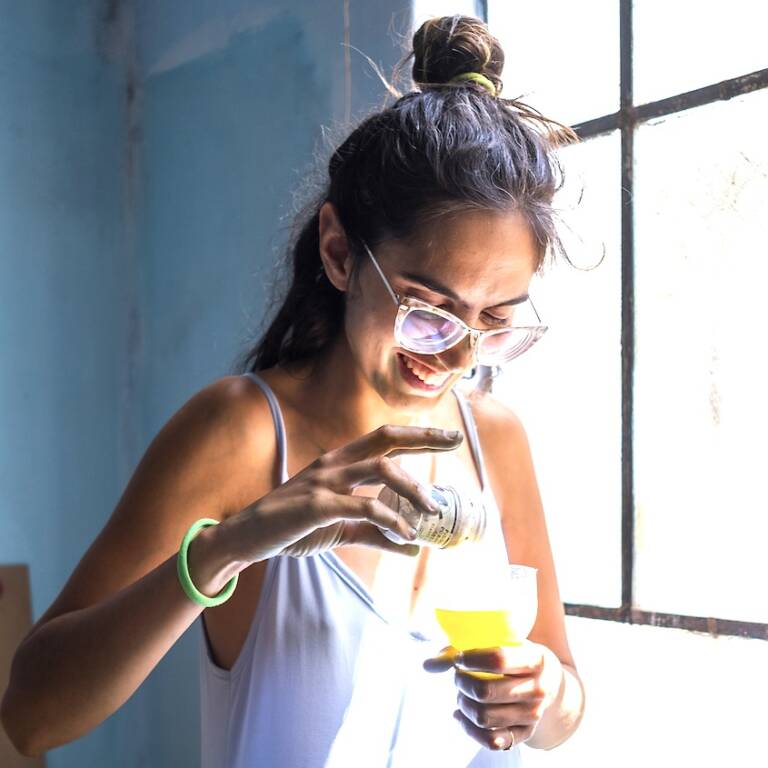
Valentine
Abraham
France / Canada
Visual Artist — Multimedia
Artist Website
What is your artistic practice?
My favorite medium is painting. I’ve also been known to use ceramics, drawing, writing and others.
On what projects are you currently working?
I’m currently working on my first large scale project thanks to the support of a grant, exploring identity, relationship and the stories our bodies tell through the making of thirty partial body portraits. Divided at the hips, I am painting 15 tops and 15 bottoms that will be placed on a big wooden carousel, allowing the viewer to create 225 combinations out of the meeting of 30 different strangers.
What is the most relevant conversation that you remember having during your residency at Arquetopia?
That is a very difficult question to answer, as I feel like my whole time at Arquetopia was filled with conversations that shifted considerably my way of understanding the world and making art, both with Francisco and Nayeli but also with the fellow residents, so much so that all of these talks have become entangled in my memory; however, weeks later the conversation initiated on landscape is still running wild in my brain as I continue wrapping my head around it.
What changed after your residency at Arquetopia?
So far, it is hard to say, as I haven’t yet returned to my normal studio practice and am exploring Mexico, but in Arquetopia I abandoned my usual medium of oil painting and discovered new ways to paint that will, undoubtedly alter the way I make art forever, if only because it reawakened my curiosity for different materials than the classic ones.
How are artist residencies important to the artistic practice?
This was my very first residency, so I couldn’t talk as a general rule, but this was a life changing experience for me. Getting out of my usual space, working in a different studio, surrounded with other passionate artists, in a new country, pulled me completely out of my comfort zone and I think that is always where the magic happens. I found more inspiration in my five weeks at Arquetopia than in the year before. But more than that, I feel I got to know myself better as I was faced with new questions posed both by the space, the readings, the new materials and all the new people. It helped decenter my experience and consider my practice in a broader, wider, wilder world. I left Arquetopia transformed, and I am both excited to see what comes next and full of gratitude for this great gift in an always complex journey.
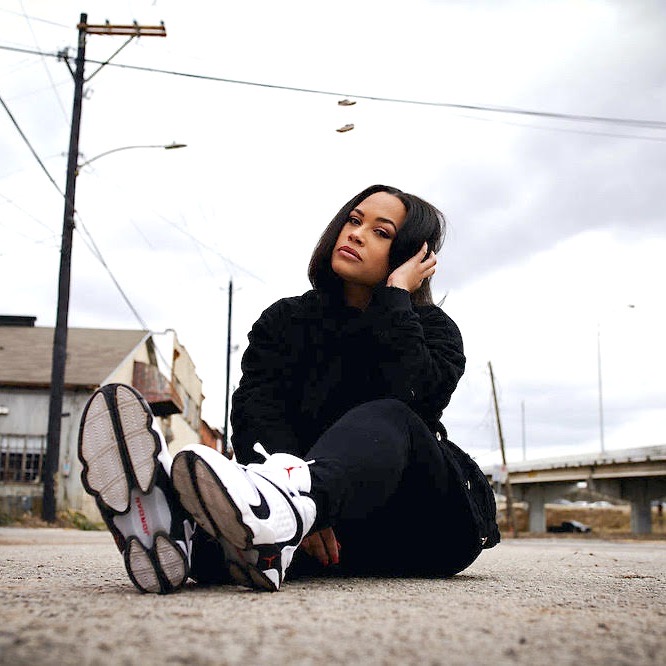
Kaima
Akarue
USA
Visual Artist — Multimedia
Artist Website
What is your artistic practice?
I am a multimedia artist who currently works predominantly in collage.
What has been your artistic process during the residency?
I used the residency as an incubation of thought and reflection. Through guided readings and research, I fleshed out themes of personal practice, motivation and purpose, discovering ways in which my mental debris informs my work and practice. I collected reference photos, documented the environment and journaled.
Which has been the text, essay or quote that you read at Arquetopia that most influenced your practice and why?
“Sister Outsider” by Audre Lorde was influential because I felt seen. It provided space for me to explore thoughts of differences and further substantiate the importance of identity investigation in my work.
What is next in your artistic practice after the residency?
I will continue school, working on my second year in the MFA program at the University of Houston. I also will be an artist-in-residence at the Harris County Cultural Arts Center, where I plan to really cultivate an arena for community to thrive.
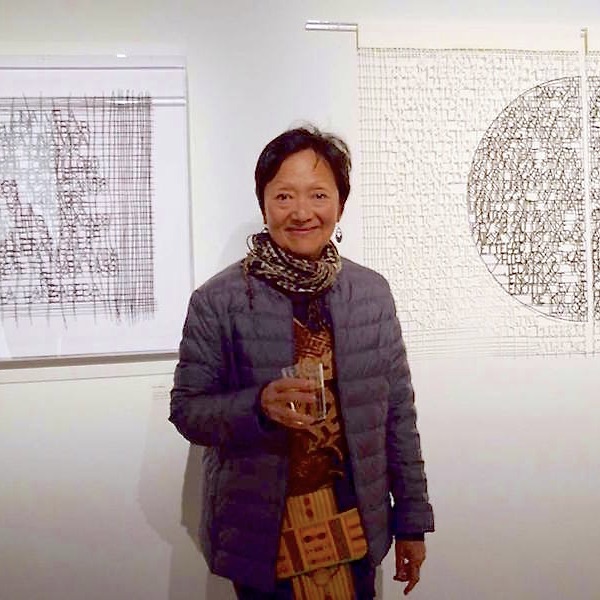
Ellen
Bepp
Japan / USA
Visual Artist — Multimedia
Artist Website
What is your artistic practice?
Mixed media, hand-cut paper.
On what projects are you currently working?
I continue to explore handcut paper as a format to bring attention to acts of injustice, xenophobia, racism, particularly in the context of the current regressive political climate in the US. During my recent stays in Oaxaca and short visit to Chiapas, I learned more about the history of political upheaval and resistance in those Indigenous communities, past and present. This has propelled me to further attempt to address struggles here in the US through art and activism.
For example, as a Japanese American, it is important for me to continue to educate the public about past incidents of racism and injustice based on my personal experiences. I consider it my obligation to remind people of the wrongs perpetrated against Japanese Americans, including my family, during WWII in this country and their incarceration in concentration camps by the US government. The scenario is much too similar today against Muslim citizens and other immigrants and the xenophobic hysteria is palpable. I will show my work in a group exhibition slated to open in September 2017, addressing these issues and honoring the 75th Anniversary of Executive Order 9066, which was issued by President Franklin D. Roosevelt. His signing ordered the removal of Japanese Americans from parts of the West Coast and today it is crucial to speak out to never allow this to happen again.
What is the most relevant conversation that you remember having during your residency at Arquetopia?
What I recall most is a conversation I had with one of the Arquetopia board members, Raymundo Fraga, while I was visiting the Puebla residency site in 2015. The Arquetopia staff had set up a meeting for me because I had expressed interest in the Indigenous history of Mexico and a desire to learn about traditional papel amate (bark paper). I wanted to research names of groups of original inhabitants who still survive today. It turned out that Raymundo Fraga is one of the most knowledgeable educators and textile collectors around, so I had the honor of meeting him. He generously shared his time and knowledge, books and resources so that I could look up names, indigenous languages still spoken and learn how the amate paper was made and used. I had read that there were areas in the state of Puebla where the paper was still being produced so he gave me directions on how to reach a small community named San Pablito, Pahuatlán, about eight hours away by bus. I made my way there and visited the taller (workshop) of Juan Santos where he demonstrated step-by-step how the papel amate has been made and used for generations. It was a privilege to spend time with him and his family. I procured a large sheet of amate paper that day from him and created an art piece dedicated to the 68 current indigenous communities of Mexico.
What changed after your residency at Arquetopia?
After returning home from each of my two residencies at Arquetopia, I found myself asking more questions about what was important to me in my art practice. When I had first arrived in Oaxaca on July 26, 2014, we received news about the kidnapping/disappearance of 43 student teachers at Ayotzinapa Rural Teachers’ College in the state of Guerrero. Then when I returned home after my 2014 residency the news about more killings of unarmed African Americans was also weighing heavily upon me. I wanted to create work around those issues of racism, police brutality, and social injustice. I decided to experiment with the Mexican paper cutout art form (papel picado) which has always struck me as both ethereal and powerful. I wanted to address these killings in America in particular and in my community in Oakland, CA. This is when I began cutting out the names of 100 unarmed African Americans killed by police in 2014. It was a cathartic process and I have been told by viewers that reading these names cut out of a delicate sheet of paper is somehow much more impactful than reading printed names.
After my 2015 residency, I continued doing handcut paper, experimenting with text and with figurative pieces as well. As the 2016 US presidential race ramped up, I wanted to address the border wall, anti-immigration issues, etc.
Today, as a result of so many backward changes in policies by this American government and an atmosphere of fearmongering and hatred, people of color and people with fewer financial resources are struggling. Many of us in the artist community are taking a stance of resistance and realize once again the importance of art as a tool and a weapon.
Artist residencies allow us to break out of our usual routines and escape our daily distractions. They allow us to commit ourselves to our art with the luxury of a concentrated chunk of time. They expose us to experiences outside of our everyday lives if we take the opportunity to actively get involved in a new environment and remain open. They expose us to new people and viewpoints if we embrace the opportunity to engage, exchange and learn from them. All of this gives us a richer and deeper well to draw from in order to enhance our artistic practice.
How are artist residencies important to the artistic practice?
I had the rare fortune to attend my first Oaxaca residency in 2014 but was able to immediately return the following year, thanks to an amazing gift from Arquetopia. Because I had become familiar with the area my first time there, by my second time I was able to travel around even more easily, to visit local friends that I had met the year before. This gave me opportunities to learn directly from people in the community about their personal lives, culture and the many-faceted environment of Oaxaca.
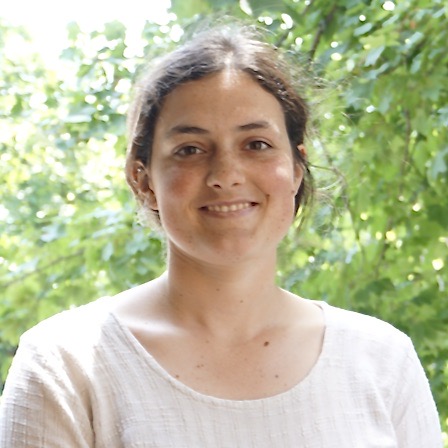
Annabel
Biro
Canada
Visual Artist — Ceramics
Artist Website
What is your artistic practice?
I am a visual artist working in ceramics.
On what projects are you currently working?
I am currently working on a large scale installation project. My goal is to create a ceramic floating dock and to install the work in the water of the Halifax NS Waterfront. This project is a continuation of the conceptual framework I started to explore during my time at Arquetopia. I am interested in the concept of ownership over space/property, I am working on creating a dialogue that examines this concept further. The dock form I am pursuing to create represents an abstract form of land; a dock could be described as an extension or island of land for our bodies to stand upon. By creating this object I am inevitably creating something that is seen to be owned by someone.
What is the most relevant conversation that you remember having during your residency at Arquetopia?
The readings and weekly meetings were so beneficial during my residency. One of the discussions that has stuck with me was about making work with intention and being conscience of the shadows that your work creates. Artists create work with their own experiences and the audience will have many more perspectives to the work that may not be what the artist had anticipated. By having the skill to see where those shadows are in your work will only guide you to refine your arts purpose further. Another important discussion during my residency was one about the use of language. Specifically the use of words that are relative to an individ- ual experience, like authentic, traditional, primitive, exotic, ect. Many of the amazing essays I read highlighted and emphasized the issues and implications of the use of language. These are just two examples of the conversations I had at Arquetopia.
What changed after your residency at Arquetopia?
From this experience I am motivated to create work with more awareness to the multiple perspectives and experiences of my audience. I have learned so much from Francisco, Nayeli, the other amazing talented artists I had the opportunity to meet during my stay. It was also my first time traveling outside of Canada and I absolutely loved exploring and learning about Puebla, Mexico. I am inspired to travel more and to keep pursuing my artistic practice through residencies. I am so grateful for my time at Arquetopia. It was truly a once in a lifetime experience.
How are artist residencies important to the artistic practice?
Artistic practices are strengthened by stepping out of your comfort zone and putting your work out for more people to connect with. By participating in artist residencies you have the opportunity to make connections with a group of diverse creative minds. It also provides artists with the space and resources to create work. In addition, this international residency gives artists the chance to travel and work which is truly amazing. All the things that an Artist Residency provides has the potential to motivate and guide an artistic practice through growth.
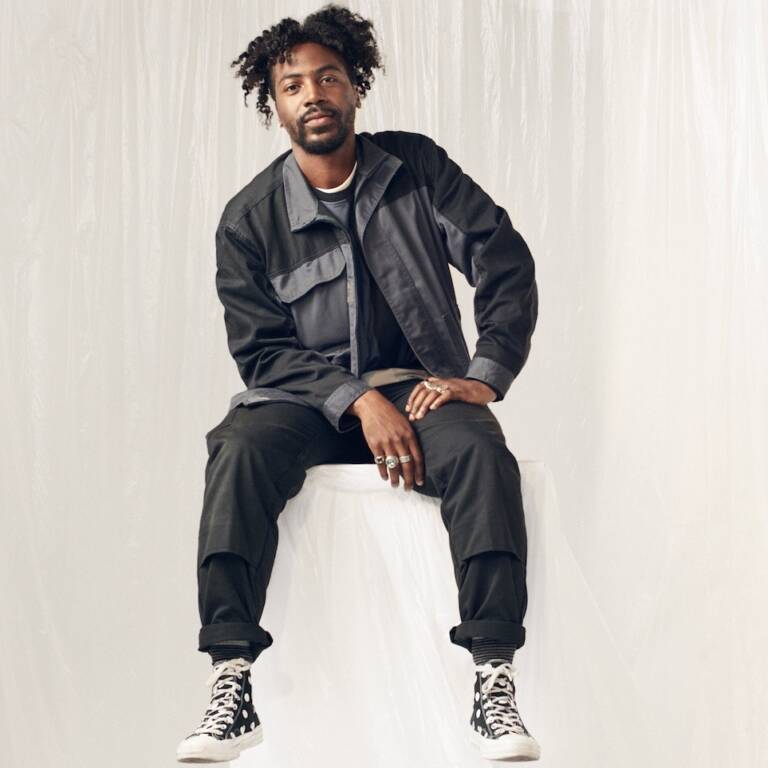
Joel
Boyd
United Kingdom
Visual Artist — Textiles / Fashion Design
Artist Website
What is your artistic practice?
I am a fashion designer.
On what projects are you currently working?
My latest project is an adaptation of one of my first projects I ever worked on. It is a fashion collection inspired by pioneer black surfers looking at surf culture and surrounding elements such as marine life, surfing iconography, etc.
What is the most relevant conversation that you remember having during your residency at Arquetopia?
I found all of the conversations that I had with Francisco and Nayeli really thought provoking, inspiring and relevant, but if I had to pick one, I think it would be the last conversation we had. We spoke about various texts, one called “Text and Textile”, and then we began to discuss another text, “Woven Heaven, Tangled Earth”. Both texts were interesting because they mentioned the storytelling aspect of cloth which is something we try to do with clothing, but this spoke of it on a level that I’ve never considered, so I found that very insightful.
What changed after your residency at Arquetopia?
I think it opened my eyes to looking at my practice through a new lens. The talks with Francisco and Nayeli were really pivotal because they made me think about things I hadn’t and when you are faced with those types of realities it makes you rethink a lot.
How are artist residencies important to the artistic practice?
I find them a great way to refresh yourself. When we have a practice, I think that we don’t tend to learn new things once we feel we are in a self-sufficient place, but it allows to leave your norm and enter a new world fresh for a brief period of time, which I think we as creatives need to do in order to keep the spark alive.
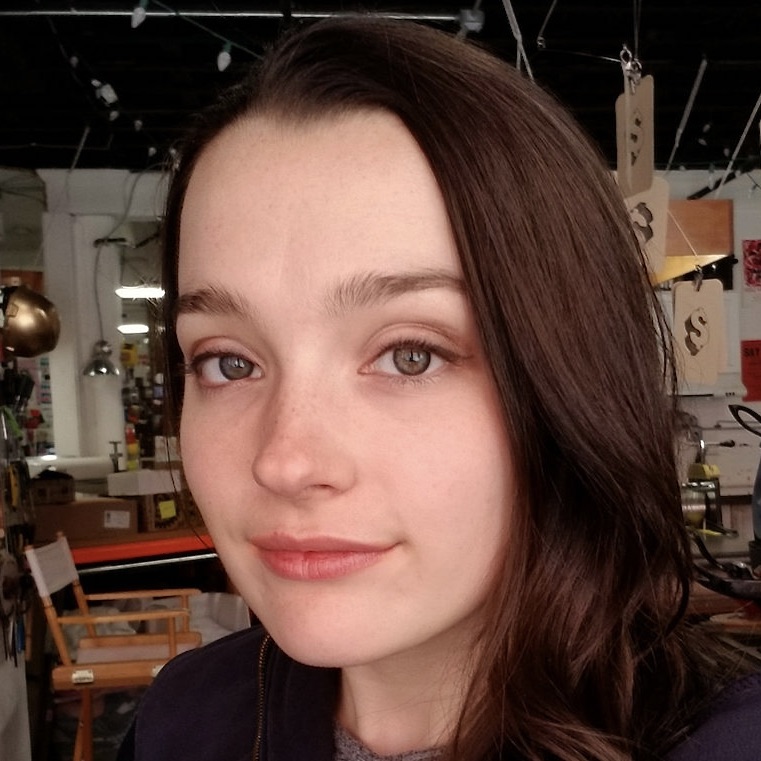
Quincy
Brimstein
USA
Visual Artist — Printmaking
Artist Website
What is your artistic practice?
I’m an artist based in Portland, Maine. A majority of my work is printmaking based. Unlike most traditional printmaking, I usually don’t create editions. I use the multiple prints and the unique textures within them to reinvent imagery by using collage techniques.
On what projects are you currently working?
I recently completed a fellowship at Pickwick Independent Press in Portland, Maine. The fellowship, Printers Without Margins, allows for individuals to create radical printed matter with a social message to share with the larger community. The social message I chose to focus on was volunteering and idea that free-time is a privilege that can become a vehicle of positive change. Now that I have completed the fel- lowship, I’m very interested in continuing to incorporate text into my imagery and I have been writing a lot to inform my visual practice.
What is the most relevant conversation that you remember having during your residency at Arquetopia?
The conversations I had with Francisco and Nayeli were very insightful and illuminating. I found our most interesting and multifaceted conversation was regarding the politics of space and how its crucial to consider the audience and how their background relates to the experience of viewing. I was particularly moved by the idea that the history of art has always favored power and has established many artists as being the “masters of time” thereby positioning the viewer as “stuck in space.” Additionally, we discussed who has the right to represent specific places and the complex histories that permeate landscape art. From this conversation I began to ask: when depicting landscapes and ecology, who is the artist claiming space for and why? What is the source of this place and what is the epistemology of that area?
What changed after your residency at Arquetopia?
After my residency at Arquetopia, I developed a critical curiosity for many topics and areas of art. Many of the articles that I read about Mexican art history revealed that art was used as a tool for colonialism. Now my eye is trained to recognize this phenomena in art and media which can be a startling and illuminating realization. I was also lucky enough to continue traveling throughout Mexico after my stay at Arquetopia. I traveled with new friends and sometimes traveled alone and so I really had to trust my intuition when navigating these new spaces. I found friends in the most unlikely of situations and am forever grateful for all the great connections I made in Mexico.
How are artist residencies important to the artistic practice?
As a recent graduate, I am still developing my artistic practice and the financial flexibility to regularly and consistently produce art. Artist residencies have provided me a supportive and immersive environment to continue my exploration and education. I go into each residency with a the goal of learning new techniques and connecting with other artists from different backgrounds than my own. International residencies are also great opportunities to travel solo.
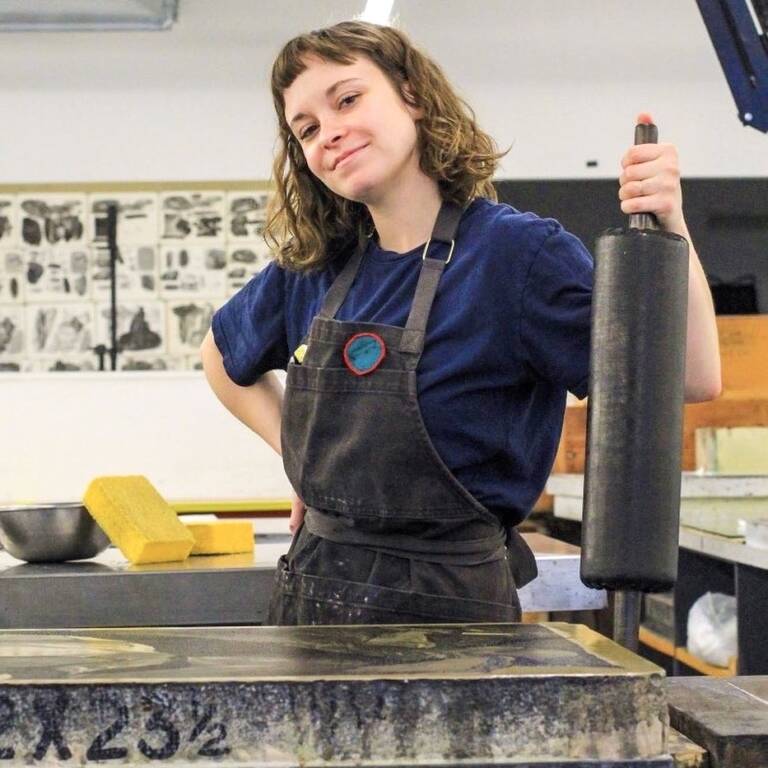
What is your artistic practice?
I am a printmaker who also works in handmade paper, ceramics, and book arts. My practice is heavily process based, exploring the connections between material, thought, and print in relation to reimagining and reframing memories of landscapes into considered narratives.
What has been your artistic process during the residency?
I became interested in this idea of “mapping” and how to connect experiences and feelings we have with the world we see around us. I became interested in creating a map of thoughts and land together. Often when we think back to past experiences, how we are able to remember the full account is by recalling where we were at the time and the things around us. I felt creating work at Arquetopia in this mindset directly related to what my residency focused on: creating Natural Silkscreen Ink. My final project was a ’zine titled, “Void Mapping”, which contained my thoughts during my time in Oaxaca, silkscreen printed imagery using natural inks, and printed on my handmade cotton paper.
Which has been the text, essay or quote that you read at Arquetopia that most influenced your practice and why?
My favorite was Performing the Fantasy of Mobility While Enacting the Violence of Immobility by Francisco Guevara. I often think about the power of mobility in my work as someone who has often felt the effects of immobility in her life. I really enjoyed how it covered the systems of power that decide the rates of mobility and the history of why this is important to think about in our daily lives. I also think that my focus of “mapping” and “void” during the residency was greatly influenced by this work. One of my favorite quotes from the article is: “The capacity to move implies the condition of freedom, the ability to freely move through time and space. However, mobility is never just the fact of movement, it is a representation that carries several burdens, including how it is experienced and its effects.”
What is next in your artistic practice after the residency?
I am currently rethinking my visual practice in response to my residency. I am taking some time to write, sketch, and rethink how I can continue these thoughts I had during the residency so they can continue to grow and challenge my previous practice, beliefs, and systems of making.
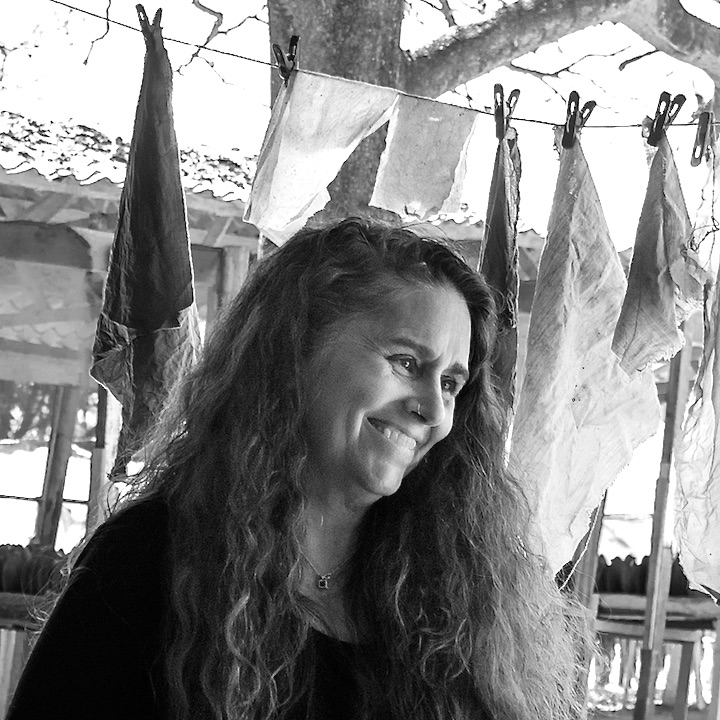
What is your artistic practice?
I am an installation and mixed media artist. I have a passion for extracting color from nature to use in my creative practice.
On what projects are you currently working?
Thanks to the hand-dyed textiles I created from organic material sourced in Oaxaca during my residency at Arquetopia, I am currently building a series of mixed media two-dimensional pieces on canvas. Simultaneously, I continue my exploration of natural colors by experimenting with new substrates including paper and testing new mediums like natural ink. All of this activity informs my ongoing installation practice where I’m pushing the limits of organic dyes by incorporating them into my ephemeral sculptures in ice and bioplastics. I’m excited to place a kinetic abaca fiber installation, Swizzle Sticks, in a three-month public exhibition in the Seattle area this summer (July-October 2020), and I will have my first full-length print feature highlighting the influence natural color has had on my artwork in What Women Create.
What is the most relevant conversation that you remember having during your residency at Arquetopia?
I have fond memories of several conversations about creativity and artistic practice during my residency in Oaxaca. The weekly discussions with Francisco and Nayeli were rife with historical critiques that challenged the common misperceptions perpetuated by the Western Imperialist agenda and its impact on the myth of the artist. It was a refreshing perspective that has provided an opening for a shift in my mindset. We also had meaningful conversation about the artist’s responsibility to discover the ‘why’ in their unique voice and freely share their vision without expectation.
What changed after your residency at Arquetopia?
After my residency at Arquetopia, I had a deeper understanding of natural dye material and technique, which in turn has elicited more creative questions and an insatiable curiosity to fuel my pursuit of nature’s palette. I have returned to my home studio with a new confidence and an expansion of creative ideas rooted in the world of dye and earth pigment.
How are artist residencies important to the artistic practice?
Beyond the priceless experience of immersive creative time dedicated to one’s art practice, a residency is an excellent time to take risks and push all boundaries. Change of any kind – environment, culture, routine, medium, etc. – brings us alive, and in this energetic shift, expansion is inevitable. I intend to seek artist residency opportunities annually to broaden my creative vision and celebrate the wonder of being an artist.
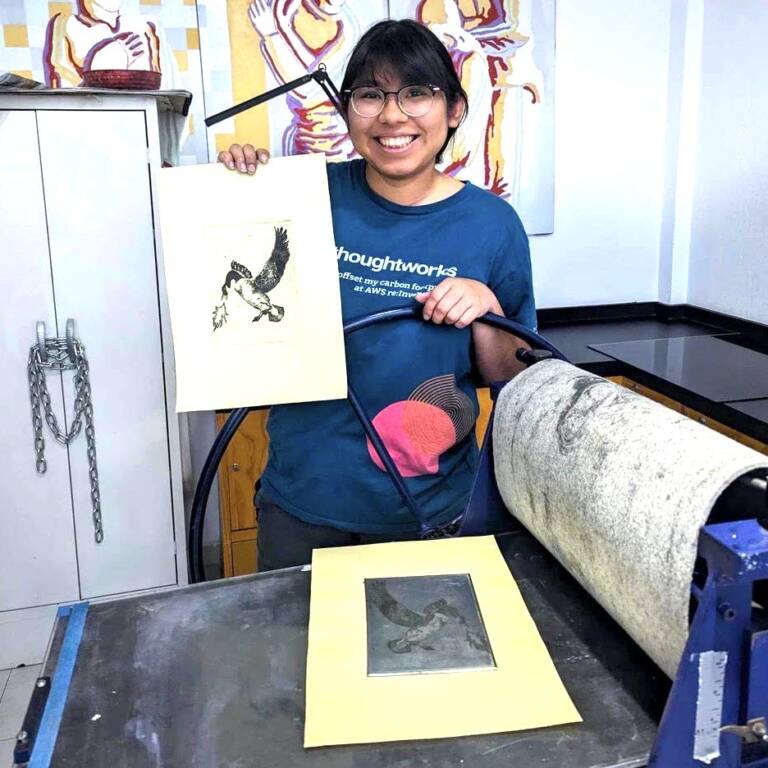
Carla
Castro
USA
Visual Artist — Printmaking
Artist Website
What is your artistic practice?
Intaglio printmaking.
Which has been the text, essay or quote that you read at Arquetopia that most influenced your practice and why?
The Mexican Picturesque. This reading influenced my practice since it has a lot to do with the time period of the stories I am illustrating. The description of the 19th century travelers that visited and heard about Mexico made me think about how to represent my illustrations accurately with understanding the history and modern thinking of today. How the depictions of the past are still prevalent today and what I can create to resonate it to the average Mexican viewer and Mexican American viewer. What subtle details I can create in my work that is inherently only in a Mexican setting. The reading really made me start considering much more than just creating a piece that is a direct translation from a page.
What is next in your artistic practice after the residency?
My hope is to continue creating illustrative works on more stories and legends that are common knowledge in Mexico and bring that to the United States to the Mexican American community and to anyone that love stories. I hope to create a book and collect stories to even urban legends and illustrate them in three story sequences for engagement.
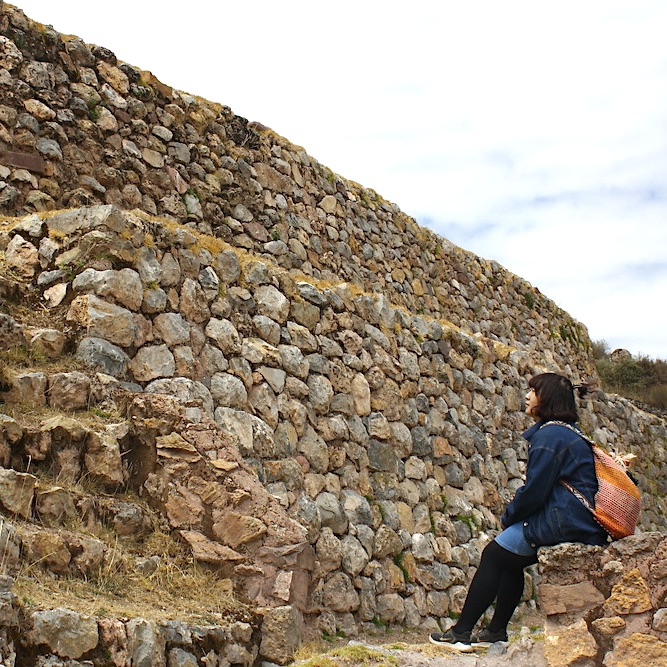
Yuchin
Chang
Taiwan
Visual Artist — Illustration
Artist Website
What is your artistic practice?
I am an illustrator, visual artist and storyteller.
On what projects are you currently working?
During the time in the residency, I was working on a picture book project based on my own writing, I Would Like to Travel with the Monster.
What is the most relevant conversation that you remember having during your residency at Arquetopia?
Oh, that’s quite a bit, I mean, most of the conversations between me and Maritza about foods were quite memorable. I liked when I was discussing different ideas with other fellow artists; I liked talking about the seasons changing of Peru with Luiselen; I also enjoyed a lot exchanging thoughts with lovely Nayeli and Francisco during our meetings. Everything could be most relevant about this experience, from how those interactions have changed my way of understanding about this world, to creating a long series of interests and curiosities about how the world in front of us was formed.
I have learned about how to find the purpose of my work by self questioning with the right questions, and to remind myself that overall, we came to this world alone, and would go alone as well.
What changed after your residency at Arquetopia?
Nothing and everything, I guess. Life still goes on the way it was, kept on observing, being curious, walking around, painting and all that. But at the same time, I changed the way I look at the world that I have been in for almost three decades. I figured how complex my working process is, that I am really obsessed with layers of thoughts, research and the combination of multiple experiences within different senses. At the same time, I would like to present my thoughts with simpler, vivid images to engage with people.
As well, Peru and Arquetopia have given me amazing experiences of learning, literally from every second while I was there, that created a whole new desire for me to want to experience the same feeling more. It does give a better direction for me to decide what or what to do and where to go next.
On the art point of view, Peru definitely changed the way I look at colors, and creating layouts of landscapes. Also, I felt more comfortable and relaxed while sketching and coming up with ideas.
How are artist residencies important to the artistic practice?
I think residency programs are generally really helpful for my life as an artist; it creates a safe space and time to not just create my art works, but to feel relaxed about experimenting, learning and to do nothing (which is sometimes really important). As well, having opportunities to live in whole other environments for a couple weeks does create the excitement of art practice. Recently, I just did a residency in Taipei, my home town, even though it was where I grew up, but I got to see the area and the city with a newcomer’s eyes, which was pretty amazing.
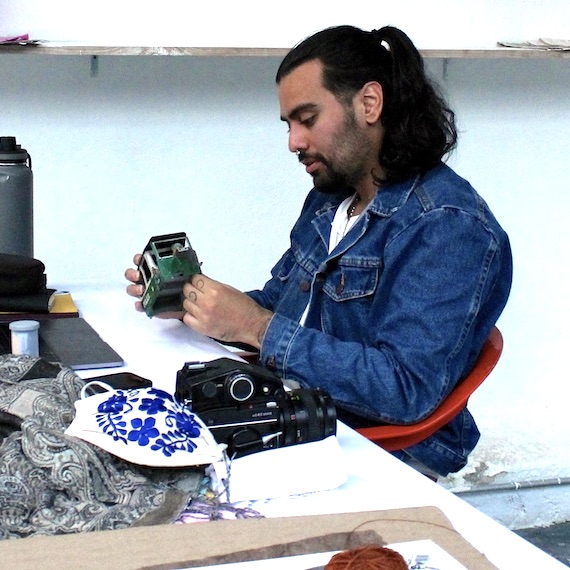
José "Chicle"
Corcoles
USA
Visual Artist — Multimedia
Artist Website
What is your artistic practice?
My artistic practice heavily involves photography while incorporating collage and video elements.
On what projects are you currently working?
Currently, I am working on a buffet of new projects; most importantly, I’m developing a portraiture series on hickeys (yes, the love bites on necks) looking at them as performance and love as resistance. I’m also developing more abstract photography projects focused on exploring the tension in Chicago neighborhoods between class, gender and culture.
What is the most relevant conversation that you remember having during your residency at Arquetopia?
The most relevant conversations I had during my residency revolved around the de-centering of the artist in the art making process, it’s something I’ve been able to carry into my classrooms as an art teacher and hold more meaningful conversations around the topic.
What changed after your residency at Arquetopia?
So much changed after the residency for me! What followed was a burst of energy. I rented an artist studio space, I moved into a new apartment, got a dog. Those things are small in comparison to the effect the residency had on my work, my thinking and it reflected in my curriculums and my art making.
How are artist residencies important to the artistic practice?
The residency changed my life, I’m aware of how dramatic that sounds, but that is truly how I feel.
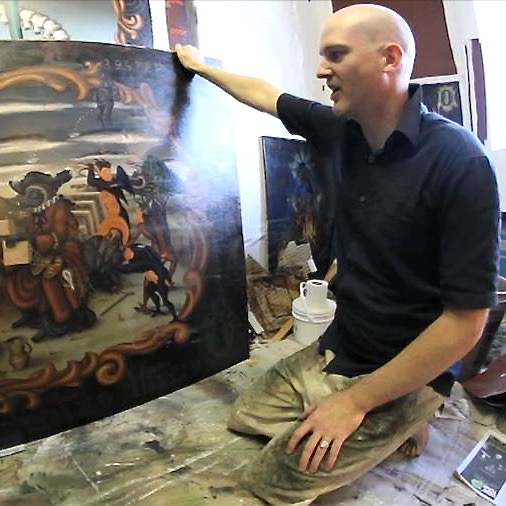
Matt
Couper
New Zealand / USA
Visual Artist — Painting, Performance
Artist Website
What is your artistic practice?
Primarily painting as main artistic practice, but also performance.
On what projects are you currently working?
New paintings for a group exhibition and art fair in New Zealand next year. I’m just about to leave the USA for a month to attend a group exhibition I’m part of – ‘Zoocryptage’ at Crypte Saint Eugiene in Biarritz, France and I’ll be artist in residence at Arthémuse in Normandie, France.
What is the most relevant conversation that you remember having during your residency at Arquetopia?
They were all relevant! I think the best aspect of the conversations was getting a range of answers about the history of Puebla and cultural vagaries that helped me to start developing an understanding of the area and history.
What changed after your residency at Arquetopia?
My time at Arquetopia really piqued my fascination with Mexico and I really want to return and explore more cities! I’m actually still processing a lot of the things I learnt at Arquetopia and researched in Puebla and Mexico City.
How are artist residencies important to the artistic practice?
Very. From a pragmatic viewpoint, they allow for a concentrated continuity of time to work on your art. Context and location is important too. Being in a new city or country sometimes throws a spanner in the works of your practice and makes you re evaluate your work. It can feed in new information you may not be able to respond to in your own studio context. Being around other artists is also a great time. You get to compare your art, processes and thoughts regarding your art and life in a safe environment.
What is your artistic practice?
I’m a painter.
On what projects are you currently working?
In my practice, I work in series, which consist of bodies of work centred around a specific theme and way of working. Upon returning to Canada, I presented my most recent work in a show titled, “Shores of Lost Islands.” It consists of my own fanatical versions of maps that are told from a subjective point of view, observing the ever changing rhythms of the world. They aim to highlight the function of interpretation. Historic events often hold Eurocentric views, as they are told through the lens of the European ship captains and naturalists. These stories have shaped our story of history, giving power to the explorers who colonized the West. I am in the initial all stages of creating a new body of paintings. I am testing out ideas and experimenting in the studio. This work will be tied to color and collage/quilting, and will (hopefully) implement some of the dyed wool that I produced in Teotitlán.
What is the most relevant conversation that you remember having during your residency at Arquetopia?
I was introduced to the power of interruption. Interruption can create, challenge, and change. It details progress, it impedes policy. Interruption is what makes history. Something as small as interrupting someone mid-sentence, takes away their train of thought, their voice, their spotlight, and their power. Just imagine what interruption on a larger scale can achieve.
What changed after your residency at Arquetopia?
What first seemed like we were speaking about art — my own art’s shadow, it’s function beyond my studio walls, its ability to have (positive or negative) effects, and the alternative readings outside of the context that I desired for it — became the same bullet points that would perform as clues in deciphering the broader systems in which we live and the structures that class, culture, nations, etc., are built on. A similar way that understanding historical context and asking questions to extract meaning from art, can be applied to the processes in which the world functions. I am a very intuitive and ethical-driven individual, and as such, my intuition questions the systems that it is faced with. By dissecting the history of our systems, we can understand their intention and meaning, thus providing a reason to believe in it. This subject interests me and fills my curiosity. That same ethically guided heart wants to believe that the standards and rules that govern our lives were put in place to help each other and better our global society.
How are artist residencies important to the artistic practice?
For me, they are a form of continued education and an opportunity to naturally fall into a space where new perspectives arise. This can lead to growth, both personally and in my art practice.
Romina
Del Castillo
Peru / USA
Visual Artist — Multimedia
Artist Website
What is your artistic practice?
Multimedia.
On what projects are you currently working?
I’m working on a series of interpretations of ancient Peruvian textiles and iconographic language into straw marquetry. My focus is on pieces that are found in major museums around the world. This project is an exploration of culture but also colonialism in art. How were these items made, what do they represent, and how did they get into these institutions so far away from the place they were created.
What is the most relevant conversation that you remember having during your residency at Arquetopia?
We had many insightful conversations during my residence at Arquetopia, but what made a profound impact was learning about the concept of ‘epistemicide’ or the destruction of knowledge and language as a colonizing tool. This violent and systemic effort created hierarchical structures that deemed knowledge and wisdom from the Global South as inferior while elevating European culture as the highest canon of thought. This Eurocentrism, so felt and normalized in my own experience in academia, had never been challenged to this degree. This conversation shook me to my core, and the questions it brought up still reverberate in my head: How can we break beyond a capitalist, patriarchal and western-centric world into a decolonial pluriversity that values and cherishes our cultural differences? I still don’t have the answers and my search goes on.
What changed after your residency at Arquetopia?
The month I spent in Urubamba at Arquetopia was magical and just the reset I needed for my practice. Getting out of my comfort zone and my routine, learning to work in a new environment while getting accustomed to the elevation, being surrounded by the most epic mountain landscape, playing with new materials and being introduced to new concepts and ways of thinking. It was a soul nourishing experience and I came back home to Oregon reinvigorated, inspired, and ready to create.
How are artist residencies important to the artistic practice?
It is important for artists to always feed our curiosities and find new ways of learning so we can continuously grow and our art can evolve. In the United States where arts education is extremely expensive and out of reach for the majority, artists residencies and mentorships can be a formidable alternative to a more traditional academic path.
Because my residency at Arquetopia was postponed by a year due to the pandemic, I took the time to find a couple of grants that significantly helped me with the traveling costs and the burden of taking a whole month off work. I want to encourage other artists to pursue these experiences for growth and learning, and to apply to grants. And to our governmental and philanthropic institutions to continue elevating the contributions of artists and providing us with financial opportunities so access to these spaces can be equitable.
Priscilla
Dobler
Mexico / USA
Visual Artist — Multimedia
Artist Website
What is your artistic practice?
I am multimedia artist.
I do a little of everything. I am currently working on a series of woven paintings based on the layering of images from different cultures that have influence Mexican art-identity. In addition, I am also weaving cotton thread panels called Fallas en la Infraestructura.
On what projects are you currently working?
I am currently working on a series of woven paintings based on the layering of images from different cultures that have influenced Mexican art-identity. In addition, I am also weaving cotton thread panels called Fallas en la Infraestructura.
What is the most relevant conversation that you remember having during your residency at Arquetopia?
All of my conversations with Francisco Guevara at Arquetopia were mind blowing. He has so much knowledge on the political and social structures of gender and imagery. I have always been interested in the representation of images and where they come from. One of my most relevant conversations with Francisco dealt with how the same imagery is used to represents gender, race and social class. As a female artist of color, you have to challenge the existing notations and preconditions of the exotic and seductive representation of Mexican women, to create a new image that not only represents yourself but the systematic colonization of cultures and influences of those cultures that represent who you are. It’s too simple to re-create an image that already exists and we are precondition to understand that image. I want the viewer to spend more time analyzing the layers in my paintings rather then just saying that’s a cool painting.
What changed after your residency at Arquetopia?
The way I view art changed the most. Especially in figurative paintings and how individuals are represented in those paintings. I have a great desire to continue researching and exploring different processes of creating art.
How are artist residencies important to the artistic practice?
Artist residencies are very important to the artistic practice because they allow the artist the opportunity to play and discover new techniques. In addition, an art residency like Arquetopia, will challenge you to rethink of the process and provide the tools in research to increase your understanding of art, history and social structures.
Emily
Donovan
USA
Visual Artist — Multidisciplinary
Artist Website
What is your artistic practice?
I am a painter and multimedia artist. I explore color including natural pigments and plant-based materials.
On what projects are you currently working?
I am preparing a show that includes paintings created during my residency called Practical Source. The exhibit opening in late April at the Edina Art Center reflects on what I learned about natural color and includes ideas about different engineering systems that supply natural resources, i.e. water, electricity and how they vary and influences habits of everyday life.
I am also a recipient of a 2019 Minnesota State Arts Board Artist Initiative Grant and am beginning a new body of work called Migration and Motion that looks at human interaction and patterns of migration of birds in Minnesota. In this project, I will continue my exploration of natural pigments and color and I am partnering with area birders, neighbors and the local Audubon chapter to share their stories of migration visually.
What is the most relevant conversation that you remember having during your residency at Arquetopia?
Arquetopia supplied so much insight about during my residency and afterwards, especially as I continued to travel in Cusco and within the Sacred Valley. Discussion art, literature and the readings we were assigned provided rich discussions with the other artists as we found something that related to each others work and interests. Specifically, I had the best conversations with the artists and Astrid about color and the use of natural dyes. Everyone loved to join in and help with foraging and finding the plants and materials we used and what they colors we could make.
What changed after your residency at Arquetopia?
I’ve a noted a different approach to my work and habits in my life after returning home. I find that there is certain ease to everyday life, especially in the US that I in many ways took for granted. A have a more mindful approach to my water use, electricity and the things I own or buy. My studio is huge, bright and sunny and I have many resources are available to me and ready to purchase, but so different than how I made work in Urubamba. I think of the trips in the collectivo with Astrid to find Cochinilla or paper in Cusco and the time and effort and time it took to find things, reminding me to remember what I have is valuable and precious. I am more careful about what I have and how I use it.
I also think about color in a new way with additional meaning that includes rich tones, smells and adventures. Color now holds stories and history for me from Maria’s instruction and the insightful readings provided by Arquetopia. I think of green as chill’ka and large pots of boiling greens and red as cochinilla, remembering the wonderful neighbors in Urubamba that helped me find the insects fresh when I was unable to find the store in Cusco. I look at the variety of tones I created and their vibrancy and I remember Maria’s instructions, our way of communicating without a common language, sitting on the floor while smashing plants with rocks and the results of color she made look so easy from generations of knowledge. I look forward to using these skills and knowledge in my future work.
How are artist residencies important to the artistic practice?
Changing your environment and comfort zone provides a new test for your work. It makes you diverge from your normal, comfortable or trained practice and forces confrontation about what and why you are doing things. For myself, it made me face what is easy about the way I make work and challenged me too look at new solutions and ideas about what I want to create, why and the message I want my work to convey.
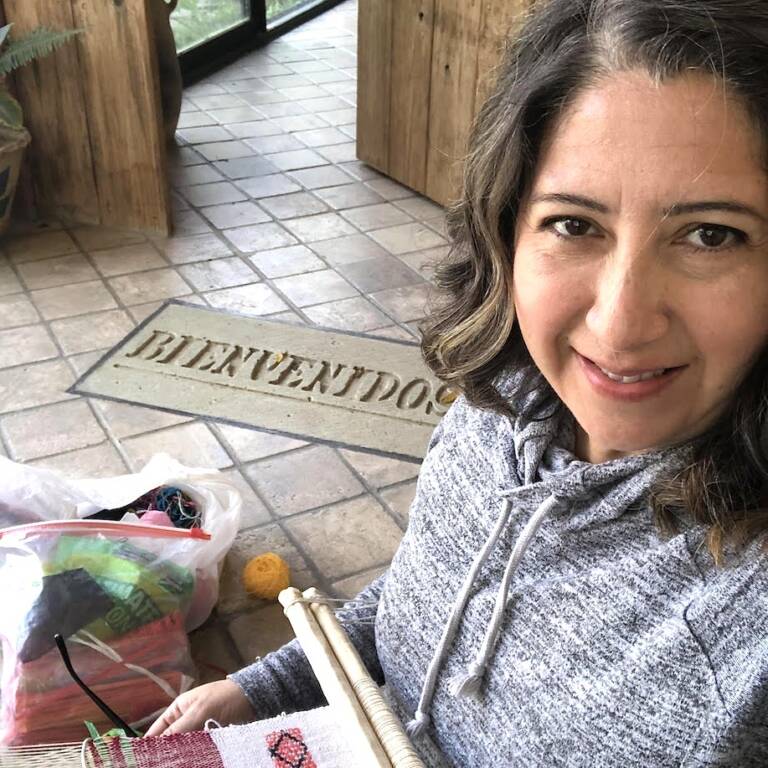
Laura
Drey
USA
Visual Artist — Multidisciplinary
Artist Website
What is your artistic practice?
My artistic practice is interdisciplinary.
On what projects are you currently working?
I’m currently working on a couple of things—Primarily, a creative writing project. Secondarily, a sculptural/installation piece that incorporates hand made papers and back-strap-loom weaving techniques that I learned while in Oaxaca.
My primary project is a creative writing project that is funded by The Idea Fund, a re-granting program administered by DiverseWorks, Aurora Picture Show, and Project Row Houses and funded by The Andy Warhol Foundation for the Visual Arts.
With this project, I have been able to travel and immerse myself into the Texas border towns that make up the Rio Grande Valley. These towns were navigational stopping points for my ancestors as they migrated to the United States from Mexico. With this gained experience I am producing a vignette of short stories and poetry that reveal cross-generational ways of belonging in the world as I draw from the experiences of my grandmother, my mother, my daughters, and myself. The work speaks to the complexities of migration, focusing on the nuances of personal and cultural identities as they intersect with themes of geography and government, labor and movement, economics and culture. There is to be a public reading and performance of the work to share with the larger community.
What is the most relevant conversation that you remember having during your residency at Arquetopia?
I remember Francisco often saying “The residency begins once you leave here” and I wholeheartedly agree with him. It’s the residency that keeps on giving and giving. All that I’ve experienced through my time in Oaxaca has been profound. There was relevancy in everyday encounters and conversations with the fellow residents, instructors, staff, and the community. Everyone coming from different points and sharing their perspectives and experiences in life was an invaluable source of shared knowledge and information. The readings and discussions regarding the politics of race, class, and gender were particularly insightful and significant.
What changed after your residency at Arquetopia?
A greater appreciation for Mexican art history and the deepened awareness of its complex histories that are apart of my cultural heritage and the role I have in its livelihood. The stress-free and low key technology-based environment influenced my practice as it helped me adopt a more solitary and organic approach to working.
How are artist residencies important to the artistic practice?
The immersive environment is vitally important to an artist’s practice. It allows one a safe place to explore and build a deepened understanding of self-questioning, exploring intuition, navigating spaces and new places, creating new relationships and connections.