Missed the October 1 Deadline for 2027
and remaining spots in 2026?
E-mail Us at info@arquetopia.org
for Program Info, Application Materials, and an Extension
including Day of the Dead, and Short-Term Programs
The Alchemy of Sacred Color:
Pre-Columbian Coloring Techniques Instructional Program
Location: Puebla
This profound and comprehensive residency program offers competitive professional opportunities for emerging and mid-career national and international artists, researchers, illustrators, printmakers, and interdisciplinary practitioners aged 20 and over interested in the visual languages, material techniques, and epistemologies of Mesoamerican codices.
PRE-COLUMBIAN COLORING TECHNIQUES RESIDENCY PROGRAM DESCRIPTION
The Pre-Columbian Coloring Techniques Instructional Program acknowledges the rich artistic heritage of Mesoamerican codices and offers a nuanced perspective that connects traditional tlacuilo —painter-scribes trained in complex artistic traditions— painting techniques with contemporary artistic practices.
This 3-week mentored production program includes 27 hours of master instruction by Arquetopia’s studio maestro, who teaches techniques historically associated with the extraction of color, the production of pigments used on amate paper, and the painting methods employed in codex creation. Instruction focuses on learning and experimentation with traditional pigments, organic and mineral color preparation, amate painting processes, line work, and related codex painting techniques. Instruction is in Spanish, though participants need not speak Spanish to successfully complete the course. Individual mentoring is provided by our directorial and curatorial staff for personalized project guidance and critique. Participants also work independently in our spaces.
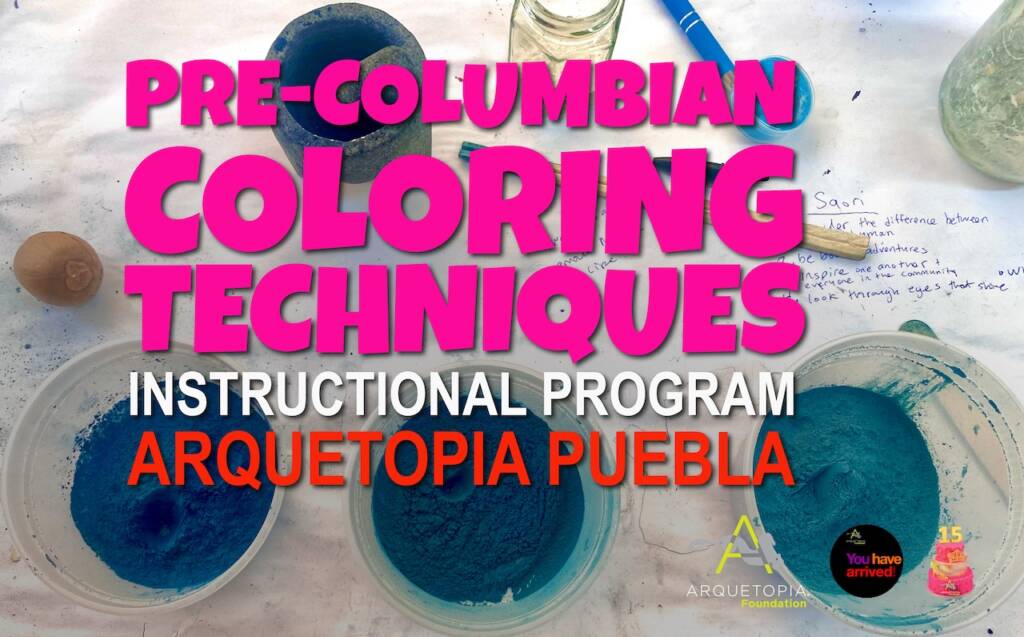
Instruction focuses on the preparation and use of organic and mineral pigments historically associated with codex production, including cochineal, Maya blue, earth pigments, and organic binders. Participants also experiment with painting techniques on amate paper, natural binders, folding structures, line work, compositional painting methods, and traditional techniques employed by tlacuilos in the creation of painted manuscripts.
Instruction focuses on the preparation and use of organic and mineral pigments historically associated with codex production, including cochineal, Maya blue, earth pigments, and organic binders. Participants also experiment with painting techniques on amate paper, natural binders, folding structures, line work, compositional painting methods, and traditional techniques employed by tlacuilos in the creation of painted manuscripts.
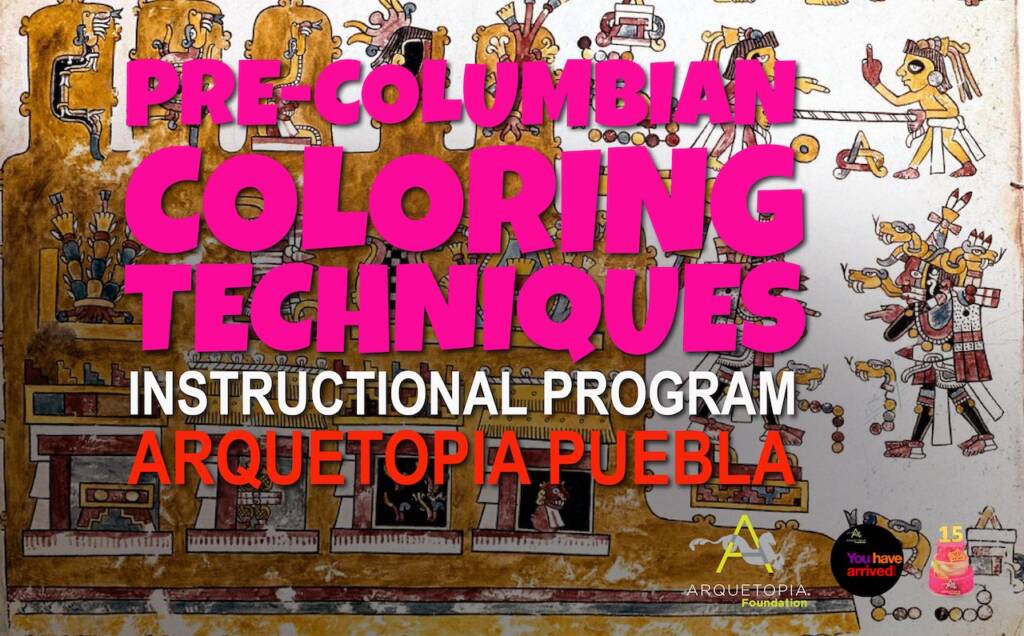
For centuries, Mesoamerican codices functioned as sophisticated systems of visual knowledge through which the cultures of ancient Mexico documented history, cultural practices, astronomy, genealogy, migration, geography, and complex relationships with the natural world. Produced by tlacuilos, codices embodied profound knowledge of color, materiality, and image-making rooted in observation, spirituality, and interdependence with nature. Through highly specialized techniques, tlacuilos transformed insects, minerals, plants, smoke, earth pigments, and botanical binders into refined systems of color and visual communication. Within these traditions, color was not merely decorative, but a living material connected to memory, cosmology, territory, and cultural continuity.
The artistic traditions surrounding codex production emerged from systems of knowledge developed over centuries throughout Mesoamerica, whose visual and material practices existed outside dominant colonial models of art and history. These traditions reveal sophisticated understandings of painting, writing, memory, and material process as interconnected forms of knowledge transmission. The creation of codices required extensive technical mastery in the extraction, preparation, and stabilization of natural pigments capable of preserving histories and sacred knowledge across generations. Following the colonial invasion of the Americas, many codices were destroyed, displaced, or suppressed, while these systems of knowledge were systematically marginalized.
Codices operated through visual systems capable of communicating layered forms of meaning beyond alphabetic writing. Through image, color, line, sequencing, and spatial organization, tlacuilos constructed complex narratives that preserved collective memory, ritual knowledge, territorial understanding, and historical continuity. Yet despite centuries of erasure and extraction, the material practices associated with codex production survived through continuity and adaptation, carrying forward enduring relationships between artistic practice, nature, material transformation, memory, and cultural survival.
PRE-COLUMBIAN COLORING TECHNIQUES RESIDENCY PROGRAM METHODOLOGY
1. The Connectivity of Concepts
The Pre-Columbian Coloring Techniques Instructional Residency Program connects the material, historical, and artistic dimensions of Mesoamerican codex painting through direct engagement with traditional pigment extraction and tlacuilo painting techniques. By learning processes historically associated with amate manuscripts, participants develop a deeper understanding of how color functioned not only as an artistic medium, but as a form of knowledge connected to territory, ecology, spirituality, and cultural continuity. Through material experimentation, lectures, and engagement with the local context, participants explore how codices preserved systems of memory, visual communication, and relationships with nature through highly sophisticated methods of painting and color production. This approach situates artistic practice within broader conversations surrounding material culture, non-dominant systems of knowledge, and the enduring legacy of Mesoamerican image-making traditions.
2. The Practice of Unlearning
This program encourages participants to reconsider dominant understandings of painting, writing, and artistic authorship through the study of codex traditions and tlacuilo practices. By engaging directly with historical methods of pigment preparation and amate painting, participants confront inherited assumptions surrounding art history, material hierarchies, and the separation between image and language reinforced through colonial frameworks. The process of learning from codex traditions becomes an exercise in unlearning linear conceptions of history and representation, opening space to understand painting as a system of memory, material transformation, and knowledge transmission. Through this process, participants develop a more conscious relationship with color, natural materials, and the historical significance embedded within codex painting techniques.
3. The Rhythm of Creating
Within the program, artistic practice emerges through sustained engagement with the rhythms of extraction, preparation, painting, and experimentation. Participants work directly with natural pigments and traditional codex painting methods, allowing material processes to guide reflection, intuition, and technical understanding. The repetition involved in grinding pigments, preparing color, applying line work, and working on amate surfaces creates a process in which making becomes inseparable from observation and discovery. This rhythm encourages participants to understand color not as a static visual element, but as an active material shaped by ecology, labor, transformation, and time. Through this continuous dialogue between hand, surface, and material, artistic practice becomes a space for reconnecting with slower, process-oriented forms of image-making rooted in Mesoamerican painting traditions.
4. The Ethics of Movement
The history of codices and their pigments is deeply connected to movement—through trade, colonial extraction, displacement, and the circulation of materials and knowledge across territories. Pigments such as cochineal and indigo traveled far beyond Mesoamerica through colonial networks, transforming global artistic production while often obscuring the systems of knowledge from which they emerged. Within this program, participants are invited to reflect on the ethical dimensions involved in working with materials and techniques shaped by these histories. Through the study of codex painting traditions, the program encourages greater awareness of the relationships between artistic practice, ecology, cultural continuity, and historical responsibility. The movement of color, materials, and visual knowledge becomes not only a historical condition, but also an opportunity to consider how contemporary artistic practices engage questions of reciprocity, preservation, and respect for the histories embedded within material processes.
Instruction is offered in Spanish, though participants do not need to speak Spanish to successfully complete the program. Participants also work independently in Arquetopia’s studio spaces and have access to Puebla’s historical archives, artistic communities, and material culture as part of their research process.
PROGRAM DURATION / TIME PERIOD
Sessions are 3 weeks, with option to extend for 1 to 2 additional weeks of continued production as a standard Art, Design or Photography Program. Dates are not predetermined but are proposed by the applying artist.
WHAT THIS COMPREHENSIVE INSTRUCTIONAL PROGRAM INCLUDES
Technique Instruction:
27 hours master instruction, at 9 hours per week
Staff Support:
A weekly meeting with our directorial and curatorial staff for personalized mentoring, research assistance, project guidance, and critique
Accommodation:
• Furnished, private bedroom
• 24-hour access to the kitchen for participants to prepare their own meals; meals/food are the participant’s responsibility
• Wireless Internet
• Use of Arquetopia’s common spaces including outdoor terraces
• Shared, serviced (single) bathrooms with modern fixtures and showers
Housekeeping
Studio Workspace:
• 24-hour access to large and bright, shared art studio with generous natural light
• Personal workspace with a large table and wall space
• Some tools provided
• Materials and supplies for the instructional course provided
• Materials and supplies for additional project production not included but available for purchase locally
PROGRAM TUITION INFO & APPLICATION DEADLINES
E-mail info@arquetopia.org for tuition info and application deadlines for this program.
TO APPLY
Click here to apply for this instructional program.