
Missed the October 1 Deadline for 2027
and remaining spots in 2026?
E-mail Us at info@arquetopia.org
for Program Info, Application Materials, and an Extension
including Day of the Dead, and Short-Term Programs
Outstanding Arquetopia Alumni
F - I
Post-Residency Interviews and Feedback
Since its beginnings in 2009, Arquetopia Foundation has hosted and mentored more than 1,300 artists, writers, art historians, curators, and researchers, from ages 20 to 92, from 112 countries worldwide, and from a wide variety of disciplines. Featured here are testimonials and feedback from many of the most outstanding alumni of our award-winning residency programs.
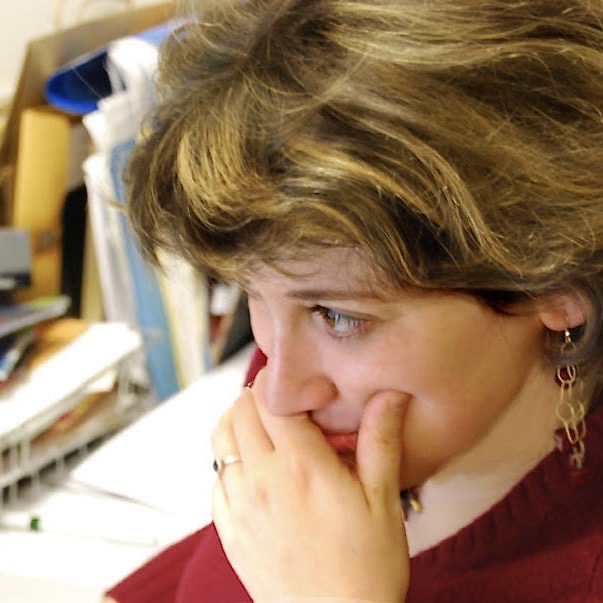
What is your artistic practice?
Experimentation and the use of digital technologies is a big part of my creative process. My main area of specialization is interactive large-scale video installations. I also have background in academic drawing and painting as well as graphic design. Unlike my digital work, which is very research-based and concept-driven, my drawings and paintings are more observational.
On what projects are you currently working?
During my artist residency, I started a series of watercolor paintings, which consisted of symbolic still-lives celebrating the rich traditions and cultural heritage of Mexico. I wasn’t very happy with the direction that the work was taking. The readings, educational field trips and the critiques, which were a big part of the residency experience, has helped me to move away from observational, realistic painting to a more conceptual approach to making art.
What is the most relevant conversation that you remember having during your residency at Arquetopia?
It’s hard to pick just one conversation or experience that was relevant because all parts of the residency were very meaningful to me: from the readings to the painting workshops to the critiques. I found the critiques, reading discussions and conversations with fellow artists to be especially valuable because they helped me to look at my artistic practice from a different angle and more critically. Phrasing work as a question, rather than a statement was one of the many indispensable suggestions that I received.
What changed after your residency at Arquetopia?
The international artist residency at Arquetopia gave me a better insight into the art of the colonial period as well as modern Mexican art. I really enjoyed the readings and the critical approach to art, which was emphasized during the program. It made me question the Western approach to art and introduced me to a different perspective/ a way of looking. Looking at the power distribution as it relates to art, the carefully crafted iconography and the color symbolism in colonial Mexican painting was an eye opening experience. The painting workshops, led by two professional local restorers, Lupe and Memo, were also extremely valuable, as they introduced us to the pre-columbian mural painting techniques, the novohispanic oil painting, and the history of the cochineal red. I have recently purchased the cochineal and is looking forward to experimenting with it further.
I teach graphic design at a community college in the San Francisco Bay Area. When I came back to the United States, I was very excited to share some of my experience and the new things that I learned at Arquetopia with my students. I updated the curriculum in order to place more emphasis on the social and cultural connotations of color. For example, in some of my courses, we looked at the history of the cochineal and discussed art as propaganda (specifically the use of religious iconography and color in colonial painting).
How are artist residencies important to the artistic practice?
The residency at Arquetopia was my first artist residency experience, and I could have not picked a better place to learn about Mexican history and art. The residency not only gave me a different outlook on art, but also helped me to approach my artistic practice more critically. Being able to receive honest feedback about my work was important for me. Seeing the work of other artists who were part of the program, was very inspirational. The residency provided a safe space for discussion and the exchange of ideas. It was kind of like a mini grad school experience. I would do it again in a heartbeat!
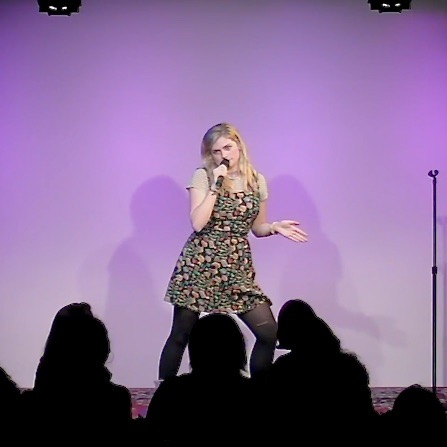
What is your artistic practice?
I make acrylic and multimedia paintings and drawings.
On what projects are you currently working?
I am currently working on producing an interactive painting show in New York with my friend and collaborator, Marissa Crider.
What is the most relevant conversation that you remember having during your residency at Arquetopia?
There were so many important and relevant conversations I had at Arquetopia that really shaped my artistic practice. I think something that keeps echoing in my head whenever I sit down to work is a conversation I had with Francisco. We talked a lot about how representations of the figure are inherently problematic. They can uphold and celebrate dominant culture and powerful bodies in ways that the artist may not be aware of. Francisco and I would sit down with my paintings and he would point out specific strokes and marks I made and would ask “why did you do that” “why those colors” “why that stroke” “why that shape”. Those conversations challenged my practice in such transformative ways. I’ll never think of my painting practice in the same way.
What changed after your residency at Arquetopia?
I think I have turned away from bodies and figures and more toward abstract compositions, focusing on colors and form. It also changed the way I think about my work and what I’m trying to communicate with my paintings.
How are artist residencies important to the artistic practice?
For me, the residency was so important to be able to have the space to explore and experiment within a structure. Arquetopia also stands out because it doesn’t let you aimlessly create, it is rigorous in the questions it makes you ask and accompanying academic material you’re expected to read. My paintings will never be the same after Arquetopia, and I am so grateful for my experience there.
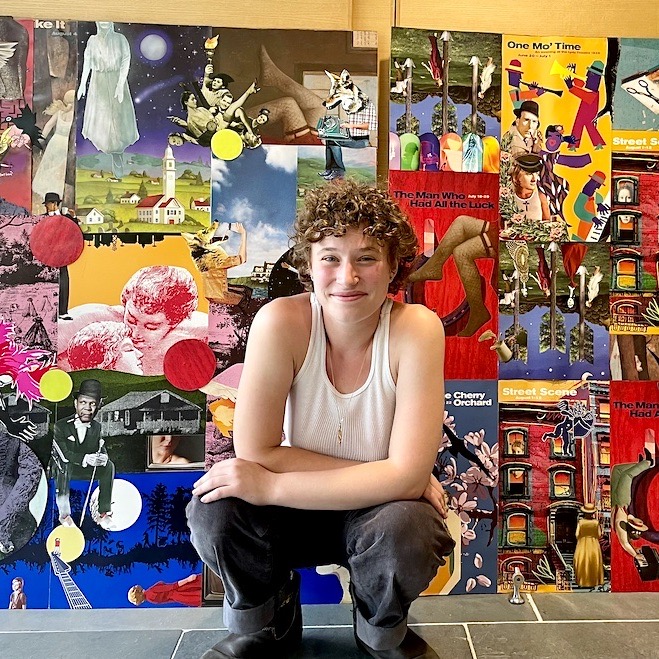
What is your artistic practice?
Collage.
On what projects are you currently working?
Currently, I’m working on two major projects. The first, which was a focus of exploration and development during my residency, is an abolitionist, early-childhood political education resource. The book hopes to provide resources and awareness for caretakers and their young children—specifically focusing on early abolitionist intervention for children racialized and socialized as white. Each page consists of a unique analog collage, which caretakers and their children will be encouraged to take apart and reimagine the information in a way that makes sense to, and excites their child. In this way, I hope that the book can provide caretakers with the opportunity to begin discussing race, class, and gender with their children, and for those children to delve into their own emergent understanding of how to move through space, and reach for real connection while being aware of the potential harm that they could cause. I pull heavily from Radical Black Feminist Scholars, including Audre Lorde, Bettina Love, Angela Davis and Saidiya Hartman, inspired by their call to interrupt the institutional flow of power, interrogate systems of discipline that police the concept of home, and commit to real connection.
Additionally, the artist collective which I co-founded in 2022—Boyz With Apple—will be bringing a devised piece of physical theater to the Edinburgh Fringe Festival. Purgatorio, inspired by Dante Aligheri’s Divina Commedia, will debut at theSpace Triplex in August 2023. For this project I will be working as a designer and scenographer, bringing together mosaic, stained glass and collage through an exploration of negative space.
What is the most relevant conversation that you remember having during your residency at Arquetopia?
In many ways, it feels difficult to pinpoint a specific conversation, since one of the components of the residency I appreciated so much was the interconnectedness and flow between readings and discussions each week. That being said, one pivotal moment that stands out was Fransisco’s succinct explanation of the relationship between space, place and landscaping. Through this conversation I came to understand landscaping as a verb, and a powerful mode of state discipline, which transforms space—which is about relationships—to inherently political places that can be more effectively policed. This redefinition served as a foundation for each subsequent idea or reading introduced and shifted my understanding of visual representations of the natural, the architectural, and the figural in my own art. This understanding of the violence of place was also the basis for my exploration of empire and home—specifically as they relate to the construction of the white, American mother—as the residency progressed.
What changed after your residency at Arquetopia?
Following the residency, I have found myself incredibly excited to continue pushing myself to let go of the body as a central figure in my work. I feel that the time and resources I was able to commit to my practice throughout the residency allowed me to further develop my physical skills as an artist as I further explored the work of theorists, historians, and artists that inform my own collage. Additionally, I was able to expand my understanding of racialization beyond the myopia of an Americentric lens.
How are artist residencies important to the artistic practice?
Here, I again have to refer back to the redefinition of space and place in order to honestly answer this question. The relationships that I developed while in the space, carefully and intentionally created through the Arquetopia residency program, serve as a continuing source of support and inspiration in my artistic career as well as my life. I feel incredibly lucky to have shared the space with wonderful residents and members of the Arquetopia team and look forward to continuing to share and create space together. Additionally, the opportunity to dedicate my full time and resources to my project for a month, while receiving consistent constructive feedback and materials to deepen my work, allowed me to expand my practice and the ideological positionalities which inform my process of creating collage.
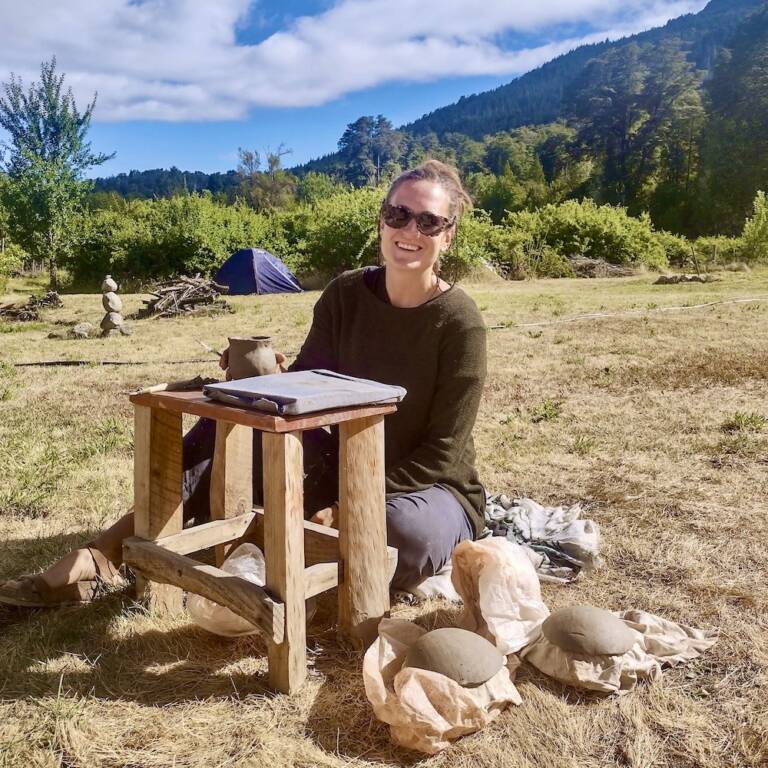
On what projects are you currently working?
In Argentina, I am still doing pre-Colombian ceramics. Firing in a traditional oven with clay from the region. Questions around the colonial behavior from myself and others are present in the work. How I do art and not “what” or “why”is central for my work.
What is the most relevant conversation that you remember having during your residency at Arquetopia?
There is not one most relevant conversation for me; many of them were very important to me. Even when the intention is good, the impact could be bad. The discussion about “the other” was important for me, and for sure, the questions about time and space or place and history.
What changed after your residency at Arquetopia?
My perspective about place and history changed a lot. What if we see art more in space and time! To think about space as a ceramic artist is very important, and after the residency, I could see that history and time play a profound role in artistic practice. The colonial mindset is very present in art. This connection is new for me and opens a variation of questions and possibilities.
How are artist residencies important to the artistic practice?
I began working in ceramic art two years ago. My art practice changed from photography and etching to sculpture. This residency was very important for me, to learn from Señora Alcione and Señor Bernardino, how they work with clay. And I came closer to my goal to do sustainable ceramics, to sculpt without electricity and work in a better way with nature.
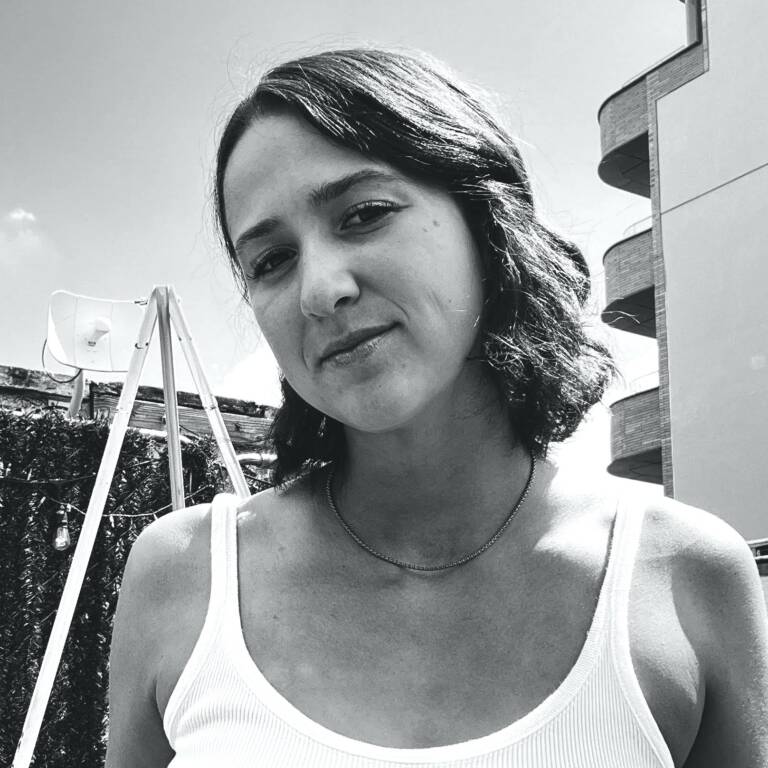
What is your artistic practice?
I am a New York-based artist currently working with collage on paper. Stitching/combining found materials with a vigorous paint application, I’ve been depicting simple scenes of my family. My work is collaged, torn and pieced together over many sessions, showcasing the raw and imperfect nature of the relationships highlighted within.
On what projects are you currently working?
As a member of a large, midwestern, Catholic family, my fascination with familial life and what we hold as sacred has driven my current work. I’m working on a series in which each piece is intended to capture a glimpse of the complex undertones within the family dynamic. The images are highlighted with recurrent ideology, in particular “sacred” motifs juxtaposed by objects representing temptation and indulgence. I’ve mixed in a few still life pieces to further hone in on an object’s impact over multiple generations within a family.
What is the most relevant conversation that you remember having during your residency at Arquetopia?
There were so many, it’s difficult to choose just one. “The Trouble with (The Term) Art” was the first reading assigned to me; therefore, I had ample conversations around these themes. The author stated that much of what is today called art was not made as art, and that there is no globally accepted definition of the term “art.” This was incredibly relevant as I began to explore the museums and galleries of Mexico. I was forced to break down my art education and criticize the language and terms I have been taught to use when classifying “art” of various regions and time periods.
What changed after your residency at Arquetopia?
Prior to Arquetopia I was working solely with acrylic on canvas. But after an early critique from another resident, I was inspired to pivot to something more sculptural. I discovered collage and was immediately hooked. Through the encouragement of Francisco and the other artists, my subject matter became my family. I explained to Francisco that I was having “fun” again, criticizing myself for not being academic enough. “That’s great!” he said, and I was off to the races.
The encouraged open dialogue and inclusive environment of the residency space, facilitated very deep relationships between the artists present together. It was the trust I felt with the other artists that allowed me to dig deep into the “why” behind my work. One of the residents in particular helped me draw significant conclusions as to why my family was so top of mind for me at this moment. Since then, I do not underestimate the power of the subconscious and the ways in which it manifests within my work. My perspective has been forever altered.
How are artist residencies important to the artistic practice?
Residencies are incredibly unique, in that they allow artists to create space for themselves outside of their day-to-day lives to reflect and create. They facilitate open and honest discussion through their communal nature, and remove the distractions that muddy an artist’s practice. For me, it had been years since I found myself in a creative flow space. But the ample studio time and lack of rigid structure gave me the freedom to sit with my practice. There was no pressure to produce quickly; therefore, I could prioritize conversations with the other residents and absorb our discussions on a deeper level. The friendships formed with the other residents was unlike anything I’ve known. The residency pushed my thinking and my work in ways could never have been possible at home.
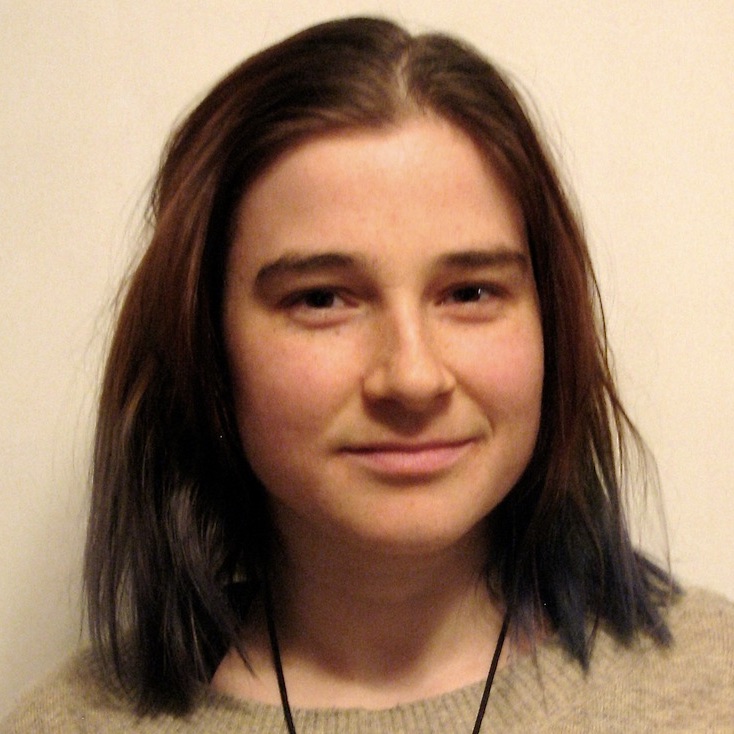
What is your artistic practice?
My artistic practice mostly consists of printmaking and bookbinding, but I also do painting and drawing.
On what projects are you currently working?
I’m not currently working on a specific project, but I have several ideas brewing. I would like to make more print-based wall installations inspired by nature and vegetation, which would continue a phase in my work that I started while at Arquetopia.
What is the most relevant conversation that you remember having during your residency at Arquetopia?
I wouldn’t say that one particular conversation was the most relevant to me. In retrospect, what feels most relevant is the accumulation of experience, from the small interactions to the longer conversations, especially with the four fantastic female artists that I met there.
What changed after your residency at Arquetopia?
Arquetopia was my first solo artist residency, and felt like a big step for my art career. I completed a project that I was very satisfied with, and therefore felt confident presenting it in applications. The pieces I worked on while in Puebla are currently being shown at a printmaking biennale (Biennale Internationale d’Estampe Contemporaine de Trois-Rivières, or BIECTR) in my home province of Quebec, Canada. Additionally, I won a prize at the Biennale (Prix Tele-Quebec). I’ve felt very honoured and grateful to receive this recognition, which wouldn’t have happened if I hadn’t been an artist-in-residence at Arquetopia.
How are artist residencies important to the artistic practice?
Residencies provide artists with the time and space to create, but specifically different space, and sometimes your sense of time can be different too. These aspects can be both inspiring and motivating. Both Puebla and Mexico were new places to me, so I was constantly in a state of discovery, a state of being that I feel is not only relevant to my own art, but also to the act of art-making in general.
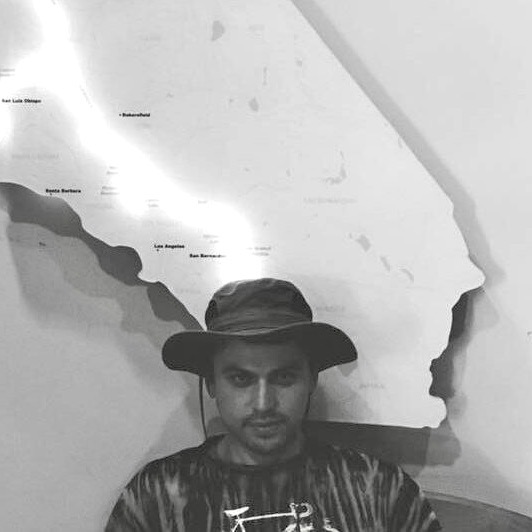
What is your artistic practice?
I am a poet from Oakland, California.
On what projects are you currently working?
I am currently working on a project that involves decentralized philosophy and bold, graphic images of poems I wrote. The Idea is to take poetry off the page in terms of visual experience. Eventually, I would like to have public displays and street art campaigns with these images.
What is the most relevant conversation that you remember having during your residency at Arquetopia?
I think the most relevant conversation I had at Arquetopia involved subject matter and voyeurism. As a poet who regularly writes from direct experience and observation, the complicated conversations based around who I was depicting in my work was really important to me. The questions of subject matter allowed my work to become more complex and unsure of itself, which was probably one of the best things for it at the time because it allowed me to grow in new ways.
What changed after your residency at Arquetopia?
After the residency at Arquetopia, I felt a renewed sense of reflection. My work is a bit more naked, a bit more raw and unprocessed. As a poet, it feels amazing to get to the core of my feelings. Arquetopia helped me navigate those inner workings in a way that a poetry workshop in the United States has never done. I felt smaller than I once did – which was actually a really positive thing to experience. My ego was reduced and with its reduction came an expansion of consciousness that stuck with my heart and ultimately rewarded my artistic practice.
How are artist residencies important to the artistic practice?
Artist residencies are vital to long-term development of artistic practice. Staying in the same pattern-driven society and trying to experience new ideas can be very tricky. We often find ourselves reproducing the same type of piece over and over again. But once you break out of your artistic bubble and see a different path you realize that the challenges of changing yourself and your work are only for the better. Residencies give us space to evolve.
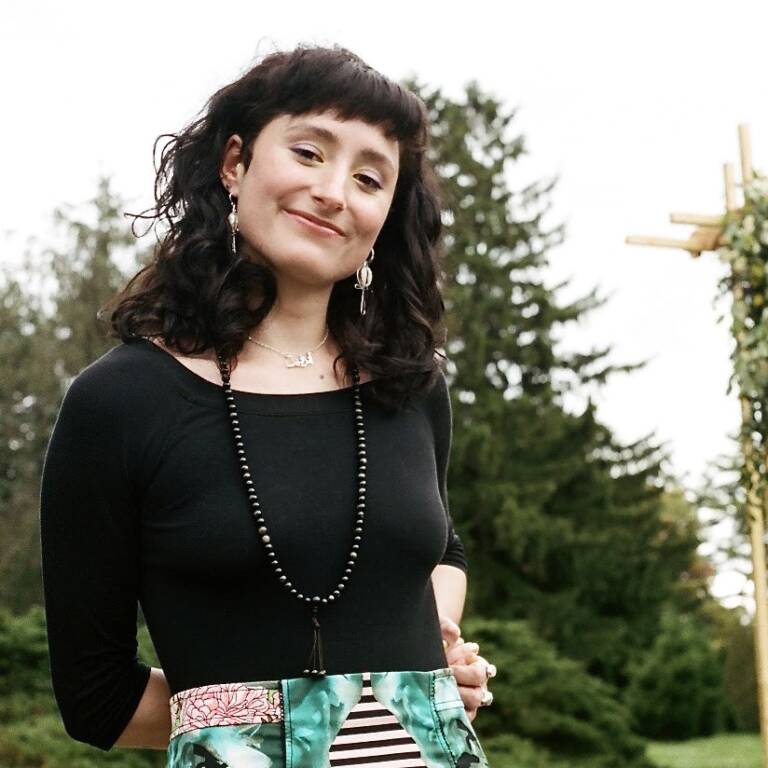
What is your artistic practice?
I am a multidisciplinary artist with concentrations in printmaking, textiles, papier-mâché, mold making, and sculpture. I create repetition with multiples and produce patterns because that is how I experience the world, and is the modality through which I wish to impact it. A lot of what I do becomes installation because I desire an immersive experience. I have also been playing around with the term installation in my practice. I consider wearable objects to be installation in the same way, as they are “installed” onto the body, creating an opportunity to merge with the work.
On what projects are you currently working?
I am currently creating a body of work that I started during my residency in Oaxaca involving plants, women, technology, and the origins of and true meaning of intelligence. On returning back to Chicago after the residency and continuing to embroider, I realized what I was trying to convey needed more than one piece to express itself completely. I liken myself to an octopus at times because I can juggle more than one piece at once, which is how I am functioning now as I watch my work grow, evolve, and shift. I create room for personal conversation with my work, both through its materiality and conceptually. I know I am doing something right if it’s keeping me on my toes.
Additionally, I am continuing to explore mask making through printmaking, hand embroidery, and papier-mâché. I envision my masks as both sculptural talisman, and theatrical displays of what I wish to capture: an individual’s raw energy & unique essence. I believe that the first medium any artist works with is the body in that it is the first tool we begin to express soul through; I see masks as potent extension of the human vessel. The metaphysical reality as being part of physical nature is simply based on reciprocity; if an outcome is desired, the visualization and creation of said outcome is necessary for fruition. Essentially I am creating talisman for the people I love, not only because I love them, but also because unveiling the sacred that is still alive in art is part of my mission.
What is the most relevant conversation that you remember having during your residency at Arquetopia?
This is a hard question to answer, and I don’t want to answer it because to pin point one conversation I had with Francisco and Nayeli specifically would seemingly lower the importance of the conversations I had with them otherwise. The beautiful thing about this program and the extremely thoughtful discourses that occurred was that each new article or topic presented flowed into the next in a way that felt like the cracking of an egg, but from the inside out. The back doors of academia unknown to me at the time were unlocked to present alternative paths of thought. Our conversations were like puzzle pieces fitting together, and I am grateful for all of them.
What changed after your residency at Arquetopia?
After the residency, I felt both much closer to what I wanted to express in my work, as well as just beginning to scratch the surface of something I had never consciously explored before, but had been dancing around conceptually for quite some time. I was able to talk about my passions in a way that I never could have been able to in school due to the discussions I had with Francisco and Nayeli revolving around colonization and its role in aesthetics, as well as colonization’s role in the collective perspective of time and space. I am liberated by these new ideas, as well as feel the responsibility they require to be held.
How are artist residencies important to the artistic practice?
Residencies, especially international ones I feel, are a way to test ideas and perspectives on a bigger stage outside of ones comfort zone, outside of their city, and outside of their usual community. This bringing of ideas to a new environment to see how they stand is crucial in discovering the strength they hold. The combination of learning about the place the residency is located, the application of craft or practice, and the bouncing around of theories and concepts is an energetic mixture sure to impact in exciting ways.
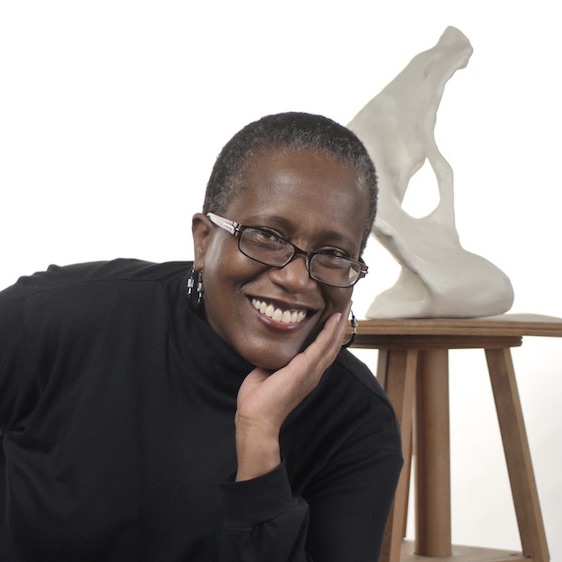
What is your artistic practice?
I am a clay artist, educator, and curator.
What has been your artistic process during the residency?
Thoughts on process: Just before the residency, I visited several museums in Mexico City. I paid attention to which forms I was drawn to, what spoke to me. I researched them at the residency, delving into their functions and symbolism. I experimented with ways to tell my story—and theirs. I tried out multiple iterations of a single idea while getting acquainted with the local clay, a living, organic body with a mind of its own.
At my instructor’s urging, I examined different deities and symbols, particularly images of women. I experimented with a post-fertility figure for women who are post-fertile. What creative powers might they carry? The open-bellied works evolved into the two-faced Janice (a play on Janus) figures, also referencing Yoruba goddesses Oshun and Yemaya.
I became engaged with the little female figures from Tlatilco. In my research, I learned that they were usually buried with women. These full-figured pieces became the inspiration for an activation. As part of a libation ritual, I buried unfired clay figures along the site of a Puebla slave market in honor of the Africans who were sold there for their labor. Over time, the rains will break down the clay and germinate the chamomile seeds inside, lending healing to the narrative. This is an organic, earthy spin on the nkisi nkondi figures of the Kongo, which are riddled with nails to release the power contained in their abdomens.
Which has been the text, essay or quote that you read at Arquetopia that most influenced your practice and why?
The readings on urban slavery and the Puebla markets resonated with me the most. I got a deeper understanding of the profits at stake, the credit system, the role of the church, all the moving parts. This gave me insight into aspects of the African diaspora that I was unaware of. This feeds into my Ifani’s Tribe narrative, which tells the story of an African girl searching for kinfolk scattered by slave raids.
What is next in your artistic practice after the residency?
This fall, I am exhibiting with Sapphire and Crystals, a collective of African American women artists, in a show called “Freedom’s Muse”. The show opens October 13th at the David and Reva Logan Center for the Arts in Chicago. I am also curating two exhibitions: the first is a Climate Justice and Arts Exhibition, opening October 21st at Douglass Park Fieldhouse; the second is a portrait exhibition by artist and activist Irina Zadov, entitled “What Time Is It?” opening November 10th at the Chicago Art Department.
Once back in the studio, I look forward to revisiting the clay work I made in Puebla, expanding the scale and playing with color. I have ideas for a host figure as well; I started one in Puebla, but I had to leave it because it didn’t dry in time. I have also started work on a relief print series based on this work.
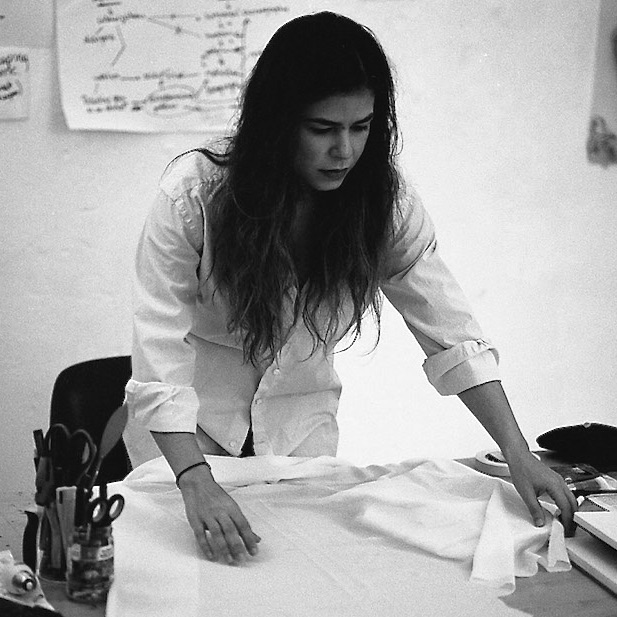
What is your artistic practice?
I am an interdisciplinary artist. As a trilingual woman of Palestinian descent, born in the US and raised in diverse communities in the Middle East and Canada, I use my art to question ideas surrounding identity.
Through meditations on traditional practices and my present environments, my work merges eastern and western styles to express how the crossing of cultures can form new identities. My choice in medium follows the conceptual needs of the piece which has primarily been embroidery, but also includes works on paper and new media.
The cross stitch embroidery technique is a way of honouring tradition. Both the female and Arab elements of this practice share a similar need for dialogue that I am interested in bringing to the forefront of conversation.
On what projects are you currently working?
I am currently working on two projects: and installation and an abstract embroidery series.
The idea of the installation is to simulate the internal experience of the Arab diaspora living in the west through the appropriation of the English language. The piece involves a combination of typographical artworks spanning across paper, embroidery, soundscapes and video of the anthem Mawtini (homeland), an Arabic song by Palestinian poet Ibrahim Touqan.
The second project is a series of embroidery pieces inspired by abstract painting that merge traditional Palestinian embroidery techniques and contemporary abstract paintings from the west. The resulting series will be small monochrome embroidery pieces that attempt to push the already innate qualities of textile while maintaining the compositional and emotional aspects of an abstract painting.
What is the most relevant conversation that you remember having during your residency at Arquetopia?
The first meeting I had with Francisco and Nayeli set the trajectory for the rest of my month there. We were discussing one of the readings concerning the “performance” aspect of art making and the “shadow” the artist casts on it. To say I didn’t understand what I had read would be an understatement, so when Francesco asked me what I thought my shadow was I had nothing of substance to say. After that meeting I made sure to reflect on the mental, energetic and physical experience that I was having while embroidering and pushed myself to question the experiences. I examined my internal narratives as well as the cultural and societal conflicts I embodied concerning the craft. This lead to the development of the theme of my new art practice, the formation of identity in diaspora.
What changed after your residency at Arquetopia?
My process of making became more confident and fluid. I learnt to be the observer of my creation and to trust in the direction it is going in. The practice of embroidery taught me patience and presence and the guidance of Francisco and Nayeli helped in the evolution of my perception an analysis of art.
How are artist residencies important to the artistic practice?
Residencies take artists out of their comfort zones and into spaces that require them to transform in order to adapt. This transformation creates shifts in creative, behavioural and mental patterns which in turn allows for new patterns to flourish. In my opinion, art residencies work as catalysts in the evolution of an art practice.
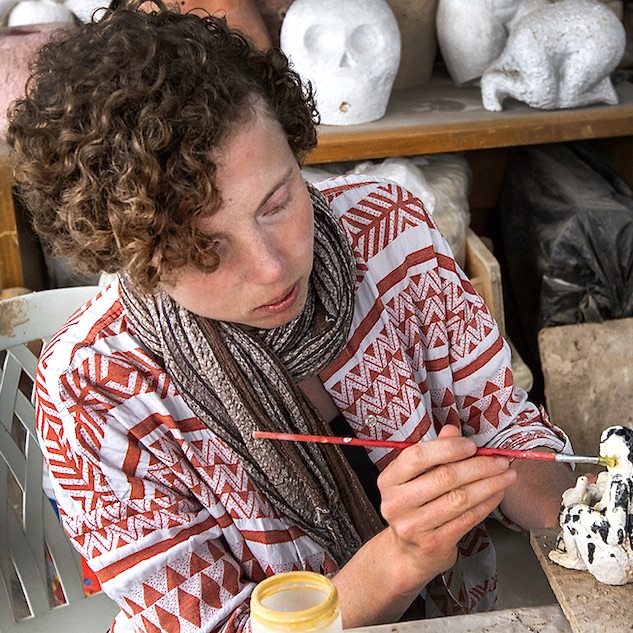
What is your artistic practice?
I am working mostly in the field of graphic art and illustration, focusing primarily on the technique of screenprinting.
What has been your artistic process during the residency?
During the residency, I was developing my skills in sculpture work with clay, exploring the possibilities of traditional ceramic building techniques and engobe color production. In the theoretical part, Arquetopia offered the space to scrutinize perspectives and reflect alternatives to the Western education system which gave me the possibility to relocate my own artistic practice in the actual discourses of art theory.
Which has been the text, essay or quote that you read at Arquetopia that most influenced your practice and why?
I was deeply moved by the text, “The Chicken or the legue” by Marcy Norton and its critical reflection on the human-animal relationship. It fundamentally changed my perspective about our coexistence, which requires respectful interaction, responsibility and an open dialogue engaged at eye level between interspecies often underrepresented in observation and classification processes. In my art practice, the animal shape is one of my favorite themes which I often use fable-like to represent human nature. Arquetopia gave me the key to explore the multiplicity of dimensions in interspecies interactions.
What is next in your artistic practice after the residency?
In my future research project, I would love to focus on the human animal encounters by requesting the barriers between species and pointing out the complexity of relations between biological systems, focusing especially on the critical reflection on the tendency of humanization and mystification in the description of interspecies engagement and pointing out inequalities as well as successful cooperation processes.
Thank you so much for everything again, it was a big pleasure to participate in this residency, and I feel lastingly shaped by this experience and the warm way you have welcomed me.
At the moment, I am trying to catch up with the routines of daily life here in Berlin and looking forward to dive deeper into the texts Francisco kindly has sent to me.
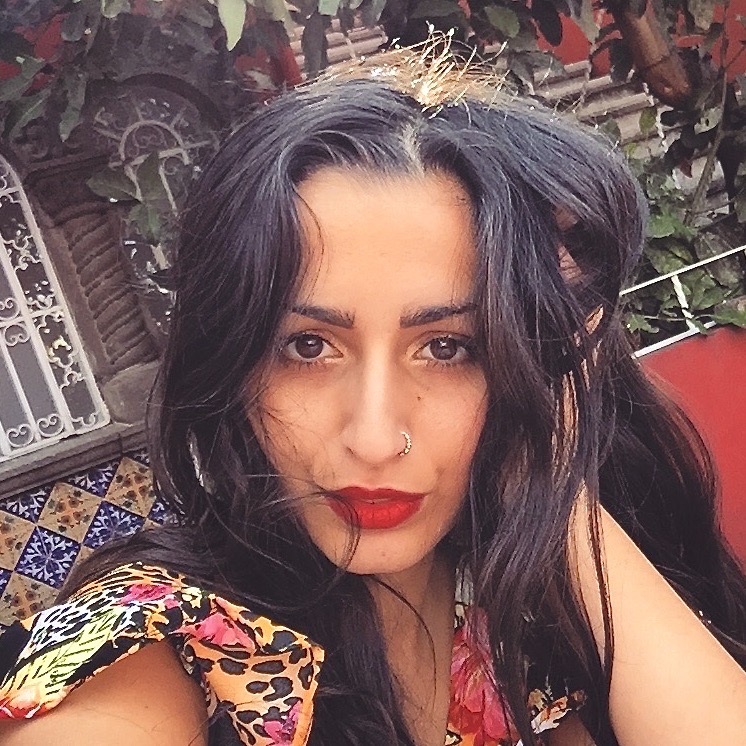
What is your artistic practice?
I am a contemporary jewelry designer. I like to create pieces which surprise, delight and push boundaries. Within my practice, I take great inspiration from the ancient tale of King Midas and The Golden Touch. Legend dictates that everything the King touched was turned into gold. Even the lowliest, most invaluable objects become trophies. Influenced by this fantasy, I apply my own golden touch when designing, in order to add a little sparkle and wonder to the overlooked and the everyday!
On what projects are you currently working?
Each time I develop a new project, I create jewelry which has a playful concept and tells a story. Currently, I am continuing a body of work entitled “Chewing Gum Pearls.” Throughout the collection, beautiful freshwater baroque pearls are used to represent squished up pieces of gum. Discarded chewing gum is conventionally seen as gross and unremarkable; however, each time somebody squishes up a used piece of gum, an entirely unique shape and form is created. In this way, each piece of old gum can be interpreted as a unique and rare jewel! I love the weird and wonderful forms that baroque pearls feature and I love that no two pearls are ever the same. To make the jewelry, I use an ancient technique called lost wax casting which allows me to form individual settings that fit each pearl perfectly. I also use a lot of pearls that have been cultured into specific shapes, such as stars or crosses!
What is the most relevant conversation that you remember having during your residency at Arquetopia?
A common thread throughout my practice is the idea of taking “normalised” ideas and subverting them in order to challenge traditions and push upon the boundaries of convention. I had many conversations with Francisco and Nayeli about this, and what has resonated with me most is the notion that there is a difference between subverting something as opposed to setting something free. By subverting ideas, I create alternative conventions that still stem from a point of control; however, by completely re-imagining and de-constructing, I am able to contribute much fresher narratives to the world of contemporary jewelry. These conversations have helped me develop and design pieces of conceptual jewelry that I believe to be multifaceted and timeless.
What changed after your residency at Arquetopia?
I have continued developing the work I started at Arquetopia, and in 2021, I plan to exhibit a new collection of jewelry featuring seven complex designs. I researched and developed these designs whilst on my residency and I am currently producing each piece by hand back in the UK. The jewelry will explore the seven deadly sins and aesthetically is inspired by the sugar skulls (calaveras) I collected whilst on my residency in Puebla. The working title for the exhibition is “I Sin, Therefore I Am,” a play on the famous Descartes quote and an idea that came to me as a result of reading the essays assigned to me by Arquetopia.
How are artist residencies important to the artistic practice?
I believe that artist residences are invaluable to artists at any stage in a career. Speaking as an emerging designer, it can be so incredibly difficult to balance oneself between creativity and commerciality. Making a living and making masterpieces don’t always go hand in hand. Taking the time out to immerse yourself within a residency project gives you the space to develop truly thoughtful, considered and well researched concepts, which ultimately allows you to create richer work and contribute the best you possibly can to your field.