
Missed the October 1 Deadline for 2027
and remaining spots in 2026?
E-mail Us at info@arquetopia.org
for Program Info, Application Materials, and an Extension
including Day of the Dead, and Short-Term Programs
Outstanding Arquetopia Alumni
V - Z
Post-Residency Interviews and Feedback
Since its beginnings in 2009, Arquetopia Foundation has hosted and mentored more than 1,300 artists, writers, art historians, curators, and researchers, from ages 20 to 92, from 112 countries worldwide, and from a wide variety of disciplines. Featured here are testimonials and feedback from many of the most outstanding alumni of our award-winning residency programs.
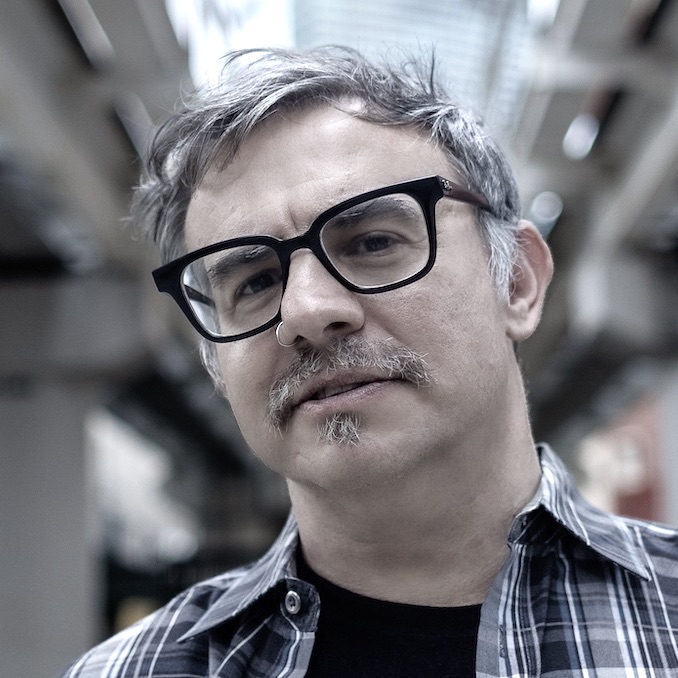
What is your artistic practice?
I’m a writer and screenwriter.
On what projects are you currently working?
I’m still working on the novel I worked on during the Oaxaca residency — the story of a family from Miami that is told in two days, 30 years apart. I am also working on a script about the Malvinas war and promoting my recently published novel, Neurosis Miami.
What is the most relevant conversation that you remember having during your residency at Arquetopia?
Ouch. Many. The most relevant for me was one I had with Francisco and Nayeli about the “symbolic assets” of the story I was working on. I want to mention many others with my fellow residents about art and life. And some memorable chats about mezcal.
What changed after your residency at Arquetopia?
First of all, I fell in love with Oaxaca. The mountains, the city, the food, the people. Then, it set the bar high regarding what I can accomplish when focusing on one project (something that is more and more complicated nowadays). I feel that chaos is part of my work, improvisation. Arquetopia impacted my practice, revealing the strength of some pause and the use of some topical approach that takes the themes of the fiction to another level.
How are artist residencies important to the artistic practice?
It allows artists to switch off some noise from daily life and focus on the practice. As well as put your art on the spot to be observed from the perspectives of artists from other disciplines. I have trusted readers (people I respect who give honest feedback about my projects). But they are primarily writers. That’s how it is mainly done. The residencies facilitate different approaches in a unique environment.
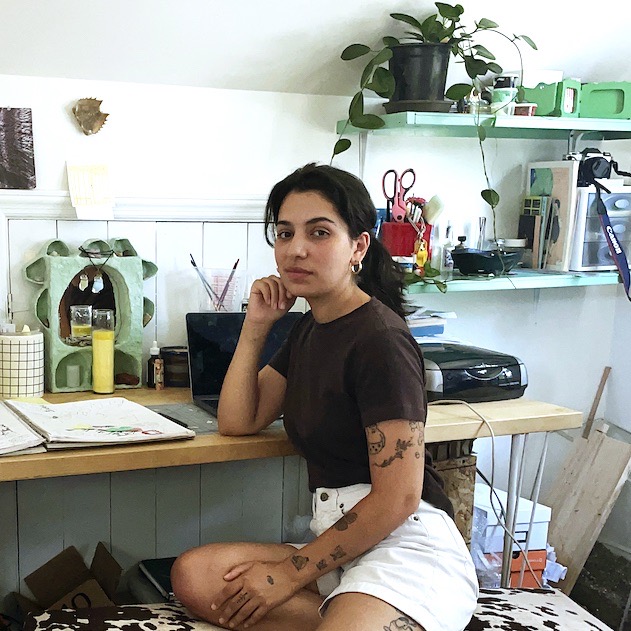
What is your artistic practice?
Much of my work begins in visions on long stretches of road or in the still moments before falling asleep. They’re translated into notes and sketches, but once they enter the 3-D they take on a life of their own. It’s a constant dance between myself and the agency of what I’m making. My mind is both off and on in the same moment; it’s like staring at something through your periphery, and trusting the blurred silhouette enough to know where it needs to be taken next. For this reason, my work spans a large range of mediums, and I am always trying to learn new skills and communicate with new materials.
On what projects are you currently working?
I am currently concluding a couple of projects in hope of pursuing some new ideas: finishing the ceramic altars from my time in Urubamba, archiving photos from the trips I’ve taken this year, posting a series of bandanas exploring organic networks and resist-dyeing processes, illustrating a calendar for the coming year, and so much more.
What is the most relevant conversation that you remember having during your residency at Arquetopia?
So much of the focus of my conversations with Francisco and Nayeli were about language. I really got to unpack the way words and labels that I have been so accustomed to using actually continue to reference a “center” and further work to oppress and exterminate rather than serve the function of liberation that they might promise. Words hold a lot of power, and as someone who works with existing in a space that is neither here nor there, it has been extremely eye opening for me exploring the ways language can actually perpetuate the binaries and barriers I am trying to detach myself from (if that is even possible). Space becomes a place. Time becomes a history. And we won’t find our liberation in either of those devices.
What changed after your residency at Arquetopia?
A lot. The residency could not have come at a better time for me. It had been postponed two years from our first summer with COVID, and although upsetting in the moment it proved to be the perfect amount of time for me to come back into my practice. From Francisco and Nayeli, I gained something from Arquetopia that was a lot more meaningful than a finished body of work. I gained a sense of trust with myself as an artist – they encouraged me to not only follow my drives, but to expand on them. From Bernardo and Alcione, I learned to regard clay in a whole new way. They walked me through every step from earth to finished ceramic piece and encouraged within me a stillness I had lost in the pace of New York life. From the other residents there who told me about their journeys as artists, I gained an outlook on our futures that had been so difficult for me to imagine through the last two years. From the people I met along the way and from all the family I have in this country so far from my home back in the States, I gained a new sense of togetherness that disregards language and borders. I feel so blessed to have gotten this time in Urubamba and the surrounding Sacred Valley and I cannot thank the program enough.
How are artist residencies important to the artistic practice?
There’s a complicated relationship between artist residencies and the countries they are located in. One of my first conversations with Francisco was about this dilemma; artist residencies are inherently harmful, as is the idea that traveling is a mandatory part of an artist’s practice. Our presence in these countries makes an unavoidable impact. Being there, I was able to fully see how much of the Sacred Valley has been manipulated to revolve around people like us, and being artists doesn’t separate us from this phenomenon. Being able to travel this freely at all is a privilege in itself that I’ll never take for granted. That being said, and as this was my first (of many) artist residencies, I found my time with Arquetopia incredibly rewarding. As much as an artist residency is a great opportunity to disconnect from our day to day patterns, it is at the same time an opportunity to reconnect. I cannot speak for all artist residencies, but so much of Arquetopia’s motivation was in this connection – in understanding our role as artists, and how we impact all life around us from people to animals to plants. Maybe it is only through this moment of disconnect that we are able to truly see just how much we do connect. Thank you all again for having me!
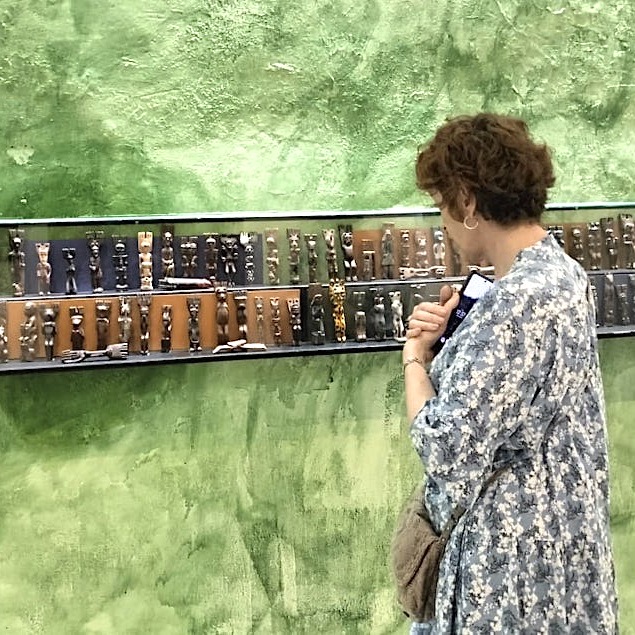
Alejandra
Walzer
Argentina / Spain
Writer
Writer Website
What is your artistic practice?
I am experimenting with the writing of short literary forms, based on some observations made during more than a decade travelling and working in different countries in sub-Saharan Africa.
What has been your artistic process during the residency?
I came to the residency with high expectations and quite a few concerns: would I be able to write without constantly worrying about editing my texts? Would I be able to find the appropriate language and tone to express what I want to say? What finally happened was that I just started writing from day one. I was very focused but also in a loose, almost detached attitude. This was for me a fundamental factor for the process because, although it may be obvious to many artists, there are things that we don’t discover until we experience them first hand. For me, this was a very significant discovery because during my stay at Arquetopia residency I understood that I was initiating a process that was not going to have an immediate outcome, but rather it was a journey along a path that only I could walk. It is true that there were some afternoons when I wandered up and down in the garden looking for a word, a phrase, the best ending for a text, but fundamentally, I was more oriented towards the search than to the final result. I feel that the residency offered me the means, the mental and sensitive environment I needed to give shape to something I wanted to start for a long time but had been deferring.
Which has been the text, essay or quote that you read at Arquetopia that most influenced your practice and why?
For me, the weekly meetings were a crucial moment of encounter and exchange, and I say this because all the proposed readings spoke to me. They were all relevant either because they addressed intellectual, ethical or aesthetic questions that haunt my project. I felt that the texts were selected to suit my needs, and I also had the opportunity to read some authors who were new to me. I find it difficult, therefore, to select a sentence or a text out of all of them because I felt that a conversation was created in which everything was interwoven. Anyway, to answer the question, I would choose the concept of “epistemicide” raised by Ramón Grosfogel when he refers to the ways in which modernity was built on the elimination of differences (and of the different) and the construction of new hegemonies, and I would put it together with Audre Lorde’s phrase:“The Master’s Tools Will Never Dismantle the Master’s House”.For me, the critique proposed by both authors is a recognition of the dignity and hierarchy of the knowledge produced by any given community and also a call to find one’s own forms of agency that do not submit to a logic imposed by power and its ways of exercising force. This resonates in a very essential way with my writing topic and also with my concerns about style.
What is next in your artistic practice after the residency?
My process is already underway; I must keep working and exploring. For now, I let myself flow, knowing that at some point the time will come when it does make sense to judge, correct, edit. When that happens, I hope to also be picturing my next writing project.
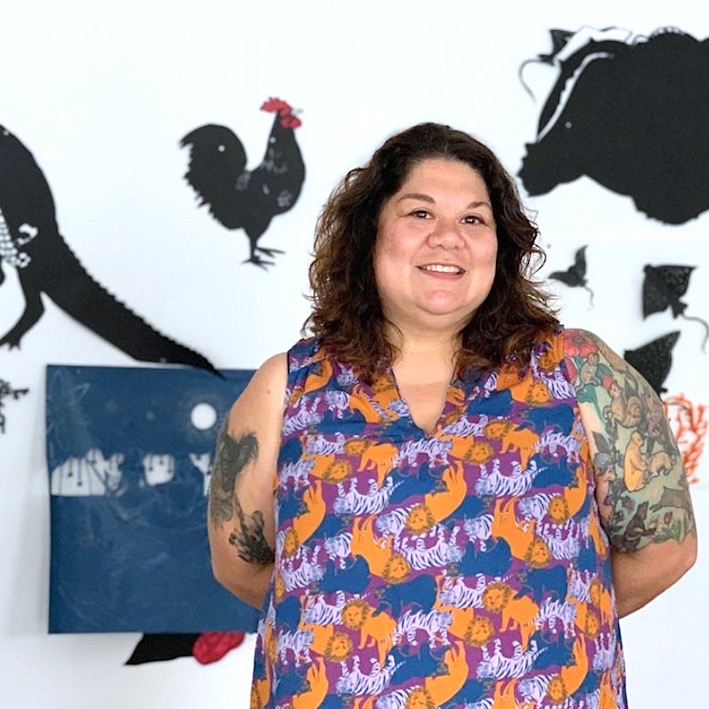
What is your artistic practice?
“Anthropocene Blues: Nature and the Social Imagination” investigates the boundaries between human and animal, realms perceived as entirely separate by the modern mind. I explore the intersection of nature and culture through cut paper artworks. The simple act of cutting paper is a study in transformation, reducing visual information down to the essentials. In this medium, an outline alone can carry meaning and narrative. Cut paper practice carries incredible tension; a single mistake can compromise the entire architecture of a piece. Anthropocene Blues reflects this tension in its subject matter: giving alternate consideration to the extinctions of species, threatened ecosystems, and the global decline of biodiversity with the natural history of wildlife species deemed worthless, filthy, or invasive.
On what projects are you currently working?
I am preparing for two exhibitions, one at The Museum of Nebraska Art and one at Stone Soup in Key West. I am working a series of papercuts. The imagery intertwines narratives and stories assigned to remote and endangered landscapes and threatened species. While at Arquetopia the history of the convents and bodies of knowledge forged by nuns leading sequestered lives became fascinating to me. I have been rethinking my previous assumptions about nature and gender.
What is the most relevant conversation that you remember having during your residency at Arquetopia?
Our meetings were so insightful. I have always done things somewhat intuitively, and Francisco had a way of presenting articles and theories that gave shape to things that I knew or felt but could not express. I would read the articles and think, “This is what I have been trying to say.”
There were several phrases from the first conversation, that were jolting because of their honesty. Subjects that I thought I was so familiar with were recontextualized in such a way that it upended what my previous understanding of them. “The history of scientific illustration is violent,” I had never really considered that it was part of the cycle of objective and subjective violence.
What changed after your residency at Arquetopia?
As I engaged in conversation, I realized how often I couch my language (about controversial topics) in euphemisms or vague language. Francisco would say, “It isn’t sort of violent; it IS violent.” I walked away from Arquetopia with a sense of strength, the ability to state something plainly and stand by it, regardless of which toes you are stepping on. In De-Centering myself, I found strength.
How are artist residencies important to the artistic practice?
I loved being in that space with other artists. As more people arrived at the residency, the better it became. It became this opportunity to explore new places you probably wouldn’t have otherwise, to see with other eyes things that had previously gone unnoticed and to have utterly new conversations.
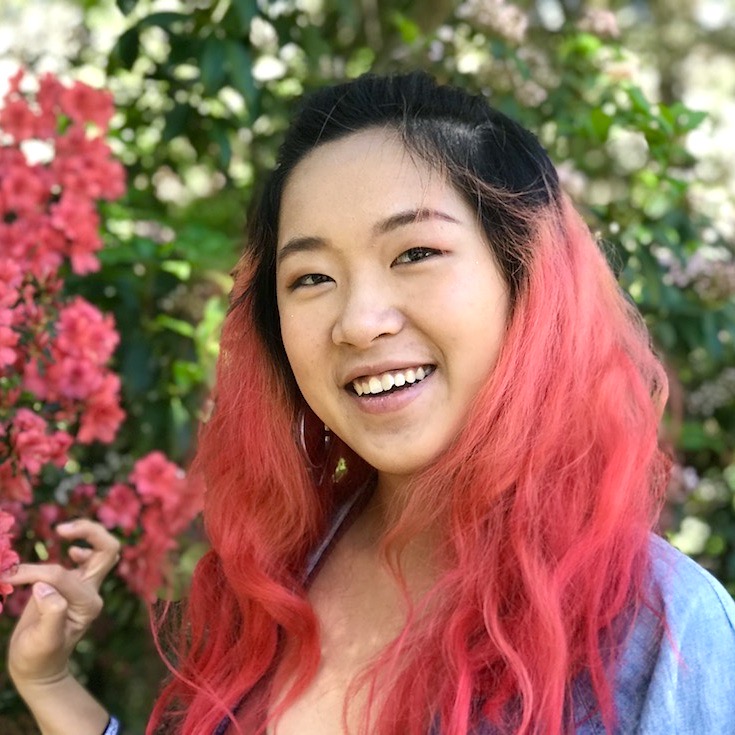
What is your artistic practice?
For the past year and half, I have been mostly doing virtual environment building, architecture, and documentary. My artistic practice has been very scattered: I also have backgrounds in oil painting, sculpture in various materials, performance, and creative coding.
What ties the greatest majority of my work together is an interest in the boundary of the self and places where that boundary dissolves. I am in particular a fan of the emotional experiences of awe and absurdity. Both experiences take people out of themselves—their egos, usually very briefly, but these experiences often create a sustained period of taking oneself a bit less seriously and sometimes result in a peaceful state. Or, in some philosophical frameworks, awe and absurdity help people understand a bit better that there is no individual self.
I label myself as an artist in the broadest way, to exempt myself from any additional identity labeling that would limit what I do. I love exploring different materials, dimensions, and mediums of expressions that engage with different senses, to understand or facilitate the experience of ego reducing.
Another part of my identity is that I am starting my sophomore year this fall at Princeton University. I plan to study history of science, architecture, cognitive science, and computer science, while keeping myself creatively engaged in my free time. I have always loved working with my STEM friends who are also incredibly creative, so I look forward to doing more cross-disciplinary collaborations in the future.
On what projects are you currently working?
I am making a feature-length documentary about the student psychedelic clubs at Princeton, Penn, Harvard and UCL. It features the student leaders’ personal stories battling with suicidal depression, anorexia and bulimia, their journeys of starting the student clubs in respective colleges and organizing the Intercollegiate Psychedelic Summit at Harvard in 2020, my interviews with world-leading psychedelics scholars Karl Friston and Robin Earhart-Harris, and an actual psychedelic trip undertaken by a few of the student leaders. The film is not only about the story of bringing psychedelic research further into the system, but also about a group of friends transitioning from the college bubbles into the society, while they continue to find ways to dream for humanity. I started making this film in October 2019, and it should be completed by early September of 2021.
I also recently started an internship with the Qualia Research Institute (QRI). I am creating illustrations for their main research articles and doing web design for QRI’s upcoming html book. QRI is a small group of scholars tackling consciousness research, with the goal of building an intellectual foundation for engineering a more blissful future. I am excited about using my skills in digital painting, 3D modeling, creative coding and graphic design, to help QRI’s research reach a broader audience.
Apart from these two projects, I want to spend my time on practicing the skills I have been trying to build, especially in the last year. At Arquetopia I did a weaving piece on my reflection of death and the shaping of Mexico’s national identity, repeatedly using the mitla pattern that represents death-life cycles.
Prior to the Arquetopia residency, I made a sound piece with Max/MSP about the fundamental human experience of being trapped in one’s own consciousness. Before then, I built two virtual environments that reflect my wordless world models in reaction to what is going on with contemporary society: one about the subtle religion of the cute that manifests in politics and tech world, and one about America’s capitalism on self-expression. The summer of 2019, I did independent research at the Positive Psychology Center of University of Pennsylvania on designing awe-inspiring spaces. I wrote a paper that incorporated philosophy, positive psychology and neuroscience, and curated a gallery of examples in architecture and art.
I hope to create multi-sensory experiences in the future, whether in physical reality or virtual reality, that would inspire egoless internal experiences.
What is the most relevant conversation that you remember having during your residency at Arquetopia?
I didn’t know very much about Mexico prior to this residency and bought into the popular images of what the Day of the Dead is to the country. I proposed in my application to Arquetopia that I wanted to make a piece about the similarities between what death means in Mexico and in Tibet, as these two regions are both known for their radical acceptance of death. But through my research, especially reading the book Death and the Idea of Mexico, and my Skype calls with Francisco and Nayeli, it didn’t take too long for me to realize there is almost nothing that Mexican and Tibetan cultures share about death. Death is an entirely religious issue in Tibet, whereas in Mexico it has been a lot more politically based than I imagined. This realization was a critical point in my residency. I completely got rid of the Tibetan part and just designed my work solely around what I have learned about death (and the Day of the Dead) in relation to the shaping of Mexico’s national identity.
What changed after your residency at Arquetopia?
The more concrete thing I took away from Arquetopia is knowledge of weaving. Arquetopia for me was a branching out with the openness that I could be introducing something new to my overall artistic practice. I had never done textiles before and it was especially exciting to learn weaving in Mexico as I had been curious about both weaving and the Mexican culture for a long time. I loved the soft and patterned volumes I could create with weaving and I definitely want to integrate textiles with my other skills that tend to be digitally based. I am thinking of interactive textiles or wearables!
There is also something abstract about my experience at Arquetopia that I can’t quite tease apart if it is more about the residency or more about the Mexican culture, but I noticed that even in the weeks after Arquetopia, I have been able to peacefully focus on the process of making and experiencing more. The dynamics the staff brought into the house every day, excursions to the Oaxaca City and nearby historical sites, the schedule and pace of the residency itself, all nurtured a mental state that is different from what the US or China — two countries I have spent almost all my life in — tends to induce in me. I found myself focusing more on the process and the present experience than some type of “end” or “result.” And I have been able to maintain this more peaceful state of mind I gained from Arquetopia in the weeks since I finished the residency.
How are artist residencies important to the artistic practice?
Artist residencies provide an environment for immersive dialogues among creators. I loved my conversations with other artists at Arquetopia: taking foraging trips with Margaret and learning how to find pigments in rocks, hearing about Bill’s immersive theater pieces, etc.
Residencies also help create a structure for artists who tend to juggle a lot of uncertainties in their professional life. A change of environment, programming, people and theme helps with framing a period of the artist’s life. I like introducing this kind of structure to my life because I know in a given period of time I can experiment with something in my practice or experience a completely new culture, so that I can keep challenging myself and growing creatively.
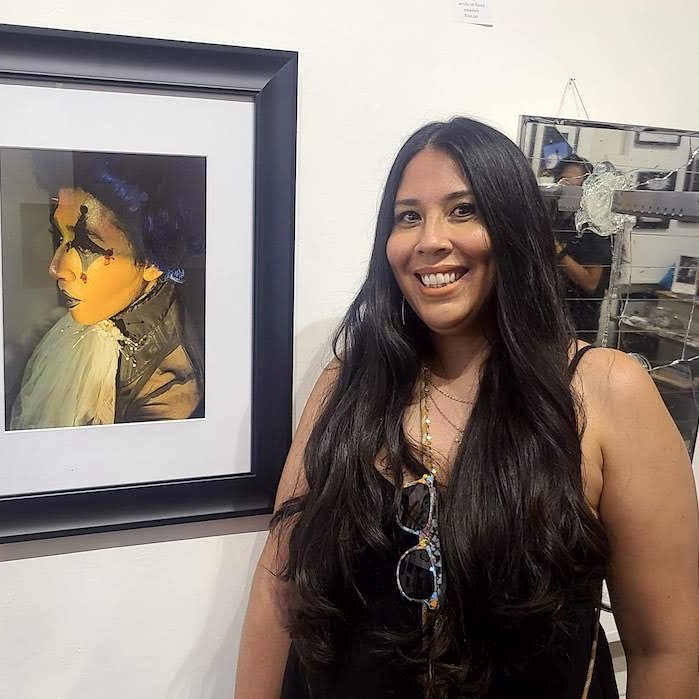
What is your artistic practice?
My artistic practice involves photography, documentary filmmaking, and printmaking.
On what projects are you currently working?
I am currently back in Puebla, continuing the work I started at the residency. I am also working on a exhibition show dedicated to creating a safe queer space in San Bernardino in conjunction with the Garcia Arts Center that will open in September 22. I am also working on “Pocha,” a show that highlights underrepresented artists. I am a featured artist for the online magazine “The Pomonan,” adding stories and photos throughout the year.
What is the most relevant conversation that you remember having during your residency at Arquetopia?
The most relevant conversation that has truly helped shape and form my current work, was a discussion in which the topic of anger came up. Immediately, Francisco understood my fear of allowing the anger I felt take hold. The readings assigned and the discussion that occurred the following week, has allowed me to accept and use the anger that I feel. It has allowed me to remain hopeful in spite of incredibly difficult times ahead. My artist practice has always attempted to address, even if subtly, the racism, sexism, homophobia that has plagued people in disenfranchised communities. I was challenged to be honest, in a way that scared me, but has since left a profound impact on me as an artist and more importantly as a person.
What changed after your residency at Arquetopia?
The most impactful thing that the residency did for me was open my eyes to what a practicing artist could be. Prior to my residency in Puebla I had a very specific idea of what type of artist I needed to be, but my time in Puebla, the work with the Artists in the program, the readings and the discussions has allowed me to work with a level of freedom and openness that I had not had prior to my experience. I fell in love with the city so much that I have since returned to continue my work. I have new ideas and that would not have happened had I not been in Puebla.
How are artist residencies important to the artistic practice?
Artist residencies challenge you to look at the space around you and attempt to understand your place within it as an artist and as a person. As an artist the desire to be a machine and turn out work, to also turn out marketable work, is something that within capitalist societies is prevalent. The artistic practice at times cannot be defined in a homogenous way, and residencies allow artists to explore and immerse themselves in a different environment to help define and open up other means of what being an artist can be.