
Missed the October 1 Deadline for 2027
and remaining spots in 2026?
E-mail Us at info@arquetopia.org
for Program Info, Application Materials, and an Extension
including Day of the Dead, and Short-Term Programs
Outstanding Arquetopia Alumni
J - M
Post-Residency Interviews and Feedback
Since its beginnings in 2009, Arquetopia Foundation has hosted and mentored more than 1,300 artists, writers, art historians, curators, and researchers, from ages 20 to 92, from 112 countries worldwide, and from a wide variety of disciplines. Featured here are testimonials and feedback from many of the most outstanding alumni of our award-winning residency programs.
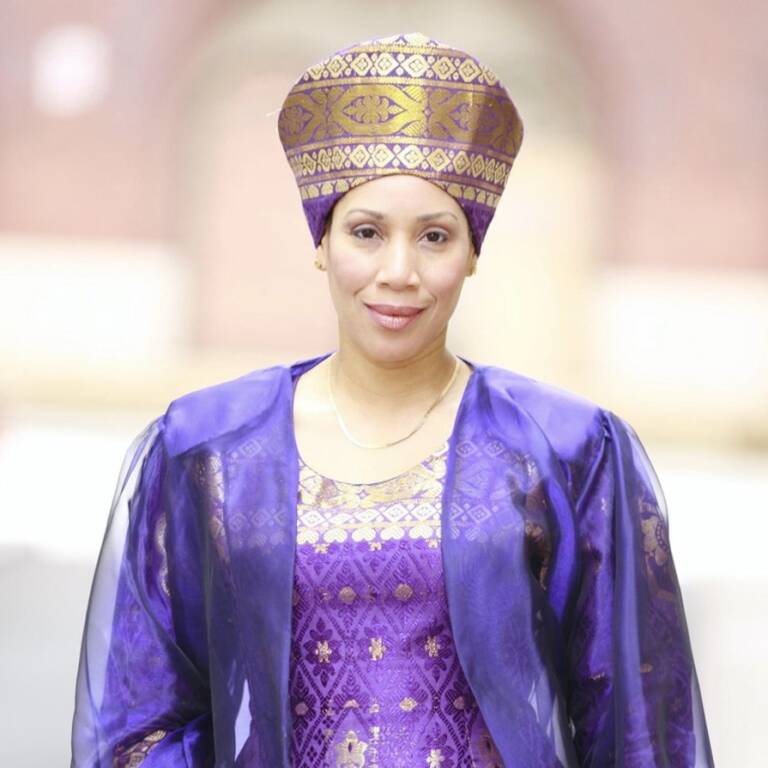
What is your artistic practice?
Interdisciplinary Performance/Literary Art (poetry)/Visual Art (collage).
What has been your artistic process during the residency?
Researching enslaved African Mexicanas for my play, I Know My Robe Gonna Fit Me Well; I Tried It On at the Gates of Hell: Speak! Our Mothers and restructuring the first two chapters of my dissertation essay, Trauerspiel: Subject into Nonbeing.
Which has been the text, essay or quote that you read at Arquetopia that most influenced your practice and why?
I found my weekly conversations with Francisco and the Arquetopia team insightful and a source of enrichment supporting my residency research and experience. Among the many things that remain with me is our discussion of “Limpieza de sangre” and the role hegemonic ideas of blood purity or “cleanliness” played in the undergirding of systems of bondage constraining nonwhite peoples throughout the Americas, and Africans within the Iberian Peninsula. I found one of several readings provided particularly helpful, “Race, Purity, and Gender in Sixteenth-Century Spain,” from historian María Elena Martínez’s 2008 monograph Genealogical Fictions: Limpieza de Sangre, Religion, and Gender in Colonial Mexico. It was an excellent catalyst for our conversation, as it clarified my understanding of how the so-called “New World”and the people residing in this world complicated, creolized, and problematized any Euro-centered idea of “blood purity.”My research of enslaved African women in Mexico and the uniqueness of the “esclava” experience among indigenous and Afro women throughout the circum-Caribbean and Latin America provided me with valuable insight into the workings of hegemonic domination in this hemisphere and how it played out differently depending on the regions within the Americas, while always tied to economics and class.
What is next in your artistic practice after the residency?
Currently, I am completing the research, writing, and restructuring of my doctoral dissertation, Trauerspiel: Subject into Nonbeing (2022), a performance, art installation, and dissertation essay interrogating the violence of ridicule, the mob/vigilante, and hegemonically instigated violence the creeps or seeps into the safe Black space, namely, some homes of marginalized families of African descent within the Americas. I am earmarked to defend at the University of Wisconsin-Madison 2023-2024.
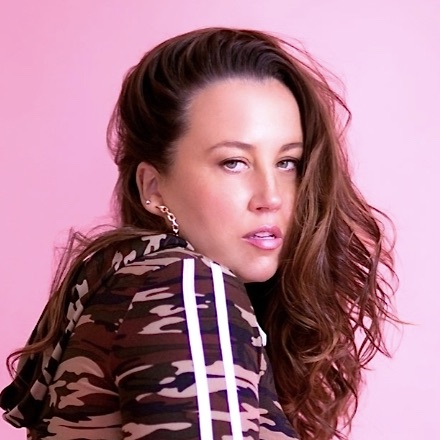
Katti
Kahn
Australia
Writer
Writer Website
What is your artistic practice?
Creative Writer – novelist and script writer.
On what projects are you currently working?
Currently, I am working on my debut novel called None of Your Business, based on a collective group of women working in the inner city of a legal Melbourne brothel. I am also working on two screenplays. One is loosely based on my novel set in the years 2016-2020, which saw a huge shift and a forever change in the industry worldwide as we knew it. The other script is an Australian “western” called Hang Her Head, set in the Gold Rush era in the early 19th century.
What is the most relevant conversation that you remember having during your residency at Arquetopia?
My project all came together in my mind when I was speaking to Francisco and Nayeli about the weekly essay readings. Two things were said to me that stood out. 1. Disrupt the system / Interruption = distortion; and 2. (paraphrasing) Suggested my project is based on the social construct of what is the masculine. This is what got me excited because yes! I love a challenge, as I am rebellious at heart. My project is not to exploit or expose anyone, but to stand witness and describe the nature, the mindset, and the act of buying and selling sex.
What changed after your residency at Arquetopia?
On my return to Melbourne, for me personally, I had a greater appreciation of my own life journey and the experiences within it. And as a writer, my time at Arquetopia gave me a deeper understanding of the questions I had going into the residency. I feel the weekly readings and conversations have changed the way I am approaching my project and how to better my research for future projects.
How are artist residencies important to the artistic practice?
Artist’s residencies are an important part of a creative person’s practice. A special bond is formed between artists that can be expressed thoroughly in conversations. These conversations are based around the craft and practice of our projects. With Arquetopia, I had the privilege of meeting people from different countries and learning not only more about my own craft and myself but other people’s styles and approaches to their work. I am excited to continue reaching out to artist residencies in the future to help with my craft, to meet amazing people and most importantly to have unique and fun experiences.
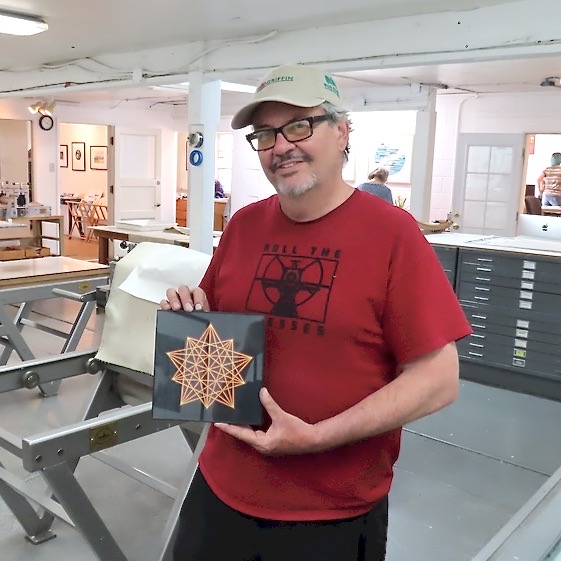
What is your artistic practice?
I am a printmaker, and I print in all mediums, with a focus on screen printing and block printing.
What has been your artistic process during the residency?
During the residency, I worked on multiple-color screen prints based on ancient Aztec codexes, and Islamic design elements. Though not planned in advance, the subjects grew out of the readings and discussions.
Which has been the text, essay or quote that you read at Arquetopia that most influenced your practice and why?
For me, there were really two texts that interested me greatly and were good topics for consideration. The first was the subject of eroticism and empire in French Orientalist painting, and the second was the history and role of chocolate in colonial Mexico and Spain. Both very interesting essays that brought to light a number of ideas I had not previously considered. Im sure those ideas will somehow percolate into my practice in the future.
What is next in your artistic practice after the residency?
I will continue to focus on my printmaking, both as an artist and a teacher.
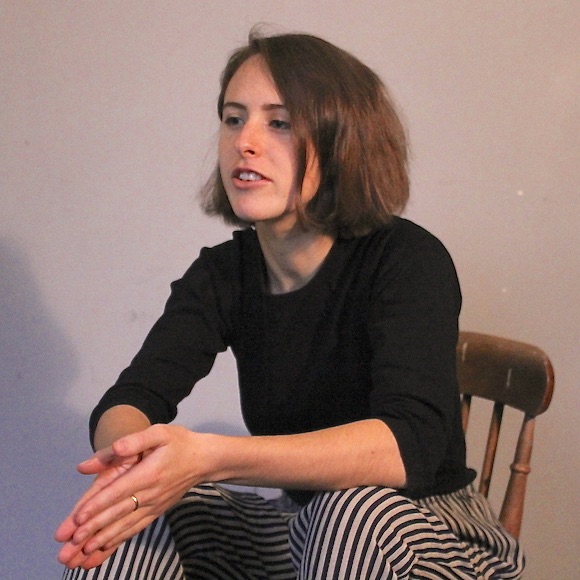
What is your artistic practice?
I am an artist and musician currently based in London.
On what projects are you currently working?
I am involved in a few different projects at the moment. Most recently I’ve just finished a short residency in South Pembrokeshire, Wales. Leaning into the idea of the visiting artist, and their (sometimes) problematic involvement with short term, community related art, I was interested in the expectations and perceptions of a new place in such limited time. A meditation on the needy artist, I placed ads in the local paper, in shop windows and online for local residents to take me on a walk and show me their favourite place. I documented my side of everything, from the agonising process of wording the poster, to the communication with the venue, my anticipation of the meetings, worries about weather, the responses I received and any antagonisms along the way. I went on daily walks with a different person and reflected on these encounters, the shifting impressions I was having as well as the difficulty of translating the intimacy of these experiences. The residency culminated in a performative show and tell, which wove together my introspections with work I made in response to the walks. Music, short films, and story telling offered a revealing self-exposé as a gesture of gratitude to everyone who had helped.
I organise and coordinate a platform called the Surround with musician Rose Dagul. We host a regular, nomadic DIY event for musicians and performers to come together and test out new ideas in London. It’s a constant motivator to perform and create new work ourselves and provides a solid framework for proj- ects with other artists and musicians locally. As a platform we also compile music compilations of every- one’s work when we can, and are working on self publishing and releasing our own music, bypassing some of the more established routes and taking everything into our own hands as much as we can.
I’m also working on an ongoing personal project, spanning performance, illustration and the written word, examining the perception of our bodies while experiencing ill health. I am currently preparing a musical and choreographed performance that explores the shifting relationship I have had with my body after it stopped behaving quite in the way it used to, following a parasitic invasion. Thinking about change, mystery, blame, anxiety, fear of chronic illness, symptoms ‘being in the mind’ and the fragile ecosystem that sits inside of us, the work is a playful meditation on losing control and what it takes to claw it back.
What is the most relevant conversation that you remember having during your residency at Arquetopia?
I think the most significant challenge I got was very early on and regarding my role as the observer. I had proposed a project that would involve me doing a lot of observational drawing, and I was made to look at what it means to be the invisible observer, and the role of scribe within colonial history. It made me thinking about ways to confront my own presence in public space, rather than hiding behind it, and consider the connotations of the all-seeing onlookers touched on above, this idea of the observer and their assumed invisibility is something I think about a lot. It took me a little while to return to observational drawing, but as I do I am so much more aware of the editing decisions, both in terms of setting myself up in a situation and also the process itself.
I also started to question more generally my emphasis on aesthetic and to feel liberated from the ‘page’.
What changed after your residency at Arquetopia?
I had started to confuse the potential to deconstruct with something that could only happen on paper, within an image, and was reminded of physical intervention as a tool, and public space as a stage.
How are artist residencies important to the artistic practice?
They are so vital! A good residency provides the space and time to explore something in depth and follow tangents without constraint. I wouldn’t say they are free of distractions exactly, but they are free of our usual distractions. They declutter our routine which means we can really engage in our surroundings and be sensitive to new or alternative ways of doing things. They can provide really useful interruptions to the way we think.
What is your artistic practice?
My practice ranges from elaborate textiles, giant ceramic charms bracelets, coptic stitch bookmaking, and most recently large, layered colored pencil drawings.
On what projects are you currently working?
Recently, I have been inspired by my study of expressive arts at The European Graduate School. I have been trying to make work that reflects what I desire most by layering images and words that are stuck in my head. They fill the page in a paradox of strangeness and charm. The avenues that I have chosen to do that are usually large drawings, but I am interested in incorporating my knowledge of textiles and fibers into this exploration as well.
What is the most relevant conversation that you remember having during your residency at Arquetopia?
I had a conversation about textiles based on a text I was given to read that altered my relationship with the medium. Francisco and I considered textiles as providing the verbs for thinking and communicating. Humans spin and piece together the world, and everything is connected by a thread. The history of female labor in the household, factory and childhood was striking in this conversation, for I understood the deep history and power of the work I was doing. Without my conscious consideration, I was contributing to an important history. This helped me to realize that my work springs into existence with meaning inescapable in it already, without a single personal thought. There is a woven history and I am taking the thread and continuing that story.
What changed after your residency at Arquetopia?
My work as a collaborator in an art clothing project came to an end, and my individual practice has begun to develop. I have started a masters program in the expressive arts, learning to facilitate art based workshops to foster growth and healing for groups or individuals. I am looking inward during this process as well, finding the materials and methods of expression that help me to understand my facing of the world, as well as to understand the space between me and my art.
How are artist residencies important to the artistic practice?
Residencies give the artist a space of permission to explore their work in a different, more supportive context. I believe that there is a “tapping in” when it comes to creating beauty or importance, and sometimes a push into that liminal space is integral. That is the push that a residency provides. This space is then tended to with materials, education, and conversation.
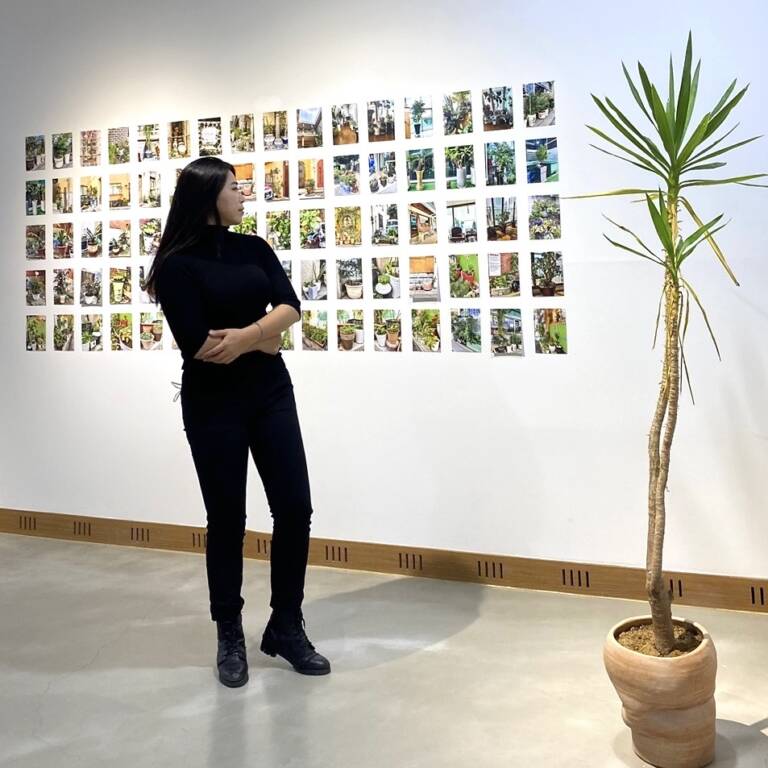
What is your artistic practice?
I am working on various visual arts based on ceramics. I mainly create artwork from a feminist perspective on identity and space. In particular, I am interested in the borderline nature of identities that are scattered outside and on the periphery of a fixed language or frame. I create art from personal emotions, experiences, or observed phenomena around me.
On what projects are you currently working?
Recently, I have been working on seeking a turning point for having a conventional identity in a fixed place. What I made in Mexico last summer is based on what I and my family felt as we moved. I’ve seen my mother’sfavorite flower pots make up a huge part of our luggage when we move. I am not very interested in flower pots, so I started to ponder what flowerpots mean to my mother.
I wanted to talk about the mobility of roots by using a flower pot as an object and metaphorizing it as a subject. The flowerpot, the main theme of the work, is depicted as a dynamic object that moves and scatters the passive image of a plant by its roots. Of all things we believe to have our roots in, we are actually only a lingering being. Nothing is static and fixed.
So, I purposely changed my work environment completely to a village in Mexico where culture, environment, and technology were unfamiliar. Having received pottery education in Korea, I used the techniques and materials I was familiar with to create my own works in the Mexican way in workshops with local artists for about two months. As the finished works were produced, the cultures and technologies of Korea and Mexico were combined in a heterogeneous manner. However, as a result, it was interesting to see that a work that reflects the artist’s own unique feelings well was completed. In other words, I was able to discover through this project that the meaning of individuals and places can become unique in the space newly occupied by the artist or in various exchanges. To my family, flower pots are like a declaration to live in harmony with the sun and wind in the place where they are located. Therefore, the meaning of space has been changed anew.
What is the most relevant conversation that you remember having during your residency at Arquetopia?
In the residency, I tried to provide various topics and theories related to my work. Every week, I collected and introduced information and materials that would be helpful in my work. I was interested in the effect of escaping from a fixed place on dispersing identities. For me, space or place was replaced by race or class, and I explained philosophical themes about it. I spoke of a historical case that can be explained from the Mexican point of view. It was very interesting because it had a fundamental commonality with the social problems I observed in Korea.
What changed after your residency at Arquetopia?
I have experienced many changes during my stay in residency, which can be divided into work and personal aspects.
I was able to learn a serious attitude towards art by meeting people who work in various fields. We were able to share the process of finding a unique way for each to express their own story. It has been very inspiring and encouraging to me and I have learned to enjoy art more.
On a personal level, there was a change that made me feel healthier inside. The artists in the residency gave each other unlimited support and interest and formed a camaraderie. Such friendly relationships built trust in me before I started making art, and helped me to be more confident in my artistic practice. We have become more confident. In particular, I was able to exchange influence on a human level by working with writers of various ages. It was an experience that broadened my view of life.
How are artist residencies important to the artistic practice?
Arquetopia was my first artist residency experience. Mexico, like Korea, has a history of aggression and domination and was on the periphery of the Western-centered cognitive system. Also, since Puebla is a historical district where you can feel Mexico’slong history and culture, it is clear that a very new world is for me. I wanted to be fully assimilated into the people’scountry, so I made new adjustments to their language, weather, and way of life.
Arquetopia, an international residency established in the historic center of Puebla, was a very interesting experience for me. In the center of the city of tradition and history, strangers with different eye colors gathered and talked. Their traditions and history have been revived in a new light in the modern world. In other words, residency serves not only to provide an environment in which artists can work but also to share knowledge and regenerate the sense of place in the area. In the past, Puebla reflected in the eyes of a different color was only an object of conquest, but in the present, it is clear that it is a different image. At first it felt like a very quiet little town. It turns out that various industries such as textiles, paper, and automobiles are being produced in Puebla, and numerous museums and art galleries are using cutting-edge technology to vividly convey their history and culture. In a charming city where tradition and modernity coexist, residents were able to enjoy both the calm and fresh stimulation of a new space for creativity. The role of international residency, which opens the door to the world as a base for creative artistic activities, is particularly closely related to the theme of my work this year. As part of my research on space and identity, I chose a residency in an unfamiliar place far from my hometown to practice physically that I can transport my place. Residents can freely move and stay at the root, but it was like my flower pot object that grows and interacts in harmony with all conditions of the space in which it is placed. Since the residency was a common land, I was able to naturally actively exchange opinions about my work with many people. The perspectives of people with different backgrounds and knowledge were very new and valuable to me.
What is your artistic practice?
I am a multidisciplinary visual artist from Johannesburg, South Africa. I have a background in film – particularly in research, writing, and editing. As a visual artist, I have worked with sculpture, installation, painting, animation, jewelry design and, most significantly over the past couple of years, ceramics. It was my fascination with ceramics that brought me to Arquetopia for the ceramics residency in 2019.
Across these disciplines, my practice is usually concerned with notions of home, forced migration, family, family history, and identity.
On what projects are you currently working?
I am currently creating a body of ceramic pieces through which I’m attempting to unpack and understand my relationship with the domestic space. Some of these are large pieces inside of which I’m arranging a series of smaller pieces. The way I arrange everything is a big part of the work, and I am also starting to combine my ceramics with found objects, photographs, drawings, and other things that I make. I am also thinking about how I could incorporate film into all of this. Hopefully, it will come together as a congruent solo exhibition soon.
What is the most relevant conversation that you remember having during your residency at Arquetopia?
I had many wonderful, eye-opening conversations with Francisco, Nayeli and the rest of the Arquetopia staff, as well as with my fellow residents. The most memorable one for me was one I had with Francisco and Nayeli in a meeting roughly halfway through my residency. I had been working on themes of home and domesticity for quite some time, using fluffy terms like “nostalgia” and “belonging.” Not only were these terms pretty vague, but they also didn’t really fit with my work. Over the past few years, the imagery and sculptures I create have increasingly told stories of violence, loneliness, suffocation and discomfort – not exactly things that evoke feelings of nostalgia or express a sense of belonging. I had never deeply thought about why I always drifted towards these kinds of images, but throughout the residency, Francisco urged me to explore my intuition more, and to try and understand why I do what I do. I made a comment to him that all the figurines I was making were either armed with knives, crying or hanging by their necks, and he pointed out to me that this was because I was expressing the feelings of discomfort I associate with home. It seems extremely obvious to me now, but it was a very enlightening moment for me at the time, as I think I had been trying to avoid actually naming these issues. But once Francisco identified them in such a simple and straightforward way, I began to feel much more okay with the stories I actually wanted to tell.
What changed after your residency at Arquetopia?
Before the residency, I often used to make things with very little planning or forethought, letting my intuition guide me, and thinking that my work could only be driven by a feeling, rather than a thought or idea. Because Francisco had pushed me to dig deeper into where my intuition came from, I now feel that I work much more confidently, decisively and conceptually. That’s not to say I ever know exactly what a finished piece will look like, or that I work with a very specific blueprint in front of me, but more that I now work with a clearer idea in my head of what I’m trying to say. It’s made me feel a lot less scattered when I make, and I generally tend to like what I make more than I used to!
How are artist residencies important to the artistic practice?
I think in a practical sense, they are great because very few artists are actually able to be within their artistic practice full-time. Most people have side jobs, or get caught up with general administrative nonsense, or are overwhelmed by the endless terrors of life and the planet, and so to get a space to just make and think and talk about your practice is something rare. The fact that I could just be in the studio all day and night without worrying about the fridge being empty or the dog needing a walk meant that I could just be fully immersed in whatever was in front of me.
I also think that doing an artist residency can take you out of your comfort zone and force you to face people, spaces and cultures that are different from your own, which ultimately expands your way of thinking and making. A residency as intellectually stimulating as this one forces you to challenge the way you have been working, learning and thinking in the past, and I felt like it made me use my brain in a way that I hadn’t for a very long time.
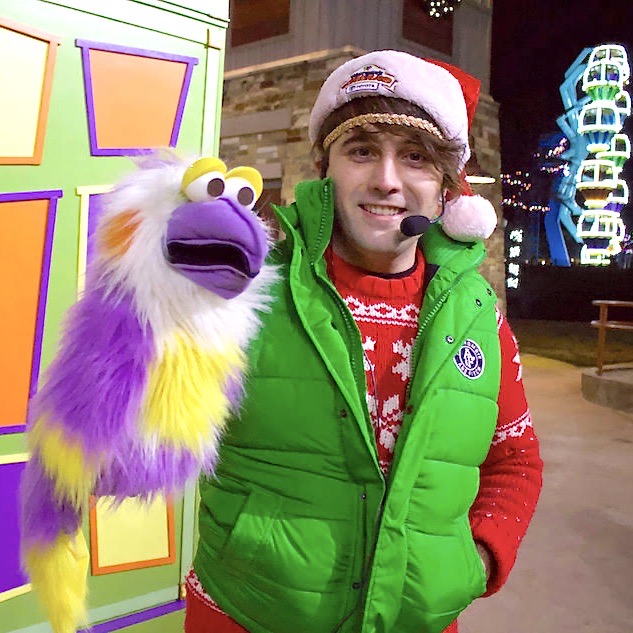
What is your artistic practice?
I make comics, plays, toys, short stories, and movies. Since 1999, most of my work has revolved around the universe of a superhero called Hero BLOB, who can turn into any liquid.
On what projects are you currently working?
I’m working on a series of comic and short story reworkings of some early work with Hero BLOB for the 20th anniversary this year. In connection with that, I’m creating a few foam hand puppets to do a short film series featuring Chilipepperman and Hag Lady Bobo, recurring characters in my work.
At the same time, I am continuing a watercolor series illustrating some of my short stories. Hopefully I’ll be getting them out in the form of a zine in the next month or two.
I’m also co-writing an adaptation of Much Ado About Nothing for a mixed special needs and typical cast, which is going to premiere at the ultra-accessible theme park Morgan’s Wonderland in San Antonio later this year.
What is the most relevant conversation that you remember having during your residency at Arquetopia?
During the residency, we were exposed to a lot of different essays and readings, and the discussions with the Arquetopia staff were more challenging and exciting than I had expected before coming to Puebla. I can be really opinionated when I approach a piece, and I came to the meetings generally ready for a mental wrestling match worthy of Arena Puebla, the lucha arena in town. More often than not, though, I found that my opinions were acknowledged and instead of meeting resistance, I was shown down completely unexpected paths of thought.
I went to school for Classics and theology, so I really don’t have a lot of background with modern history and social issues, and every week was eye-opening and sparked further explorations in a dozen directions– luckily, the people at Arquetopia had resources and knowledge of where to look to find more information in all the things I was interested in.
It’s difficult to choose a most important conversation; these talks were really full of interesting ideas and challenging concepts that had a cumulative effect on my thought generally. One thing sticks out though, which is probably far from being the most profound or wildly interesting moment of the residency, but affected my own thought more personally and starkly than any other conversation with staff or my fellow residents.
During one meeting with Francisco and Nayeli, I was airing my worries at feeling directionless at home in the States, in spite of doing more and better-quality work than at any other time in the past. Without missing a beat, Francisco said something along the lines of, “Of course you feel that way; you’re not fulfilling your place in the Capitalist system.”
It just kind of flowed out as if it were really simple and obvious (which maybe it is), but it struck me and has stayed with me since then. The statement encapsulated in its assumptions an acknowledgment of my dignity as a human being and an artist, and set me to thinking for perhaps the first time that feelings of self-doubt I have sometimes about my work or my path in life are not necessarily entirely self-produced; there is such a thing as a social pressure to produce salable work and do profitable artistic ventures. The thought has come back to me time and again since my time at Arquetopia, and serves as a source of strength as I realize that my priorities are, in fact, different from what is expected of me and that the alternative set of priorities I have is legitimate; I have agency and control over the work I produce and the reasons I produce it. What was a source of shame before is often a source of strength for me now. This has been especially comforting as I have come home to a world where we are increasingly expected to curate and monetize our social presences, especially as non-established artists, online and in person. Those things are fine, and building a following is fine, but it’s never been my priority and I’ve come to the realization that it’s fine for it not to be. I’m not and don’t plan to be a “content creator”; I’d rather be an artisan or an artist.
At the risk of sounding like a 16-year-old art school wannabe, I like to make art and to express my ideas, and so that’s what I do.
What changed after your residency at Arquetopia?
The biggest change is just that I’ve been a lot more productive; with the exception of some of the heavier work days during December, I’ve worked on one project or another every day. I’ve also followed up on a lot of the things I discovered in Puebla that consumed my interest. While I was there, I got to do several training sessions with a long-established luchador, which fed my obsession with Lucha Libre as not just an aspect of culture, but as a physical practice. I’m still seeking a way to play that out in Texas (where outposts of lucha libre culture do exist), but in the meantime I’m training my body so that I’ll be ready when I do find a way to do that!
How are artist residencies important to the artistic practice?
Residencies give space and time for the actual creation of art, which would be great by itself. Time away from daily pressures and responsibilities gives breathing room for an artist to create, away from the influences of the home city. Sometimes the whole tenor of a work can change just by revisiting it in a mental state free from the constant input of where you live; that’s the way it is for me, anyway.
Beyond that, the opportunity to live and create in a different place sets off a number of mental and creative connections that can collectively change the nature of one’s work. For instance, I was exposed to the painter Agustin Arrieta in several museums in Puebla. The color tones and the textures of foods in Arrieta’s still life paintings struck a chord with me and I mixed a whole new color palette for my watercolors, which I still use in a lot of my paintings. Before I encountered his work, I had rarely paid any attention to still lifes. My residency provided exposure to new art and the contexts that made it possible to understand it, which is vital in helping an artist deepen their own work.
Residencies also expose the artist to other resident creators, and that’s something I certainly enjoyed! I met a number of great artists on my residency, who all worked in different media and utilized very different themes from me. But we ate together, we worked in the same place, and we shared ideas and resources. One artist helped me track down some very rare Mexican Lucha Libre comics that have since influenced my work quite a lot, and I continue to correspond with another artist who is a ceramicist, just to share our work with each other. I made some real friends and learned about their work in a context that allowed us to share and critique our work together (and also eat a lot of great food, which is pretty much the key to all my friendships).
What is your artistic practice?
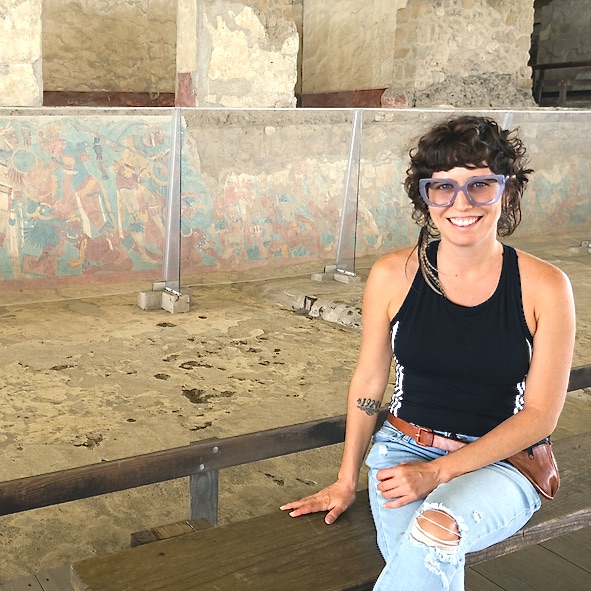
I am a painter, with a strong focus in murals and public art (for the last 20 years of my career), but since 2017, I’ve been experimenting with movement, photography and digital art. This year I’ve been revisiting my relationship with ceramics and natural pigments; also, I’ve started walking in nature as a meditative practice for the project of La Ninfaaa, deepening her simbiosis with water.
What has been your artistic process during the residency?
During this one-month residency in Arquetopia (2023), I was very open to expanding my horizons in art history and mesoamerican culture; while studying with Prof. Lara (art restorer) about natural pigments and pre-Columbian techniques in painting.
My process started since my arrival in Mexico. I stayed four days in Ciudad de Mexico with my mother. We visited the Templo Mayor, the Colegio San Ildefonso, the Museum of Arqueologia, and a diversity of spaces to get an idea of the local culture, prior to arriving in Puebla. Gotta say, it was the most fun mother-daughter adventure, it also set the tone to keep expanding on my self awareness as a latina artist. I believe that life sets small hints for you to keep self discovering your true self along the different experiences, conversations and encounters throughout your days. It’s only with silence and contemplation that we get to understand that language.
Upon my arrival to Arquetopia, I had already set my eyes on the Cacaxtla archaeological site and the “Mayan blue”. On our first group meeting, Francisco was kind enough to let me borrow a book on the history of Cacaxtla, which allowed me to dive deep into the subject. That same week, I had my meeting with Prof. Lara, and she noticed I had a genuine interest in “fresco painting”.
Most of my time during the residency was spent reading, preparing my project with natural pigments; where you need much patience, it’s a slow process to prepare each surface and let them dry properly. The exchange of ideas and traveling experiences with the other residents was crucial for me, because I enjoy bonding with female artists in search of their own truth.
Eventually, I made it to the Cacaxtla archaeological site, at Tlaxcala, on a “combi” (public transportation), that added another layer to my interaction with locals, their mobility and interaction with the authorities. Another subject that I dived into was their culinary diversity, either by buying street food (tamales or pastries around the corner) or just focusing my attention on the different dishes that were served by the in-house chef.
Aquetopia was like being guided via a shamanic trance, where I remained non-resistant to change of perspective, new visions and ready to deconstruct in order to reconstruct my beliefs systems in art, culture, and Westernized history.
Which has been the text, essay or quote that you read at Arquetopia that most influenced your practice and why?
Well, we dive deep from witch hunt, to the idea of the “Oriente”, domesticity, to America’s colonization history, but where I got the most poetic was on the trafficking of natural dyes:
“Indigo, poético como el mar, color turbio como el voyeurismo de esclavos que cantan y baten bajo el mando de soldados vestidos de azul, el color de la guerra, de los policías y marinos. Hombres de cuello azul, hoy se fajan a diario, bajo el mismo sol que presenció la opresión del tráfico de especies, color y extorsión. Travesías oceánicas – cadáveres de esclavos en alta mar – rutas de conquistas, gritos, sed de oro y plata bajo un cielo azul. Color que penetra almas, cuerpos y generaciones.” — La Ninfaaa
What is next in your artistic practice after the residency?
This past summer, I moved to the southeast side of Puerto Rico. It’s been a refreshing change! Living in a small rural town allows me to reconnect with my ancestral knowledge by walking along the shores of the Caribbean Sea, and interacting with local farmers/fishermen. Here, I am developing the next project of La Ninfaaa, a multilayer proposal that incorporates silent contemplation, natural pigments, farming, ceramics and painting. Its end result will be my next solo exhibition and first graphic novel, an artist book!
What is your artistic practice?
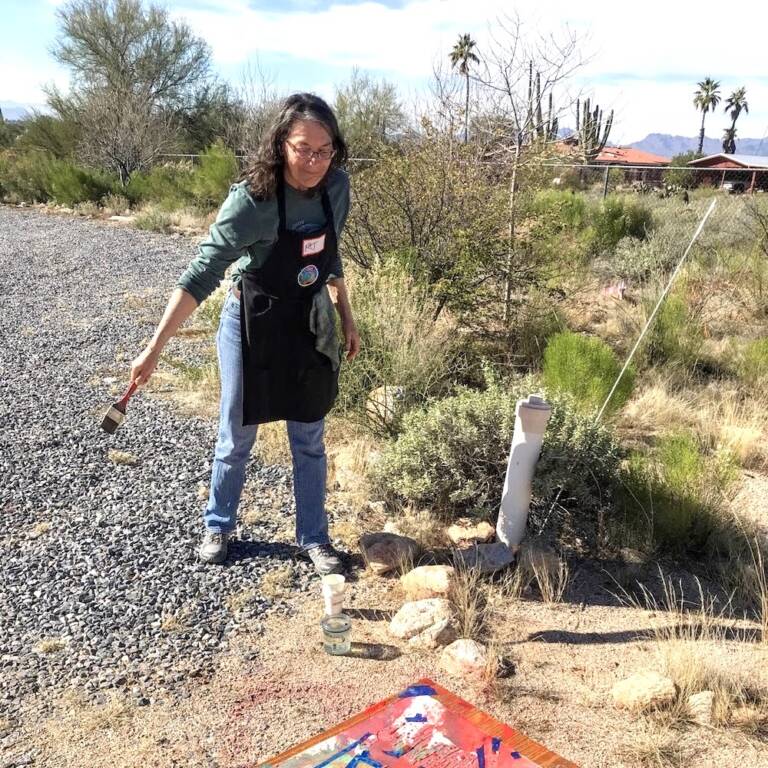
Watercolor painter and illustrated sketchbook journalist.
What has been your artistic process during the residency?
The sensory experiences of staying in Peru for five weeks and the weekly readings and critical discussions informed my illustrated journal and my painting process. Free from certain daily responsibilities and routines allowed me to walk, think, and sit with what I was experiencing and learning. The luxury of uninterrupted blocks of time to draw, paint, and research permitted me a flow of creativity and intuitive painting that I don’t typically enjoy. Although the expectations for the readings did not include incorporating those themes in my artwork, I was reflecting so deeply about them that related concepts and imagery appeared regardless.
Which has been the text, essay or quote that you read at Arquetopia that most influenced your practice and why?
Initially, I was focused on questions about sacred sites and practices. Through the readings Francisco provided based on our discussions, my focus expanded to include the roles of:
1) Sacred Sites – “Sacred Geography in the Nochixtlan Valley”
2) Landscape painting in colonialism – “Landscape & Power”
3) White middle-class feminist practices in oppression and inequality – “A Cyborg Manifesto”
4) Christian missions in imperialism, nationalism, and politics – “Manifest Domesticity”
Quote: “Art does not present reality, the practice of art presents meaning.” – Francisco Guevara
What is next in your artistic practice after the residency?
I made a list of all the ideas sparked by the residency and how I can carry the ideas and energy forward into my practice. Given the nature of finite time and a non-cyborg, human-bodied artist’s limitations, I will only accomplish a fraction of the list. As such, I present the highlights of some of the current and future projects on my mind:
Action: Currently eating more fresh foods and spending more time in my studio.
Art: Fractured Series – Deconstructing maps; endangered species; and cyborg figures and portraits. Look for another venue for showing art, one where a broader scope of inclusivity is represented.
Investigation: Infrastructure and labor required for a game of golf at a Tucson resort. Visit the SEIU Tucson office to learn more about local projects. Disrupt the “perfect” landscape painting genre by interrupting complacent, pretty pictures. Insert ironic and/or missing elements such as natural disaster, labor, infrastructure, and resource extraction.
Reading: Literature shared by Francisco as an ongoing practice of study. Feminist Science Fiction.
What is your artistic practice?
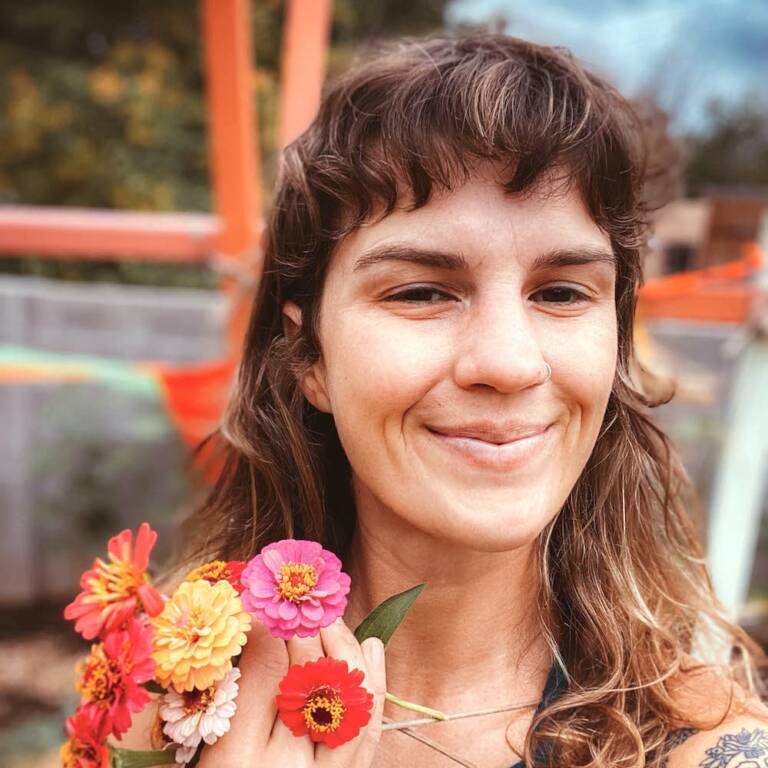
I am a fiber artist and filmmaker. I work with earth and low-impact synthetic dyes to reimagine reclaimed fiber. I delight in exploring the transformative nature of color and our symbiotic relationship with the natural world.
On what projects are you currently working?
I participated in Arquetopia’s Instructional Residency for Natural Dyeing in Oaxaca in November 2021 where I had the honor to work with Fermina Ruiz Gutierrez, a Zapotec fiber artist from Teotitlán del Valle. My intention for the residency was to rest in present awareness in my artistic process and refine my approach to dyeing through repetition and incorporating traditional Zapotec techniques learned from Fermina. During my time in Oaxaca, I created sets of prayer flags in cotton and embroidered with wool. This end product was my way to explore how to create all the tones of the color spectrum using earth dyes from plants and insects. Since my residency, I have started a small business called Solar Plant & Dye Stuff, in which I dye cotton and wool clothing with both earth and low-impact synthetic dye materials using solar electric power. I continue to refine my process and reflect on my responsibility as a maker to source and work with earth-conscious materials.
What is the most relevant conversation that you remember having during your residency at Arquetopia?
All of our conversations encouraged deep reflection as a whole but a general takeaway that seems to become richer and reveal itself with time is that art, like every other area of life, is subject to our social constructs that create judgements on its value. It doesn’t matter if we have pure intentions, objectivity is an illusion. Our perception is dictated by the moment in time, the environment in which we find ourselves and the causes and conditions that put us here. And so, art and its value is a constantly-changing negotiation between the creator and the community of spectators dependent on these factors. The significance of this realization is profound as it provokes one to reflect on things like how the Western-centric value structures that determine what is “high” art and what is “folk” art, have been violent and imperial, suppressing the artistic voices of indigenous and people of color for generations. I am grateful for these conversations and the challenge to reflect on my intentions as an artist and what it means to the larger landscape of contemporary art.
What changed after your residency at Arquetopia?
Coming home after the residency and reflecting on my time there, I have been strongly re-energized and trust that I can live a vibrant and creativity-filled life in which making art is in the forefront. Being in the residency and having my primary intention everyday just to make art has taught me how to incorporate a similar routine in my life back home. And most importantly, having the honor to spend time with Fermina, her family and the community of weavers in Teotitlán del Valle showed me how people have made a life for themselves by making art for generations. Being present in that environment broke down the mental barrier I had constructed about how one makes a living off their art based on American-centric social constructs of what it looks like to be a full-time artist. I left with a new widened perception and the drive to honor and trust that what I have to contribute creatively has value and is worth sharing.
How are artist residencies important to the artistic practice?
Artist residencies like Arquetopia’s are both a privilege and a necessity for artists. It is rare to have the opportunity away from one’s regular routine and daily distractions to focus deeply and freely on one’s art and process. Being in another environment and the practical aspects of that force artists to adapt and work in different ways. It is a safe mental space to experiment and explore without the fear of failure. They can also be extremely restorative, an opportunity to look inward, focus on oneself, and slow down. New studies have shown that creativite thinking is supported strongly by taking breaks and time in nature. Attending an artist residency can help artists reimagine their processes.
What is your artistic practice?
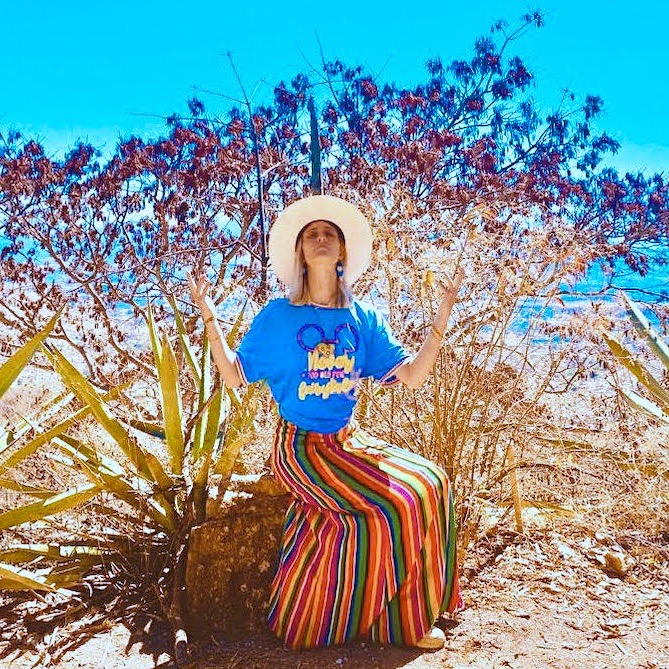
I am a multimedia artist with a strong focus in visual art, textiles, music and poetry. The process of art making started out as a form of therapy for me and continues to have this nurturing encapsulation to my spirit to this day: as a teenager, I would write poetry and share it with a friend in history class, and we would write the word “Gold” beside the ones we loved. Poetry later in my early 20s served me as a way to express deep and painful emotions especially connected to my experience as a Queer youth living in an environment at the time that was not supportive and very oppressive. There was an explosion of feeling inside of me to live my truth, express who I am creatively and complexly and speak my mind and spirit; I found this language through poetry. This would act as a gate way drug, so to speak, to the art world. I found a realm where I could explore deeper parts of myself and process my connection to the world around me; this is what I continue to do through many various mediums, whatever one speaks to me in the moment.
On what projects are you currently working?
I recently released my first recorded album online called “Old Fortress.” You can describe it as dream folk, and it follows the journey of two lovers parting ways with new love found.
I am working on crocheting a blanket using all the wool I dyed with natural materials during my study at Arquetopia. The dyeing process I learned is ancient knowledge passed down generationally in the Zapotec community in Oaxaca, Mexico. This piece is an homage to my learning experience and a compass to remind me of all the colours I can capture as I continue to explore natural dye.
I am also working on piecing together a poetry book, I weave poetry writing in and out of my daily living; I continue to document it in hopes to form a little book one day.
What is the most relevant conversation that you remember having during your residency at Arquetopia?
Taking time to discuss the power and awe of colour and the affect it has on humans. Learning and discussing the long history of slavery in connection to the production of natural dye, including making shades of red with cochineal and various blues with indigo. There were 18,000 indigo slave plantations in Western Province alone when you look at parts of this history. Often, people who were used as slaves would mix the indigo vat with their bodies. This conversation was important for me to have and be aware of as I continue to work with natural dye as it is important for us to know our history, and have reflections on how we use resources such as colour that was once used as a currency to trade human bodies: how can we transmute it into a currency of love, freedom or higher vibrations of consciousness and peace.
I also loved the conversations about art having the power to create change.
What changed after your residency at Arquetopia?
Having a better understanding of the history and knowledge of natural dye and just how extensive and complex it is in our world. Deepening my exploration and reflections on the profound effect color has on us as humans, and carrying this with me as I work with it as a vibration and element within my own art.
Simultaneously learning the history and knowledge of natural dyes used specifically in the Zapotec community in Mexico, one of several Indigenous communities in Mexico that practice techniques and ancient knowledge that stretch back more than 1000 years. This allows me to sit in my process in this present moment, feeling how my journey is one of very many in the eclipse of time, and having honor for this, culturally, energetically, humanistically, historically, medicinally and spiritually.
How are artist residencies important to the artistic practice?
My time at Arquetopia is the first artist residency I have ever experienced. It has brought me a sense of community with other artists, a space for me to focus in on the development of my craft, and learn many new things that makes me grow as an artist. Also, attending an artist residency in a different country allows you to connect with a culture and environment in a meaningful way, connecting with the people around you and sinking into rhythms of a new space while being present. I used to call myself a bedroom artist because I created a lot of my art alone in my room. I am in a new chapter of my journey, finding more community as I continue to create, and this supports and allows my art to flourish in ways I could not have imagined on my own. Artist residencies definitely contribute to this sense of community and settling into a new space and environment can spark great inspiration.
What is your artistic practice?
I’m a professor of cultural anthropology. We don’t usually get called “artists”, but Arquetopia in Oaxaca was a wonderful place to write.
What has been your artistic process during the residency?
I worked on a comparative paper about walking in cities and danger, both imagined and real. Along with research in New York, Singapore, Ho Chi Minh City, Tbilisi and Jerusalem, I reflected on moving from a car-centric environment in Calgary, Alberta to graduate school in New York City, North America’s most walkable city. Part of my project is reflecting on the role of plants and trees in making welcoming cities; our lovely neighborhood of Oaxaca, had many inspirational examples of plants-and-people coresiding, which I photographed as I walked every day.
Which has been the text, essay or quote that you read at Arquetopia that most influenced your practice and why?
I loved Karim Kattan, “At the Threshold of Humanity: Gaza is not an Abstraction” in The Baffler, published on 31 October 2023; it is so important in reminding us all to speak up about Palestine, even when that isn’t “convenient” for people.
What is next in your artistic practice after the residency?
I’m off to do some walking research in Mexico City for a few days, then I will teach on food in Italy for a week, followed by more research in the Republic of Georgia.
What is your artistic practice?
I work mostly in printmaking. Specifically, screenprinting and linoleum, as well as film photography, graphic design, and artist books.
Within these art forms, I am currently exploring how imagery in public space operates and relates to institutions of power. I’m interested in the presence of these institutions, e.g., capitalism and religion, and how they exist, oftentimes indirectly and/or subconsciously, in everyday language, symbols, and objects. I am also interested in and exploring the concepts of function and ambiguity as they relate to everyday objects.
On what projects are you currently working?
I’m very excited to be currently working on a couple print series and editions. Once I returned home from Arquetopia, I built a screenprinting set up and workspace in my home, which I guess was a project in and of itself!
I am also working on organizing an artist book & zine press/collective with some friends. I hope to use the artist book and/or zine format to explore the concepts listed above.
What is the most relevant conversation that you remember having during your residency at Arquetopia?
All of the conversations and meetings I had while at Arquetopia were very meaningful and impactful; however, in my last meeting, we discussed the reading, Facing the Other, the French Philosopher Emmanuel Levinas, and his concepts of the encounter with the Other and face-to-face interaction.
I believe these ideas are not only relevant to my artistic practice, but relevant to the current state of the world and how we interact with each other and “others.”
“Freedom is a privilege, not a license to commit murder.” Levinasian ethics remind us that the world is not an uninhabited site for our unfettered enjoyment. Living beside us is the other, who’s right to freedom not only equals ours, but as Levinas insists, “precedes ours.”
I really enjoyed the phrase, “Obligation to otherness,” which Francisco likes to rephrase as “understanding and respecting the integrity of others.” Francisco, on the topic of the encounter, also said, “When we encounter each other, we are aware we have to correct time and space… Levinas makes a shift… and changes the ‘I’ to the self, to understand the other is the important one in the encounter. And if we all did that, it would be a different world.”
I could go on and on, but Levinas. Check him out.
What changed after your residency at Arquetopia?
I believe a lot has changed. The way I see and think in everyday life; my faith in institutions; my interest and desire to read and learn outside my comfort zone; my appreciation for local, organic tomatoes; and probably, most importantly, the way I think about, interact with, critique, and create my work.
How are artist residencies important to the artistic practice?
If done the right way, artist residencies will help change the way the artist thinks. Or, rather, they will provide and educate the artist with new ideas, methods, and tools to help them grow and broaden their beliefs and practice. I’m very fortunate to have been given the opportunity to be a part of Arquetopia, a residency that does all of these things. More important than providing a destination, or an isolated studio to solely focus on and create new work, artist residencies should cultivate and develop different “ways of seeing.” Arquetopia did just that.
What is your artistic practice?
My artistic practice includes a variety of mediums. Painting, photography, stop motion animation, video work… and pretty much anything where I can use my hands.
On what projects are you currently working?
The current project I am working on is a passion project. In 2018, I started to document my Abuelita (Grandma) through photography. I named the project, “La Historia de mi Abuelita” (The history of my Grandma), a documented photography series that shared a part of my grandmother. The series displays a part of her Mexican culture through food, rituals, close family, and daily routines. This series has become an ongoing passion project.
The goal was to tell her story. After this, the project grew into a passion project where I wanted to document my whole family and its Yucatan Culture. The intentions have changed and evolved as I continue to work on it. What I am exploring in this project currently is my identity as a Yucatan-American Immigrant. Something else I am exploring through this project is the journey of Alzheimer’s with one of my family members.
What is the most relevant conversation that you remember having during your residency at Arquetopia?
The most relevant conversation I remember during my residency at Arquetopia was a conversation I had with Francisco about how important it is to have a question you are trying to answer or explore during your art process. He painted me an example, stating that if I was a performer, standing in front of the stage about to share a question everyone had been waiting for, what would it be? After this conversation, I have found myself questioning “What is it that I want to explore or understand in this project or idea?”
What changed after your residency at Arquetopia?
What changed after the residency was my thought process in how I express my ideas. Arquetopia encouraged me to continue to explore other ways I could expand one idea through different medium or a combination of mediums. My experience at Arquetopia also made me think about how an idea can forever move into a variety of discoveries and the importance of questioning our artistic practice.
How are artist residencies important to the artistic practice?
Artist residencies are important in the artistic practice because they help us grow as artists. I believe they can help artists evolve and expand their ideas, process, and projects. Through a residency, we get the opportunity to share our current work and receive feedback and mentoring from other artists about the work that can benefit us. I think residencies can also serve as another space for artists to reflect, get inspired, deepen their artistic practice and gain knowledge and learn new skills.
What is your artistic practice?
Some of my artistic practices include illustration, textile design, music, and writing.
On what projects are you currently working?
Currently, I am working on a digital portrait commission for a client. As for my textile art, I am focusing on practicing my craftsmanship on my crocheting skills. As for my music, I am continuing to write and play my songs; eventually I would like to create and album.
What is the most relevant conversation that you remember having during your residency at Arquetopia?
One of the most relevant conversations I remember having had to do with my project which related to change. It made me question how could I represent change in a way that is an organic representation instead of looking at it as a symbol in my project. I valued the opportunity to translate philosophical and spiritual meaning into my artwork with the help of my mentor.
What changed after your residency at Arquetopia?
Lots happened after I left Arquetopia. I myself feel reborn. Once I left I traveled to Merida, back to my homeland, and stayed there for a month. Afterward, I traveled to Mexico City, and after that, Las Vegas. Now that I’m home, I’m searching for a new chapter. I’ve learned so much, but I haven’t quite processed it all. I’ve noticed how my mindset has changed and is continuing to change when it comes to my artwork.
How are artist residencies important to the artistic practice?
Artist residencies are very important to helping artists gain new perspectives about art and their art process. Normally, we always create art in the same environment or unless we go to art school. Space is essential to create. It offers new experiences and growth with the creative process and thinking.
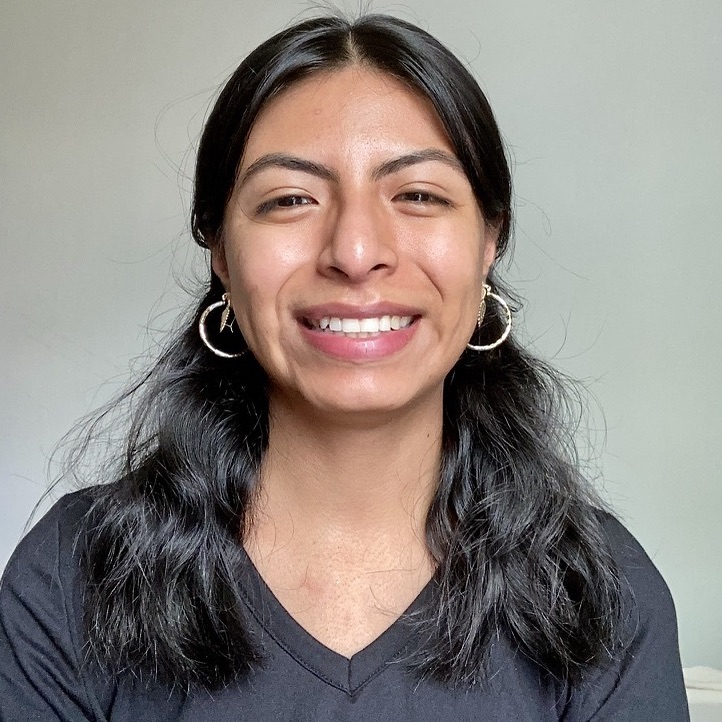
Sandra
Mora
USA
Visual Artist — Multidisciplinary
Artist Website
What is your artistic practice?
I am a multimedia visual artist currently focused on metalsmithing. Through my work, I attempt to capture a sense of comfort in the face of constant change through imagery and now, use of materials.
On what projects are you currently working?
Currently, I am working on a body of work focusing on the exploration and experimentation of materials that are normally unvalued. I hope to bring up the question of value and preciousness through the juxtaposition of precious metals and common materials.
What is the most relevant conversation that you remember having during your residency at Arquetopia?
During my residency at Arquetopia, the most relevant conversation I remember having was one discussing different methods of research for topics related to my work. Before, it was difficult for me to expand on the themes that interested me, I felt limited in the messaging I was trying to convey through my art.
What changed after your residency at Arquetopia?
What has changed after my residency at Arquetopia are my views on the materials I use in my practice. I’ve previously used common jewelry materials, precious and non-precious metals. But now, I want to challenge the value that’s placed on these metals by using more unconventional materials.
How are artist residencies important to the artistic practice?
I believe artist residencies are very important to artistic practice because it’s an opportunity for the artist to learn and experience a new way of art making. Arquetopia was my first residency, the weekly discussions and readings got me thinking about my work in a way I hadn’t before. Along with the conversations I had with the other residents, it’s an experience I wouldn’t be able to recreate alone.
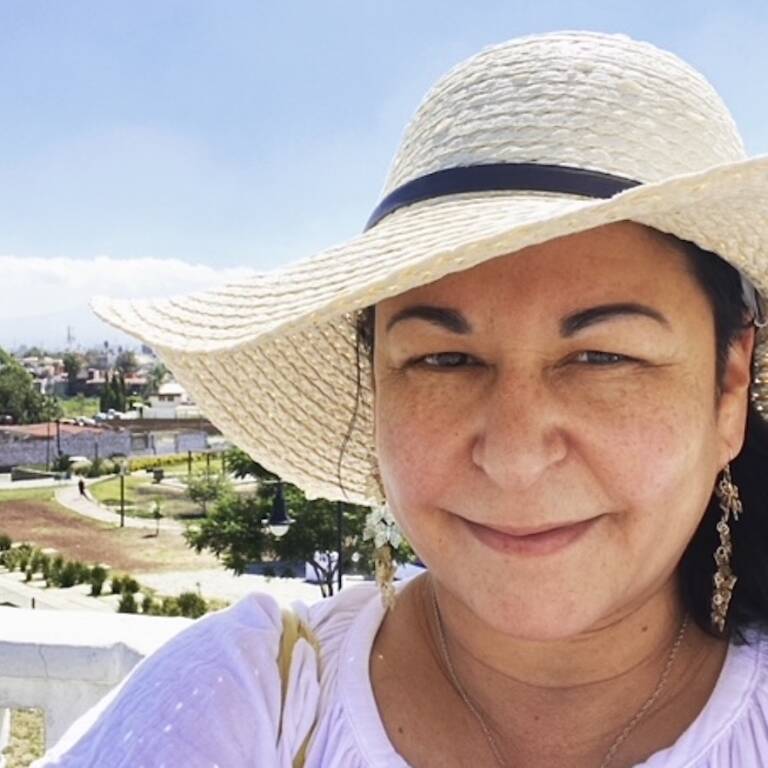
What is your artistic practice?
I am a painter.
On what projects are you currently working?
I am currently working on a series of abstract hands inspired by an artist named Saul Bass. I am also working on drawings of pre-Columbian hands over iridescent paint. I am learning how to use light and color-shifting paint in my work.
What is the most relevant conversation that you remember having during your residency at Arquetopia?
I loved all my conversations with the staff at Arquetopia. However, my final conversation was the most productive and substantial. Not only did Francisco and Nayeli encourage my practice, they asked questions that I never asked myself until this point. Why am I making this work? Why paint? Where does it fit into an expanded worldview and the history of art making? These conversations helped me become a stronger artist and these questions have led me to see my work as multifaceted as a diamond and equally important.
What changed after your residency at Arquetopia?
I learned a great deal about my art practice and what a strong work ethic I have when I am immersed in an environment that is free of distractions and interruptions. I gained a renewed sense of joy in making new paintings and I realized the importance of working alongside other artists to share ideas and meaningful conversations.
How are artist residencies important to the artistic practice?
Artist residencies extend a unique invitation to give artists the time and space they need to create new work. As a working mom and self taught artist, it was difficult to carve out time for my artwork until I spent a month in Mexico at Arquetopia. Since then, I have been able to continue painting almost on a daily basis. Leaving Arquetopia, I felt a renewed energy for painting and I discovered a bright new vision for my future and my work.
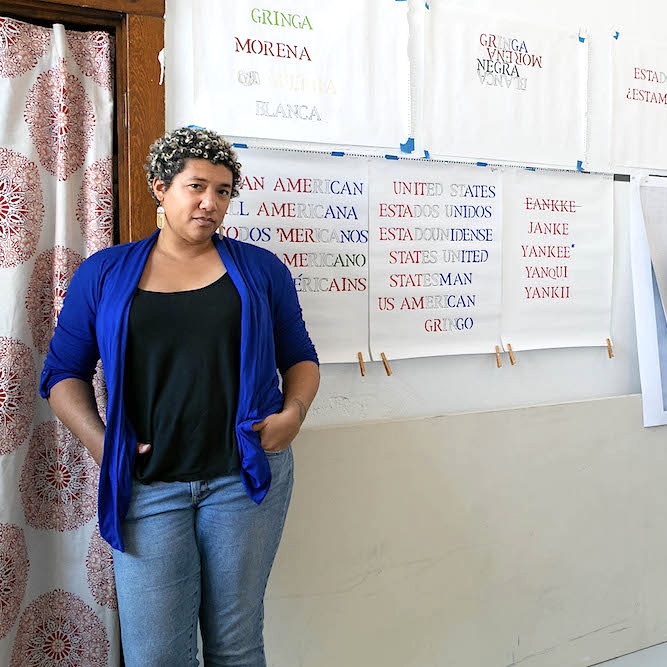
What is your artistic practice?
I’m a visual artist working primarily with photography.
On what projects are you currently working?
I am currently working on a text project I began at Arquetopia Peru. I am diverting from photography with this work and using letter stencils to play with the language we (US Americans) use to identify ourselves. I am also picking up where I left off on a project called Ars Moriendi, which is about grief and mourning.
What is the most relevant conversation that you remember having during your residency at Arquetopia?
I don’t think I can pinpoint just one conversation that impacted me during my residency. Talking to fellow resident Kathryn Walton and Arquetopia staff member Rocio about the differences between our cultures – mine being US American, Kathryn’s being Australian and Rocio’s being Peruvian– was always interesting, enlightening and often funny. My conversations with Francisco were validating of my experiences as someone who identifies as female and brown, as well as of my experiences as an academic who is often frustrated by academia.
What changed after your residency at Arquetopia?
I’m not sure what has changed concretely since the residency, but I was amazed at how comfortable and connected to the space of Urubamba I felt while I was there. I was genuinely sad to leave, and the feeling of alienation upon returning to my home base in the US was something I had never experienced. To be able to be introduced to Peru through Arquetopia was a gift, and I am still processing my time there. Having the time to think about my art and my place in different art worlds was invaluable, and being in a country I had never been to was incredibly stimulating, especially after the last few years being homebound and US-bound because of COVID.
How are artist residencies important to the artistic practice?
Residencies where you feel taken care of and have some reprieve from the usual grind of life are essential for our survival as artists in an increasingly difficult world.
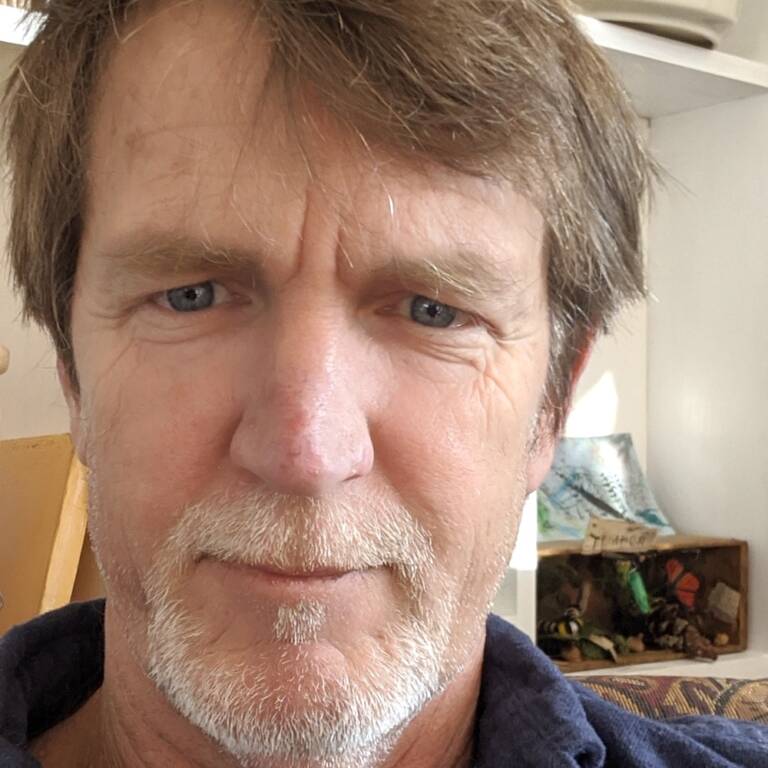
What is your artistic practice?
Painting, drawing, collaborative installation.
On what projects are you currently working?
As we are in the process of relocating our studios and practice, I am in the process of an inventory. The inventory runs deep. Not an inventory so much in the physical sense, but rather in finding threads that align with my current beliefs. During the course of working, I veer into directions that, in the moment, are of some interest. Not all these are in direct line with my interest in painting. In retrospect, I rarely walk in a straight line. Looking back affords me the opportunity to find works that align with a sense of honesty that is heartfelt, as opposed to critically manufactured.
What is the most relevant conversation that you remember having during your residency at Arquetopia?
So much information and ideas were discussed during my residency it is difficult to weigh in on one dialogue. Certainly as I write this I will focus on one dialogue, and then another will come to mind (already, Race and Manifest Destiny, the Origins of American Anglo-Saxonism, Reginald Horsman, 1981, and the weight of “performing whiteness” comes to mind).
For the moment, I will address Performing the Body/Performing the Text, edited by Amelia Jones and Andrew Stephenson, 1999, and the ways the ideas are permeating my processes.
Thoughts of an audience whom I will never meet seem freeing in a deep sense. The desire to create work that is narrative and somewhat pedantic springs from a place slightly less than true.
Time plays a new role, visual language opens, and thoughts are conveyed directly through making. The text is a recurring event that follows inevitably, and is remade to suit flowing time and political perspective.
What changed after your residency at Arquetopia?
I have a renewed sense of urgency. Though I embrace adoration, it is ultimately impermanent.
How are artist residencies important to the artistic practice?
I was reticent to dedicate a month to a residency. More importantly, I was reticent to open my practice to external dialogue. I choose my teachers carefully and with suspicion.
Being teachable continues to be an indispensable habitual motif, yet finding a teacher I trust is harrowing. Opening one’s ideas to critical dialogue takes courage. Without the courage and openness, we cannot grow. The artist residency affords us the opportunity to engage in dialogue and grow in a safe space where vulnerability is valued.