
Missed the October 1 Deadline for 2027
and remaining spots in 2026?
E-mail Us at info@arquetopia.org
for Program Info, Application Materials, and an Extension
including Day of the Dead, and Short-Term Programs
Outstanding Arquetopia Alumni
N - Q
Post-Residency Interviews and Feedback
Since its beginnings in 2009, Arquetopia Foundation has hosted and mentored more than 1,300 artists, writers, art historians, curators, and researchers, from ages 20 to 92, from 112 countries worldwide, and from a wide variety of disciplines. Featured here are testimonials and feedback from many of the most outstanding alumni of our award-winning residency programs.
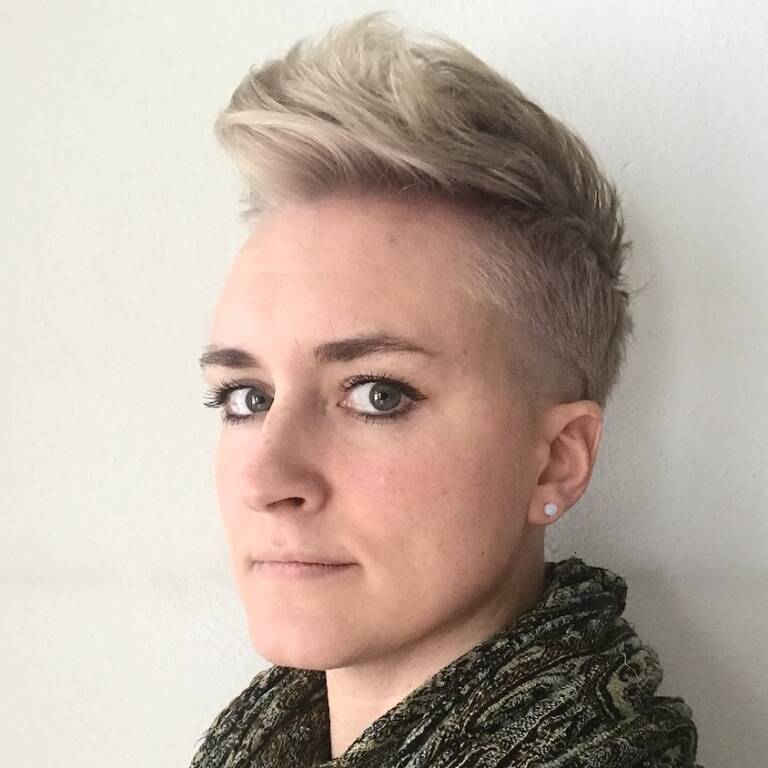
What is your artistic practice?
Art in this season of my life takes all forms of making: cooking colorful meals, journaling, parenting, photography, creating visual work in a variety of mediums. The art practice I currently prioritize is writing, incorporating text and line drawing.
On what projects are you currently working?
I am creating a book that celebrates the metaphors and small miracles within my daily gardening practice. The pieces are taking shape as handwritten, illustrated poems, fables and short essays. Beyond studying my own plants and lived experience, I research writers who center stories from nature and the interdependent systems that we exist within. Photographs support my writing and drawing work, as visual research and documentation of the garden’s seasonal shifts.
Another ongoing project is a handmade art zine that I initiated in 2018. “MOMZEANS” is a compilation of writing and artwork by local artist mothers and myself; the content highlights birth stories, parenting perspectives and affirmations, and mental health resources. My intention is to normalize the full experience of mothering and stand in nonjudgmental, openhearted honesty. Mothers are often deified, and held to impossible expectations and standards. This project seeks to increase dialogue around the complexity and humanity of mothering.
What is the most relevant conversation that you remember having during your residency at Arquetopia?
Most relevant conversation during the residency: In our first weekly meeting, mentors Francisco and Nayeli asked about my intention for the three weeks of residency. I described my hope of detecting the parameters of this book project, utilizing the quiet space away from home and the ceaseless, quotidian minutiae of life as a mother. They listened deeply as I painted the project’s imagined container, in word and gesture. At the end of that first conversation, Francisco offered something that spoke to me in a bone-deep way, “Never concede to (or acknowledge/accept) the center, and never romanticize the margins.” Within this encounter, I recognized the option to self-authorize expansion: to hold round, soft space for my practice and the eventual completion of the book. He encouraged me to use the residency time to rest, lean into my intuition, and to write whatever arrives. I left that meeting in a deep, rejuvenated exhale that infused and informed the entirety of my stay.
What changed after your residency at Arquetopia?
What changed after the residency? Since returning home from the residency, I have nourished increased spaciousness and ease within my artistic practice. My writing now lives at the intersection of make and allow. The book project feels gentle in a tangible way, as though my time in Oaxaca allowed me to soften/thicken something with sharp edges. As well, my writing practice is more robust thanks to the protected and well-organized space Arquetopia has cultivated for participants. As Francisco and Nayeli taught us, the residency truly begins after the residency, so, here at home, I suppose I’ve just begun.
How are artist residencies important to the artistic practice?
How are residencies important to the artistic practice? Residencies are a powerful opportunity for artists to rest and encounter other minds, in a safe and necessary container. I understand that my experience as a working mother artist is not unique; there are endless distractions competing for artists’ attention, with trauma or to-do lists pervading whatever consistent studio time one may have established. The mind can be a busy place. Residencies offer fertile, boundaried sanctuary to energize and expand one’s practice.
I thank you all for this exceptional residency program and opportunity to share my practice.
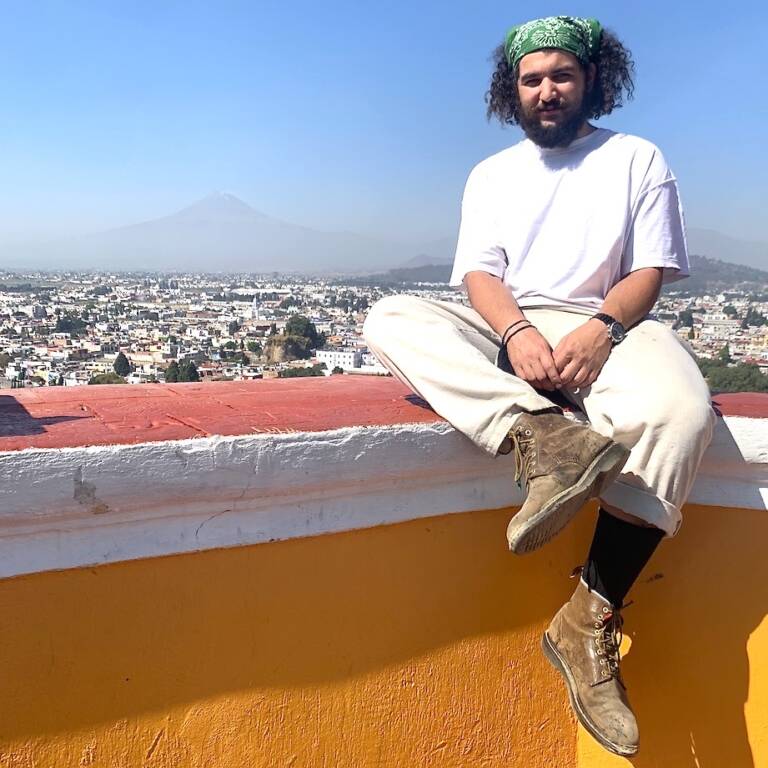
What is your artistic practice?
I am an illustrator and printmaker.
On what projects are you currently working?
Currently, I am continuing work on block prints in linoleum. I am experimenting with different techniques to achieve more distortion and experimentation in my process.
What is the most relevant conversation that you remember having during your residency at Arquetopia?
All of the discussions I had at Arquetopia were extremely thought provoking. Artistically and philosophically, I found them to be important conversations and immensely helpful in my understanding of myself and my work. One of the moments that remains in my head was a discussion on the value of the artistic process, rather than product itself. In my work I often become hyper-focused on a vision of a finished piece, this conversation with the Arquetopia team helped refocus my energy back into process; inspiring me to develop new techniques and explore the different ways in which I can create a print. This was very empowering and opened the door to many more questions.
What changed after your residency at Arquetopia?
I have a broadened excitement for my craft and creation in general. I find myself more open to exploration, and less concerned with certain aspects of personal expression.
How are artist residencies important to the artistic practice?
I find it important to remove myself from typical routine, it is often the first step in recognizing the ways in which stagnation and oppression has influenced my life and my work. Living with and learning from other artists can be a wonderful experience, especially with people who are willing to challenge underlying ideology and identity. I will continue to search for similar programs and relationships.
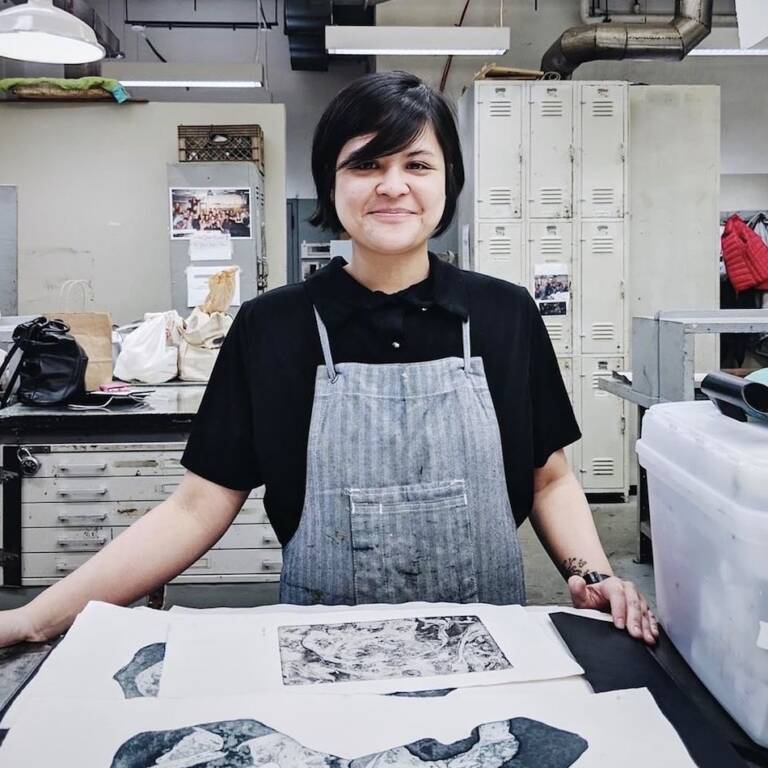
What is your artistic practice?
I do printmaking: relief, etching, and lithography.
On what projects are you currently working?
I am currently working on an etching series of topographical views of imaginary landscapes. The matrices are shaped irregularly to resemble islands and are etched with a combination of various techniques such as marbling, embossment, hard ground, white ground, and aquatint. I intend to make several dozens of unique islands that can eventually be printed in groups as well as individually.
What is the most relevant conversation that you remember having during your residency at Arquetopia?
The conversation was brought on by a sketch of an artwork that I was planning to execute; the sketch contained visual elements that to me were distinctly Filipino and Mexican. I was asked why I felt the need to include such details and I realized that I was trying to give the work an obvious Filipino and Mexican look to make it authentic and acceptable. One of the problems with this was the fact that almost all of the imagery was based on objects viewed from the context of a museum, or even designs that were clearly lifted from historical records of ethnic culture. I became aware that I was looking at these cultures –and in effect also at my own identity– not with my own eyes but those of others e.g. the dominant, male, European viewpoint.
What changed after your residency at Arquetopia?
After the Arquetopia residency, my thinking process for developing ideas completely changed. I was directed towards exploring abstract compositions when I had previously been working with representational and very literal imagery, and suddenly a whole other resource and language became available for me to explore and utilize. Since then my work has been largely abstract. Another big change was my understanding of how art is redefined by each person that encounters it. Because artworks are read like a text, the meanings change for each person depending on their background, beliefs, and so on. Understanding this made me more conscious about the choices I make and the sources of my images. In addition to that, I now aim to make work that encourage questions rather than ones that insist on a singular answer.
How are artist residencies important to the artistic practice?
Artist residencies are important to artistic practice because they provide a space and time that is fully devoted to the art-making process. They are also venues that foster dialogues and critical feedback from a curator and fellow residents. Being in a totally different milieu can also redefine the artist’s perspective of his or herself and the works that are being developed.
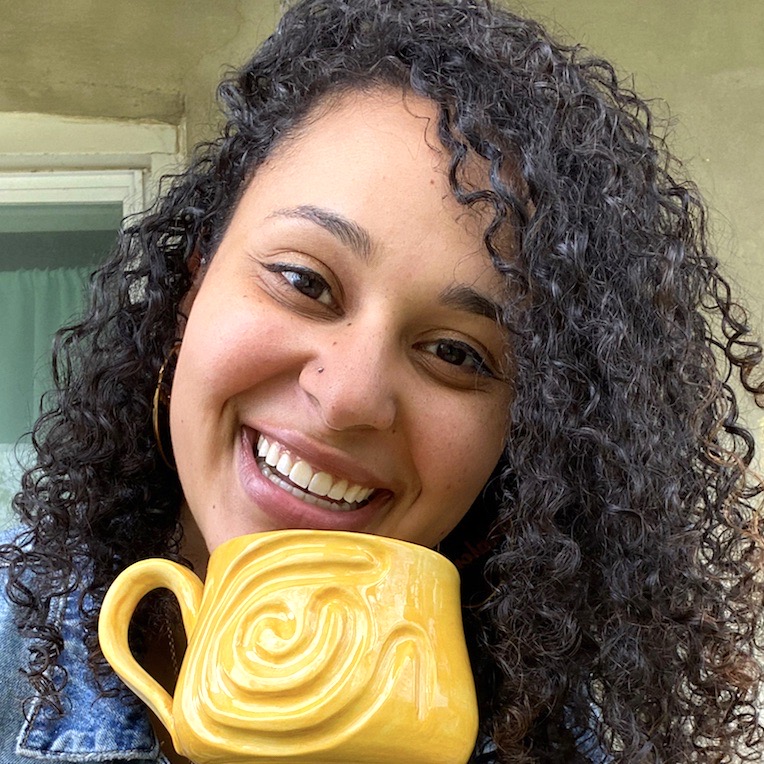
Shalom
Parker
USA
Visual Artist — Ceramics
Artist Website
What is your artistic practice?
I am a visual artist working in ceramics.
On what projects are you currently working?
I am currently working on a large scale installation project. My goal is to create a ceramic floating dock and to install the work in the water of the Halifax NS Waterfront. This project is a continuation of the conceptual framework I started to explore during my time at Arquetopia. I am interested in the concept of ownership over space/property, I am working on creating a dialogue that examines this concept further. The dock form I am pursuing to create represents an abstract form of land; a dock could be described as an extension or island of land for our bodies to stand upon. By creating this object I am inevitably creating something that is seen to be owned by someone.
What is the most relevant conversation that you remember having during your residency at Arquetopia?
The readings and weekly meetings were so beneficial during my residency. One of the discussions that has stuck with me was about making work with intention and being conscience of the shadows that your work creates. Artists create work with their own experiences and the audience will have many more perspectives to the work that may not be what the artist had anticipated. By having the skill to see where those shadows are in your work will only guide you to refine your arts purpose further. Another important discussion during my residency was one about the use of language. Specifically the use of words that are relative to an individ- ual experience, like authentic, traditional, primitive, exotic, ect. Many of the amazing essays I read highlighted and emphasized the issues and implications of the use of language. These are just two examples of the conversations I had at Arquetopia.
What changed after your residency at Arquetopia?
From this experience I am motivated to create work with more awareness to the multiple perspectives and experiences of my audience. I have learned so much from Francisco, Nayeli, the other amazing talented artists I had the opportunity to meet during my stay. It was also my first time traveling outside of Canada and I absolutely loved exploring and learning about Puebla, Mexico. I am inspired to travel more and to keep pursuing my artistic practice through residencies. I am so grateful for my time at Arquetopia. It was truly a once in a lifetime experience.
How are artist residencies important to the artistic practice?
Artistic practices are strengthened by stepping out of your comfort zone and putting your work out for more people to connect with. By participating in artist residencies you have the opportunity to make connections with a group of diverse creative minds. It also provides artists with the space and resources to create work. In addition, this international residency gives artists the chance to travel and work which is truly amazing. All the things that an Artist Residency provides has the potential to motivate and guide an artistic practice through growth.
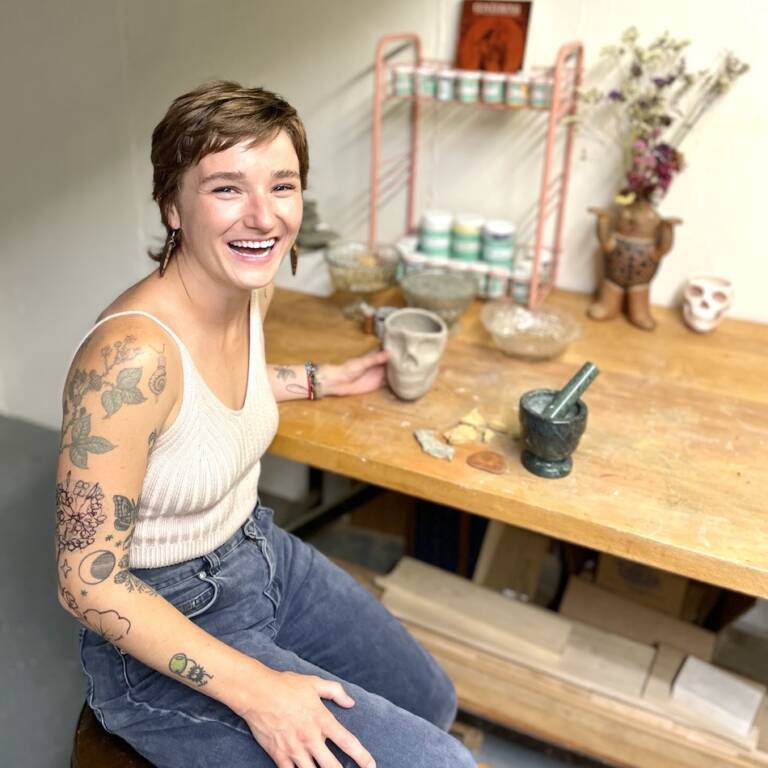
What is your artistic practice?
I practice ceramics.
On what projects are you currently working?
Since returning to Michigan, I have finished a few pieces that I made at Arquetopia with beeswax, so they are able to hold liquid. One of these pieces is a ceremonial mezcalera, and I enjoyed using this special bottle for the first time with friends. I have also been continuing to explore themes from the pre-Hispanic pottery residency. While at Arquetopia, I learned about harvesting and “washing” clay for use and how to make pigments from natural materials. I have been able to collect iron from black sand along Lake Michigan, which I turned into a pigment that surprisingly turned from purple to red after the first firing. I’ve also collected clay samples from a different Lake Michigan beach and a nearby forest. Being able to source some of my own ceramic materials connects me to the Earth and ancient ceramics process in a much more intimate way, and I am excited to continue experimenting.
What is the most relevant conversation that you remember having during your residency at Arquetopia?
All of them, haha! Really, though, it’s hard to say because they all felt so meaningful. I learned so much from the readings, my weekly meetings with Francisco and Nayeli, the classes, and other people I met through the residency. My time at Arquetopia helped me to begin to embrace my own rhythm, discarding some preconceptions about how I “should” operate that do not serve me, which has been incredibly valuable. I also feel that I have become more aware of how I want to show up as a traveler and as a community member at home.
What changed after your residency at Arquetopia?
A lot has changed since Aquetopia. One of the biggest changes that I’ve noticed is that I feel more connected to the Earth in my ceramics process. One reason I love pottery so much is that working with clay grounds me, and now that I’m gathering and preparing some of my own materials, I feel even more connected to both the Earth and the ancient history of ceramics in my practice.
How are artist residencies important to the artistic practice?
In my own experience, artist residencies have been like a power-up star to the development of my own artist style and body of work. At Arquetopia, I learned about entirely new techniques, like the traditional stone burnishing technique used in pre-Hispanic Mexico. Learning the traditional techniques of Puebla/Cholula while experiencing them was an honor, and I couldn’t have learned these techniques in such a meaningful way elsewhere. Being in Mexico and working with new clay bodies also pushed me outside of my normal creative processes and inspired me to try new forms, surfaces, and approaches to creating.
Terry
Peters
USA
Visual Artist — Textiles
Artist Website
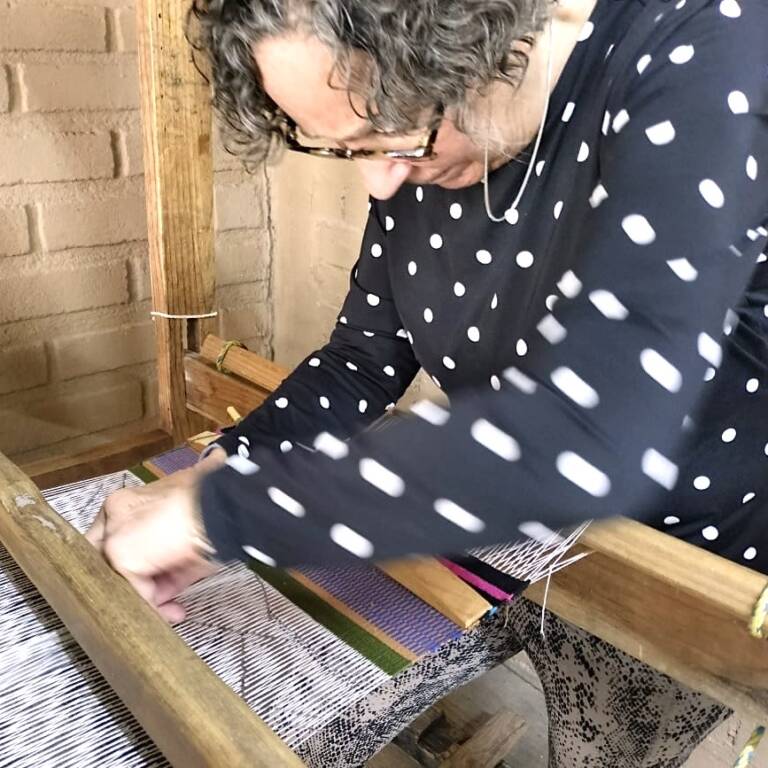
What is your artistic practice?
Tapestry weaving.
On what projects are you currently working?
Right now, I am learning Double Weave. Double Weave is weaving two layers of cloth at the same time, one above the other. I have purchased the book Double Weave by Jennifer Moore and am teaching myself the technique from the book. Double weave uses many of the same techniques and weaving structure that are found in the backstrap loom.
What is the most relevant conversation that you remember having during your residency at Arquetopia?
Some of the most relevant conversations I had while at Aquetopia where those with my fellow students. We were a group of four, all from different countries (USA, Canada, Great Britain and New Zealand) and all of varying ages. We shared the space and saw each other as equals. Our best conversations were when two or more of us were give the same weekly reading. We would discuss them together and bounce our thoughts off each other.
What changed after your residency at Arquetopia?
I am extremely thankful to all the people at Arquetopia for giving me the opportunity to participate in their tapestry weaving residency program. Not only did I learn a new weaving technique, but I also gained a new understand of myself. I learned to settle into my practice with a calm and patience – no rush – that has now carried over into everyday life. Just do the task and do it well.
How are artist residencies important to the artistic practice?
The residency gave me the opportunity to focus entirely on my weaving. Everything else was done for all of us. The staff prepared our meals, cleaned the house, and even took us on excursions to see artistic practices in the region. Removing all outside tasks and stress allowed me to relax into my artistic endeavors.
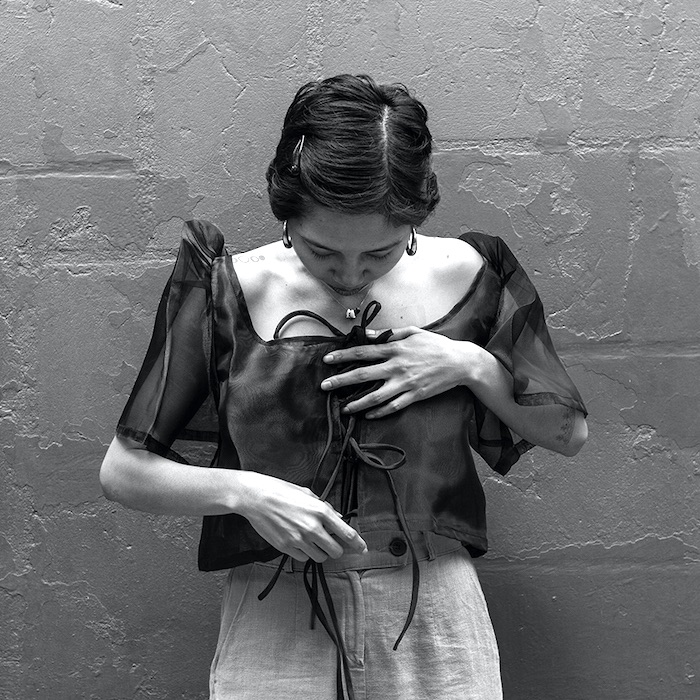
What is your artistic practice?
I find inspiration from spaces and stories, so I usually take my time immersing in the energy of a space and familiarize myself with the surroundings before getting to work. I like the challenge of finding materials I can work with and deepening the initial concept through the experience. I use photography and writing poetry or prose as part of the initial process; It acts as my guide for putting together the visual art work.
What has been your artistic process during the residency?
Puebla was a full sensory experience that definitely inspired my process. I found myself looking around town for thrift shops and digging through fabrics and potential materials. Taking the inspiration I gathered from our museum trips and my little adventures around Mexico, processing the inspiration through a discourse with the other resident artists or journaling after an excursion. The weekly readings and mentoring/critical discussions helped me in constructing the idea for the art work, and it made me look deeper into why I choose to do the work I do.
Which has been the text, essay or quote that you read at Arquetopia that most influenced your practice and why?
“Space lives; place is dead. Space is actualized; place is described.” This quote from a reading made me reflect on the way I make and/or consume art. It makes me question how I travel and experience what is around me. It puts me in a place of deep reflection and awareness.
What is next in your artistic practice after the residency?
I plan to continue the piece I started while I was at Arquetopia, and have it displayed at a space where I can talk about the work and residency experience. Dialogue/community has probably become the biggest lesson I learned from the residency, and through the art community I am part of back home, I was able to do a few events and an artist hangout/talk, since getting back. I plan to continue the conversation and investigation of art in personal human experience. It informs my art, and I’d like to somehow contribute to cultural identity by awakening a sense of nostalgia through the work.
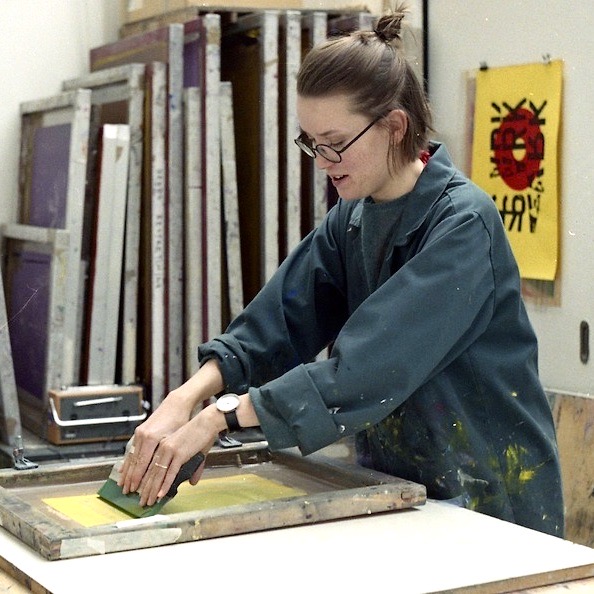
What is your artistic practice?
I am an illustrator and printmaker from Finland living in the UK. My practice takes mainly the form of silkscreen art prints, and occasionally textiles and animation. My work is inspired by observations and occurrences from my life that fascinate me: use of language and humour, movement and dance, and conversations and social interactions that I both spectate and share with other people.
On what projects are you currently working?
I am currently working on a couple of new personal projects: one looks at childhood and home, and the effect of sentimentality on memories. Since moving away from my childhood home and the country I grew up in last year, I have started to get flashbacks of specific places, objects, and moments. In my work, I want to inspect the transformation of life becoming memory, the move from experiencing to reminiscing.
My second ongoing project is to create a series of prints based on anecdotes and narratives I gathered whilst traveling around Mexico. I intend for this body of work to be showcased in a solo exhibition. Since completing my instructional course for Natural Ink Silkscreen printing in Oaxaca, I want to turn my focus to applying the knowledge I gained on residency to sourcing natural materials locally to continue making my own inks back home.
What is the most relevant conversation that you remember having during your residency at Arquetopia?
A few come to mind, but one of the conversations I had with Francisco and Nayeli that stands out was on the lack of control we have over the meaning of our art once it is released, and where the responsibility for these meanings lies. Additionally, I had some amazing moments of connection with the other resident artists discussing womanhood, relating to each other a lot, and learning from the differences in our experience. These kinds of conversations will never go amiss.
What changed after your residency at Arquetopia?
Since the residency, I have found a fresh lease of energy to go find my place in the art world professionally, and to seek out some of the support I got on residency from artistic communities in my city. The way in which we were invited to read around a variety of different themes inspired me to become more open to letting anything and everything I consume and experience to have an impact on my work. Lastly, I fell head over heels in love with the way colour is used in Mexican art and craft; I don’t think I will ever see colour in the same way again.
How are artist residencies important to the artistic practice?
Artist residencies for me are a perfect example of the kind of working environment all artists should be granted in everyday life: a desk, materials, engaging conversation, academic resources, feedback, support and time. I personally struggle to balance my artistic practice with part-time jobs, but residencies are a way for me to regain some of the time I go without fulfilling my creative needs. This residency was an opportunity for me to jumpstart my practice again, create new work, obtain a new skill, connect with a lot of new people, learn about a culture completely different to mine, and lastly, fully enjoy myself doing what I love to do without the pressure of having to justify that to anyone.